Elevate Your Cooking: The Ultimate Guide to Homemade Vegetable Broth
As the vibrant hues of summer fade and the crisp whispers of autumn signal the inevitable approach of colder days, many of us find our thoughts drifting towards comforting, soul-warming meals. While nature still offers its bountiful fresh produce, smart home cooks know this is the perfect time to prepare for the “winter is coming” season – and what better way to do that than by stocking your freezer with homemade vegetable broth? Forget store-bought versions; creating your own rich, flavorful broth from kitchen scraps is not only incredibly satisfying but also a sustainable, cost-effective way to infuse depth into all your cold-weather culinary creations.
For those of us in northern climates, soup season isn’t just a preference; it’s a necessity. And the secret to every truly exceptional soup, stew, risotto, or sauce lies in its foundation: a high-quality broth. I personally go through an astonishing amount of vegetable broth throughout the cooler months, which is precisely why discovering this simple, ingenious method for making my own was a culinary revelation. This approach, inspired by practical wisdom (and a dash of unconventional charm from sources like the Thug Kitchen cookbook – yes, you read that right!), transforms what would typically be discarded into liquid gold. While Thug Kitchen might be known for its unapologetically direct language and witty commentary (and a fair bit of profanity, as indicated by its full title, “Thug Kitchen: Eat Like You Give a F***”), their straightforward, plant-based recipes are undeniably effective and provide a refreshing take on accessible cooking.
The Foundation of Flavor: Collecting Your Vegetable Scraps
The journey to crafting your own robust vegetable broth begins not with a trip to the grocery store, but with a conscious effort to collect and repurpose what you already have. This zero-waste approach is both environmentally friendly and incredibly economical. Think of your vegetable peels, ends, and trimmings not as waste, but as latent flavor waiting to be unleashed. To start, designate a large, gallon-sized freezer bag specifically for collecting your “broth-worthy” scraps. Keep this bag in your freezer and simply add to it as you prepare meals throughout the week.
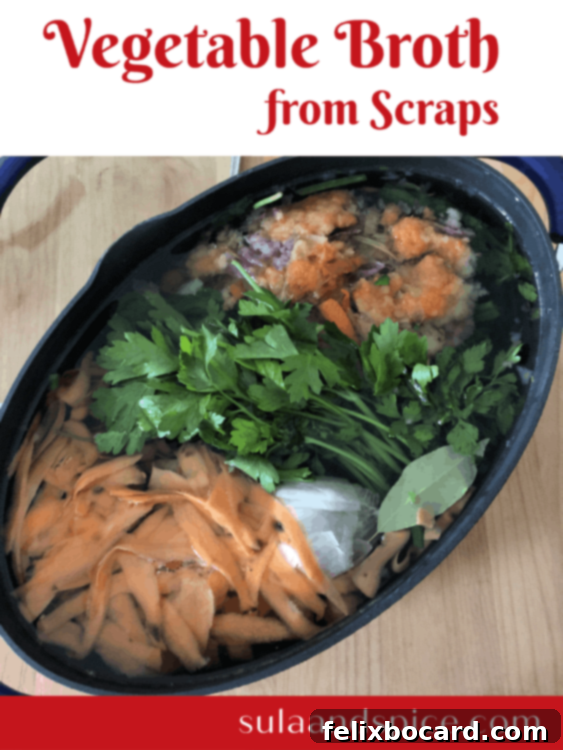
What makes a scrap “broth-worthy”? Consider the aromatic trinity: onion ends and peels, celery stalks and leaves, and carrot peels. These are the unsung heroes of most culinary bases and will provide a sweet, savory foundation for your broth. Other excellent additions include bell pepper cores, mushroom stems, leek greens, corn cobs (especially after enjoying fresh corn!), and even slightly shriveled tomatoes or zucchini that might not be picture-perfect for a salad but are bursting with flavor. The key is to include a diverse array of vegetables to build a complex, well-rounded taste profile.
However, not all vegetable scraps are created equal for broth-making. It’s crucial to avoid anything that could impart a bitter, overpowering, or unpleasant flavor. Steer clear of cruciferous vegetables like broccoli stems, cabbage, Brussels sprouts, and cauliflower, as these can make your broth bitter or give it an unwanted sulfuric aroma. Similarly, starchy vegetables like potatoes can make your broth cloudy. Absolutely avoid any scraps that show signs of mold, rot, or sliminess; while we’re using “scraps,” we’re aiming for quality, not decay. Only use clean, healthy trimmings. As your freezer bag gradually fills, you’ll be building a treasure trove of potential, ready to be transformed into deeply flavorful homemade broth.
Crafting Your Homemade Vegetable Broth: A Step-by-Step Guide
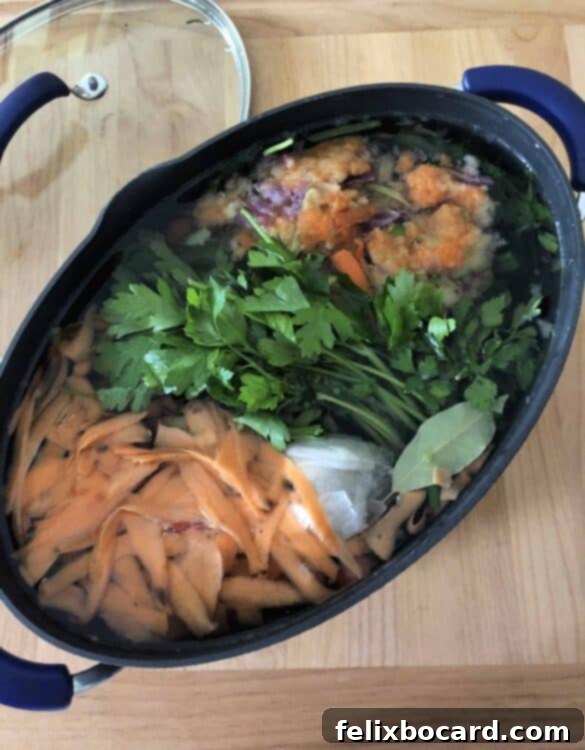
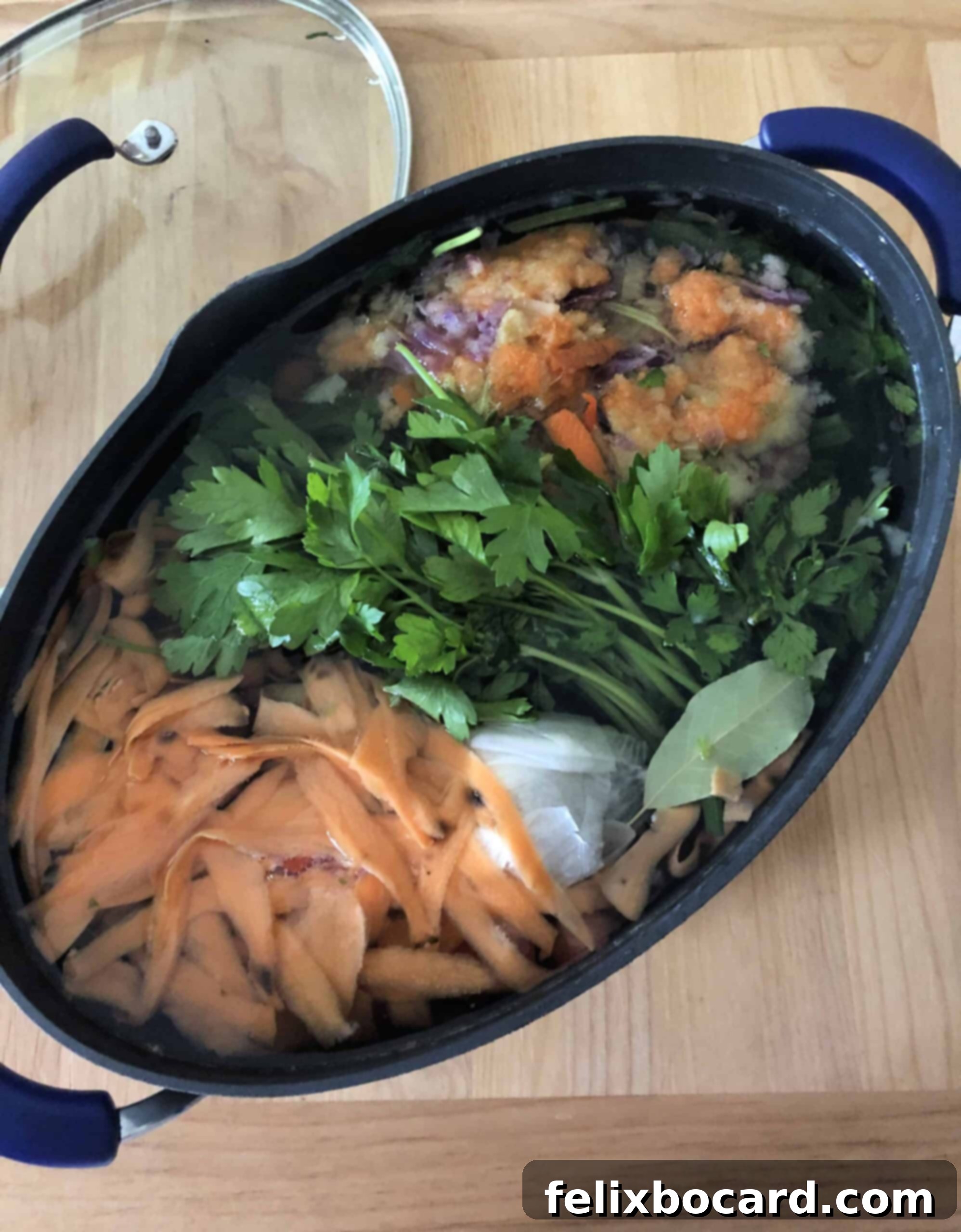
Once your one-gallon freezer bag is brimming with a colorful assortment of vegetable scraps, you’re ready to embark on the simple yet rewarding process of making your broth. The first step involves selecting the right vessel. I typically reach for the largest pot I own, usually a 12-quart stock pot, to ensure there’s ample space for all the vegetable goodness and enough water to yield a generous batch of broth. Carefully dump your frozen vegetable scraps directly into this large pot. There’s no need to thaw them beforehand; the cooking process will take care of that.
Next, fill the pot with cold water, ensuring all the vegetable scraps are fully submerged, leaving about an inch or two of space from the top rim to prevent boiling over. Now, it’s time to season your broth. While the vegetable scraps contribute immensely to the flavor, a little enhancement goes a long long way. Add a generous pinch of salt and a few grinds of black pepper. For an extra layer of aromatic depth, incorporate 2-3 bay leaves. You can also consider adding a few sprigs of fresh or dried thyme, parsley stems, or even a few whole peppercorns if you have them on hand. These subtle additions will elevate the overall flavor profile of your finished broth.
Bring the pot to a rolling boil over high heat. Once boiling vigorously, reduce the heat significantly to a gentle simmer. This slow, steady simmer is crucial for extracting maximum flavor from your vegetable scraps without over-reducing or causing bitterness. Allow the broth to simmer undisturbed for at least one hour. During this time, the vegetables will release their essential oils and soluble compounds into the water, creating that rich, savory liquid we crave. After an hour, turn off the heat and allow the pot to cool naturally on the stovetop. This cooling period is not just for safety; it also allows the flavors to further meld and deepen as the broth slowly returns to room temperature.
The Art of Straining and Smart Storage Solutions
Once your homemade vegetable broth has cooled sufficiently, the next critical phase involves straining out the solids and preparing your precious liquid for long-term storage. This step often requires the most attention, ensuring a clear, sediment-free broth ready for future culinary adventures. The goal is simple: separate every last bit of vegetable scrap from the flavorful liquid, which will then be frozen to preserve its freshness and taste.

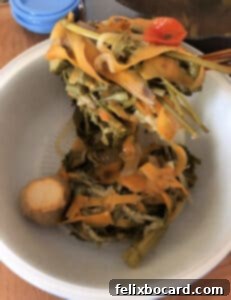
While some recipes might suggest using cheesecloth for straining, which provides a very clear broth, I’ve found that a combination of a large colander and a fine-mesh strainer works exceptionally well and is often more practical for home cooks. Begin by carefully plucking out all the larger pieces of cooked vegetable scraps from the pot using a slotted spoon or tongs. Place these into a large colander positioned over an empty bowl or even directly into your sink. Allow these larger pieces to sit and drain thoroughly; you’d be surprised how much flavorful liquid they can still release. This initial rough strain helps manage the volume and prevents the fine-mesh strainer from becoming clogged too quickly.
With the larger solids removed, you can now focus on the liquid – the delicious end product. Place a fine-mesh strainer over your largest measuring cup or a clean, large heat-proof bowl. My 8-cup Pyrex measuring cup is often my go-to for this task. Carefully ladle the broth from the pot into the strainer, allowing it to filter through. The mesh will effectively catch any remaining small particles, sediment, and fine vegetable pieces, leaving you with a beautifully clear and aromatic vegetable broth. Repeat this process until all the liquid has been strained. The strained vegetable solids can then be discarded or composted, having given their all to your broth.
Selecting the Right Containers for Freezer Storage
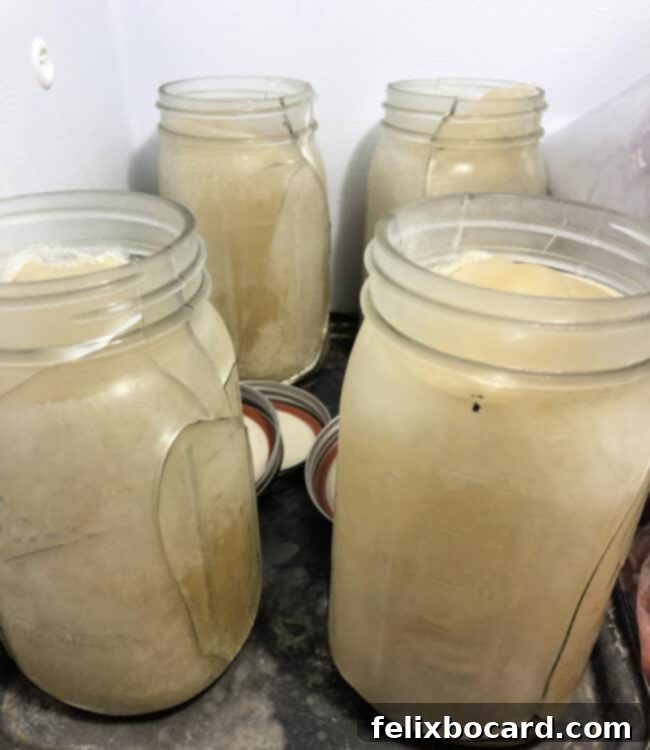
The choice of storage containers is paramount when freezing liquids like broth, and it’s a lesson many learn the hard way. In my early attempts at homemade broth, I made the common mistake of using quart-sized glass mason jars. While aesthetically pleasing and seemingly practical, these are, unfortunately, not reliably freezer-safe for liquids. The first few times, I encountered the disheartening sight of busted jars in my freezer – a mess to clean and a waste of precious broth. This taught me a valuable lesson about the physics of freezing and the importance of appropriate container selection.
After that unfortunate experience, I quickly switched to durable plastic screw-cap jars. This change proved to be a game-changer. I’ve since made several batches of broth, and there hasn’t been a single instance of breakage. These types of containers are specifically designed to withstand freezing temperatures and the expansion that occurs when liquids turn to ice. They are often BPA-free, coming in various convenient sizes like pint and quart, making them incredibly handy for portioning out broth for different recipes. Their screw-cap design ensures a tight, leak-proof seal, preventing freezer burn and maintaining the broth’s quality over time.
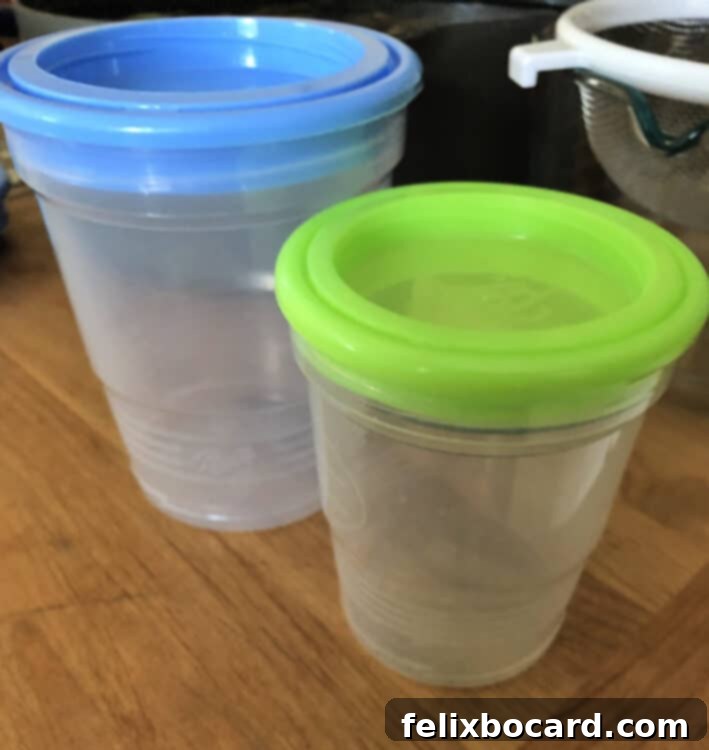
Beyond plastic jars, other excellent freezer-safe options include heavy-duty freezer bags (laid flat to freeze, then stacked), silicone freezer trays (perfect for individual servings or “broth cubes”), or even wide-mouth canning jars specifically labeled as freezer-safe, provided they are not filled to the very top. The key is to choose containers that are robust, have a good seal, and are designed to accommodate the expansion of frozen liquids.
Mastering the Expansion Challenge: Preventing Freezer Breakage
The expansion of liquid when it freezes is a fundamental scientific principle that can wreak havoc on your storage containers if not properly managed. Water expands by about 9% when it turns to ice, and this seemingly small change can exert immense pressure, leading to cracked glass jars or even bulging plastic containers. Early on, I wrestled with this “expansion problem,” often resulting in oddly shaped frozen broth or damaged containers.

Initially, I experimented with leaving the lids loose on containers when placing them in the freezer, hoping to allow for the formation of these “ice sculptures” – the domed expansion at the top. Once fully frozen, I would then attempt to “shave” off the excess ice from the bubble in the middle to get the lid to fit snugly. While this method technically worked, it was undeniably a pain. It was messy, time-consuming, and felt counter-intuitive. My reasoning was, “A quart of broth should be a quart of broth, darn it!” – I didn’t want to underfill my containers and effectively reduce my yield.
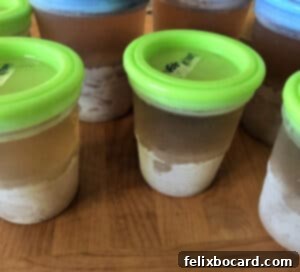
However, through trial and error, I discovered a much more elegant and efficient solution. This method allows for full containers without the risk of breakage or the hassle of post-freezing adjustments. The trick lies in a phased freezing approach. Instead of filling the containers completely in one go, I now fill each freezer-safe container only halfway with the cooled broth. These half-filled containers are then placed in the freezer. The remaining broth is temporarily stored in the refrigerator.
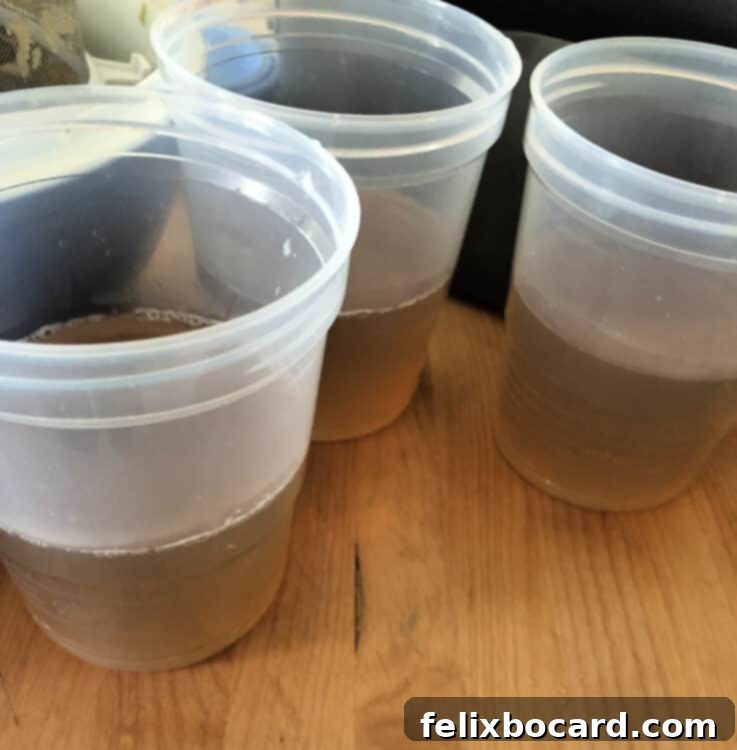
The following day, once the first half of the broth in the freezer containers is solidly frozen, I remove them. The beauty of this is that the frozen block of broth now occupies its maximum expanded volume. I then take the chilled broth from the refrigerator and use it to top off the frozen halves, filling the containers completely. With the second pour, the liquid will fill the remaining space without creating a significant upward expansion because the base is already solid and stable. The containers, now completely full, are then returned to the freezer for final freezing.
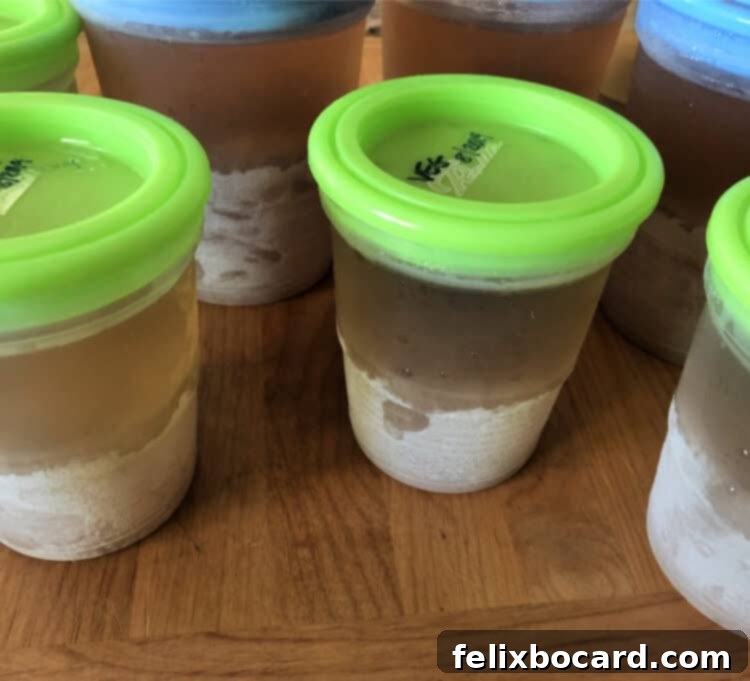
While this method involves a few extra steps and a bit more patience, the results are well worth it. You achieve perfectly full, perfectly shaped containers of broth that are not bursting at the seams, ensuring every drop of your homemade goodness is preserved. For someone who relies heavily on broth for daily cooking, this efficient, cost-effective, and waste-reducing DIY approach is not just a culinary hack – it’s a lifestyle upgrade!
📖 Recipe: Homemade Vegetable Broth

Print Recipe
Vegetable Broth from Scraps
5 mins
1 hr
1 hr 5 mins
Soup Base
Global
5 quarts
Sula
$2
Equipment
- Large Stock Pot (10-12 quart recommended)
- Freezer-safe containers for storage (plastic screw-cap jars, freezer bags, or silicone trays)
- Colander and fine-mesh strainer
Ingredients
- 5-6 cups mixed vegetable scraps (about one gallon freezer bag full: onion ends/peels, carrot peels, celery ends/leaves, bell pepper cores, mushroom stems. Avoid bitter veggies like broccoli, cabbage.)
- 2-3 bay leaves
- Salt and freshly ground black pepper (to taste)
- 5-6 quarts cold water (enough to cover scraps)
- (Optional: a few sprigs of thyme or parsley stems for added aroma)
Instructions
- Place all your accumulated vegetable scraps and bay leaves into the largest stock pot you have.

- Fill the pot with cold water, ensuring the scraps are fully submerged but leaving about an inch or two of space from the top. Bring the water to a boil over high heat. Once boiling, add a teaspoon of salt and a generous grind of black pepper (adjust to your preference). Reduce the heat to a gentle simmer and let it cook for one hour. After one hour, turn off the heat and allow the broth to cool down completely to room temperature.
- Once cooled, begin straining the broth. First, use a slotted spoon to remove all the large vegetable solids and place them in a colander over a bowl to drain any remaining liquid. Then, place a fine-mesh strainer over a large measuring cup or bowl and carefully ladle the broth through it to remove any smaller particles, ensuring a clear broth. Discard or compost the strained solids.
- For freezing, fill your chosen freezer-safe containers (plastic screw-cap jars, freezer bags, or silicone molds) halfway with the cooled broth. Place these in the freezer until solid (usually overnight). Once frozen, remove them from the freezer, top off with the remaining chilled broth from the refrigerator, and return to the freezer for complete freezing. This two-step method prevents container breakage due to liquid expansion.
- Store frozen broth for up to 6 months. Thaw in the refrigerator overnight or use directly in recipes.
Ready for Winter: The Versatility of Your Homemade Broth
There you have it! With your freezer now stocked with homemade vegetable broth, you are exceptionally well-prepared for winter. No more relying on expensive, often bland, store-bought cartons filled with unnecessary additives. You’ve harnessed the power of your kitchen, embraced sustainability, and created a deeply flavorful ingredient from scratch. And if your significant other or anyone else questions your newfound “hobby” in the kitchen, just tell them with a knowing wink, “You know nothing, Jon Snow.” They’ll soon understand when they taste the difference!
The beauty of this homemade broth lies in its incredible versatility. It serves as a superior flavor base for an endless array of dishes, elevating ordinary meals to something truly special. Use it as the liquid component in your grain cooking for enhanced flavor – perfect for making fluffy quinoa or rich brown rice. It’s the quintessential ingredient for transforming simple vegetables into a hearty cheesy potato soup or adding depth to a robust split pea soup. And for a truly satisfying one-pot meal, let your broth be the star in a vibrant minestrone. Beyond soups, think risottos, gravies, sauces, stir-fries, and even deglazing pans for pan sauces. The possibilities are truly limitless, making your homemade vegetable broth an indispensable component of a well-stocked and flavorful kitchen.