
There’s a special kind of magic that happens in the kitchen when you recreate a beloved dish from your favorite restaurant. For me, that magic moment came during the quiet days of the pandemic lockdown, when home cooking became a daily ritual for many, myself included. The craving for the exquisitely thin, delicately sweet fruit crepes from our cherished local breakfast spot became almost irresistible. It was then I realized it was time to unravel the mystery of making these delightful treats myself.
What I discovered was a pleasant surprise: homemade crepes are not only incredibly delicious but also surprisingly fast and easy to prepare. This revelation meant that those irresistible, fruit-filled crepes could be on our breakfast or brunch table whenever the mood struck, without a trip out or a lengthy cooking process. A simple dollop of whipped cream or a drizzle of homemade fruit sauce transforms them into an elegant and satisfying meal, proving that gourmet flavors are well within reach for the home cook.

What Exactly Are Crepes? A Culinary Delight Explained
Originating from the picturesque regions of France, crepes are a culinary staple revered for their delicate texture and incredible versatility. Often described as ultrathin pancakes, they are a testament to simple ingredients coming together to create something truly extraordinary. Unlike their thicker American pancake counterparts, crepes boast a fine, almost translucent consistency, achieved by a batter that’s considerably thinner and cooked quickly over moderate heat.
The basic crepe batter is a harmonious blend of fundamental kitchen staples: flour, eggs, milk, and butter. For sweet crepes, a touch of sugar and vanilla extract is often added, infusing them with a subtle sweetness that complements a wide array of fillings. This simple batter is then poured onto a hot, lightly greased surface – typically a flat griddle or a specialized crepe pan – and swiftly spread into a thin, even circle, cooking within moments.
Crepes hold a unique position in the culinary world, equally at home on a breakfast table as they are in a sophisticated dessert presentation. Their adaptability allows for a spectrum of fillings, catering to every palate:
- Sweet Crepes: These are the stars of breakfast, brunch, and dessert. Common fillings include fresh fruits (berries, bananas, sliced peaches), fruit jams or preserves, rich chocolate spreads like Nutella, fluffy whipped cream, or smooth custard. A final flourish of powdered sugar, a drizzle of maple syrup, honey, or a fruit sauce elevates them further. Sweet crepes are perfect for satisfying a sweet tooth or as a delightful start to the day.
- Savory Crepes (Galettes): In Brittany, France, savory crepes are known as “galettes” and are traditionally made with buckwheat flour, which imparts a distinctive earthy flavor and a slightly crisper texture. These can be filled with an array of savory ingredients, transforming them into a light meal or appetizer. Popular choices include melted cheese, savory ham, fried or scrambled eggs, fresh spinach, sautéed mushrooms, or luxurious smoked salmon with a dollop of crème fraîche.
Whether you prefer them sweet and decadent or savory and satisfying, crepes offer an elegant yet simple canvas for a multitude of flavors. Their delicate nature makes them feel like a special treat, despite their straightforward preparation.
The Unmatched Joy and Benefits of Homemade Crepes
While the allure of restaurant crepes is undeniable, there’s a profound satisfaction that comes from mastering them in your own kitchen. Opting for homemade crepes offers a plethora of benefits that go beyond just convenience:
- Unbeatable Freshness: Nothing compares to the taste and aroma of crepes made fresh, right before your eyes. The delicate texture and warm, inviting scent are simply unparalleled.
- Complete Customization: When you make crepes at home, you’re the chef in charge. You can adjust the sweetness of the batter, choose organic or locally sourced ingredients, and, most excitingly, experiment with an endless variety of fillings and toppings to suit every dietary preference and flavor craving.
- Cost-Effectiveness: Crepes are made from incredibly inexpensive, basic pantry staples. Preparing them at home is significantly more economical than purchasing them from a cafe or restaurant, especially when feeding a crowd.
- A Fun and Rewarding Culinary Experience: The process of whisking the batter, swirling it in the pan, and watching each crepe achieve its perfect golden hue is immensely satisfying. It’s a culinary skill that feels impressive to master, yet is surprisingly accessible. It’s also a fantastic activity to do with family, creating delicious memories together.
- Versatility for Any Occasion: From a quick weekday breakfast to an elaborate weekend brunch or an elegant dessert, homemade crepes fit seamlessly into any meal plan. Their simple elegance makes them suitable for both casual family gatherings and special occasions.
Embracing the art of homemade crepes means embracing flavor, freshness, and the pure joy of creating something truly delicious from scratch.
Essential Ingredients for Perfect Crepes
At its heart, a crepe is a refined version of a pancake, so it’s no surprise that the ingredient list shares many similarities. However, the magic lies in the proportions and the method, which yield a much lighter and thinner result. For our easy fruit crepes, you’ll need just a few simple items, all likely already in your pantry:
- Eggs: These are crucial for binding the batter, adding richness, and providing structure to the delicate crepes. They contribute to the characteristic airy texture.
- Milk: The liquid base that gives crepes their signature thinness. Whole milk adds a lovely richness, but you can use lower-fat alternatives or even dairy-free milks for a different profile.
- Butter: Melted butter infuses the batter with a rich, nutty flavor and contributes to the crepes’ tenderness. It also helps prevent sticking and promotes beautiful golden-brown edges.
- All-Purpose Flour: The foundation of the crepe, providing body and structure. Using all-purpose flour keeps the recipe simple and accessible.
- Sugar: A touch of granulated sugar in sweet crepes enhances their flavor, aids in browning, and makes them irresistible. You can adjust the amount to your preference.
- Salt: Just a dash of salt is essential to balance the sweetness and bring out the full flavor of the other ingredients, preventing the crepes from tasting bland.
These humble ingredients, when combined correctly, create a batter that transforms into exquisite crepes, ready to be filled with your favorite fruits and toppings. The beauty of this recipe lies in its simplicity and the quality of its basic components.

Mastering Homemade Crepes: Step-by-Step Guide
The idea of making homemade crepes often conjures images of fancy French cafes and complex culinary techniques. However, I’m here to assure you that crafting perfect crepes at home is far easier than it seems! The key to success lies in two main areas: achieving a perfectly smooth batter and mastering the cooking process. Let’s break it down:
Step 1: Achieving a Silky-Smooth Batter
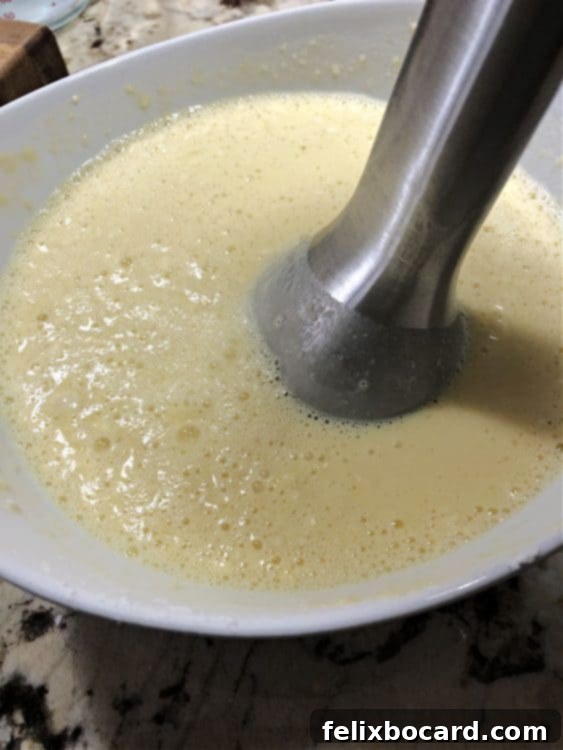
- The very first step, and arguably the most crucial, is ensuring your crepe batter is incredibly smooth, without any unsightly lumps of flour. While vigorous whisking can work, it often feels like an endless task, especially if you’re aiming for that truly velvety consistency.
- My secret weapon for this is an immersion blender. It makes quick work of blending all the ingredients into a perfectly smooth batter in mere seconds. A regular stand blender is equally effective and a fantastic solution for achieving lump-free results. Even a hand mixer can do the trick with a bit more effort.
- The goal is to eliminate any flour lumps. This smoothness is what gives crepes their signature delicate and even texture, preventing them from tearing easily during cooking. Once your batter is smooth, consider letting it rest for at least 15-30 minutes, or even overnight in the refrigerator. This allows the flour to fully hydrate and the gluten to relax, resulting in even more tender and pliable crepes.
Step 2: Cooking Your Crepes to Golden Perfection
- Once your batter is ready, it’s time to cook! Heat a non-stick skillet or a specialized crepe pan over medium heat. While dedicated crepe pans are available, a good quality non-stick skillet works wonderfully and is what I typically use without any issues. The key is to have a reliably non-stick surface to prevent sticking and ensure easy flipping. Lightly grease the pan with a tiny bit of butter or oil – just enough to coat it, as too much grease can make your crepes greasy.
- Pour approximately ¼ cup of batter into the center of your hot pan. Immediately, and swiftly, lift and tilt the pan in a circular motion to allow the batter to spread thinly and evenly across the entire surface. This quick swirling action is essential for achieving the characteristic thinness of a crepe.
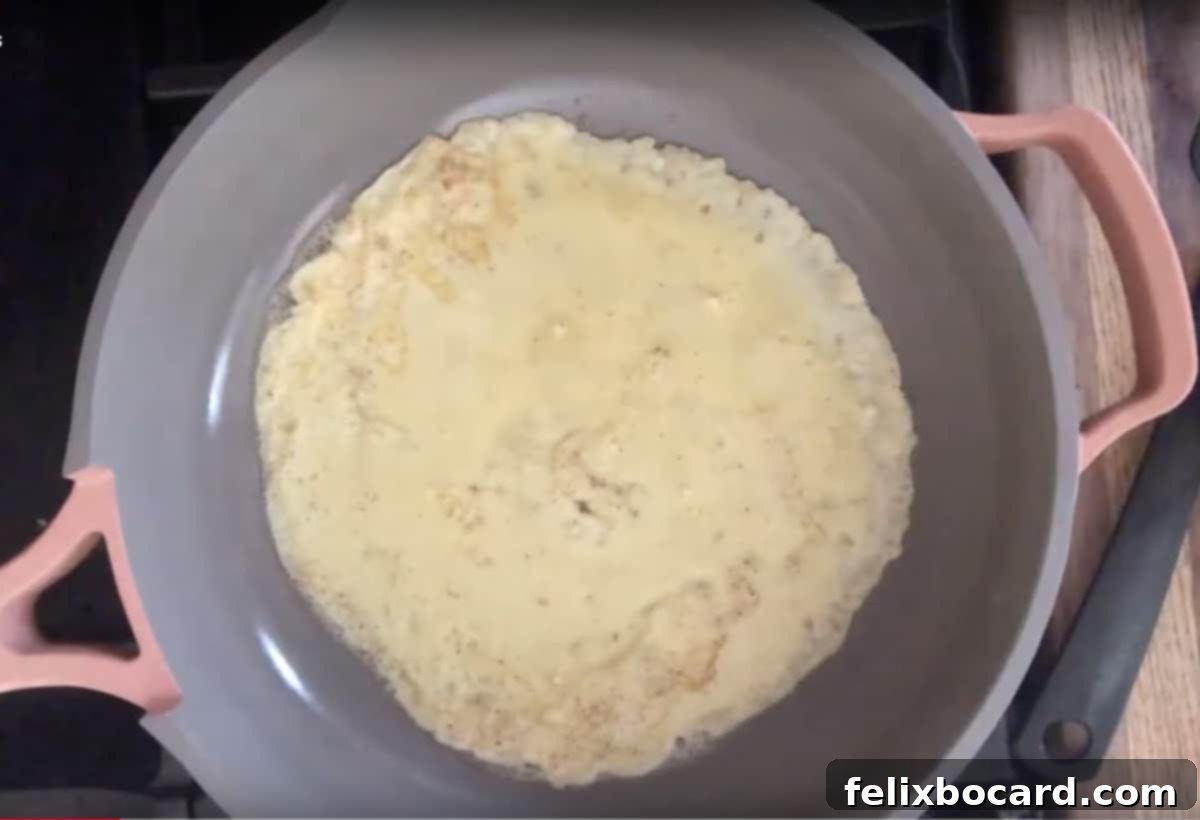
- Allow the crepe to cook for 1 to 2 minutes on the first side. You’ll know it’s ready to flip when the edges begin to look dry and slightly crispy, and the surface shows tiny bubbles. Keep a close eye on these edges – I personally love a slightly crispy edge, so I cook them until they’re a beautiful golden brown. If you prefer a completely soft crepe, you might reduce the cooking time slightly.
- Using a spatula, carefully slide it under the crepe and gently flip it over. Cook the second side for another minute or so, until it’s lightly golden. Don’t worry if your first crepe isn’t perfect; consider it a learning curve! It often takes a crepe or two to get the pan temperature and batter distribution just right.
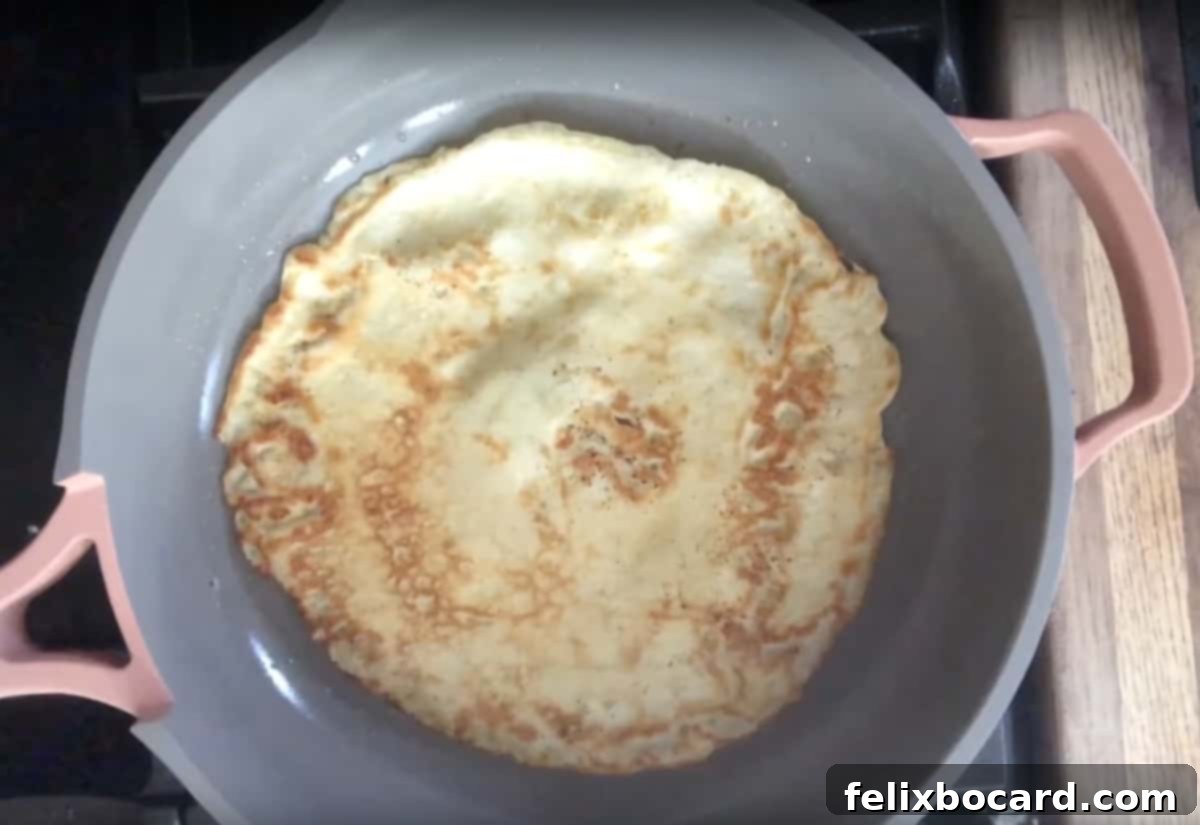
- You might have heard that you need a special “wide” spatula or a dedicated crepe pan for easy flipping. I’m happy to report that this isn’t necessarily true! With a good non-stick surface and a regular spatula, I’ve had absolutely no difficulty flipping these delicate crepes, especially with those slightly crispier edges providing a bit more structure. Don’t let specialized equipment be a barrier to enjoying homemade crepes!
The Art of Filling Fruit Crepes: Creative Combinations
Once your beautiful, golden crepes are cooked, the real fun begins: filling them! For these delightful fruit crepes, fresh fruit is, of course, the star. We adore a vibrant mix of berries (strawberries, blueberries, raspberries) and sliced bananas, but this is your culinary canvas – feel free to choose your favorite fruits or whatever is in season.
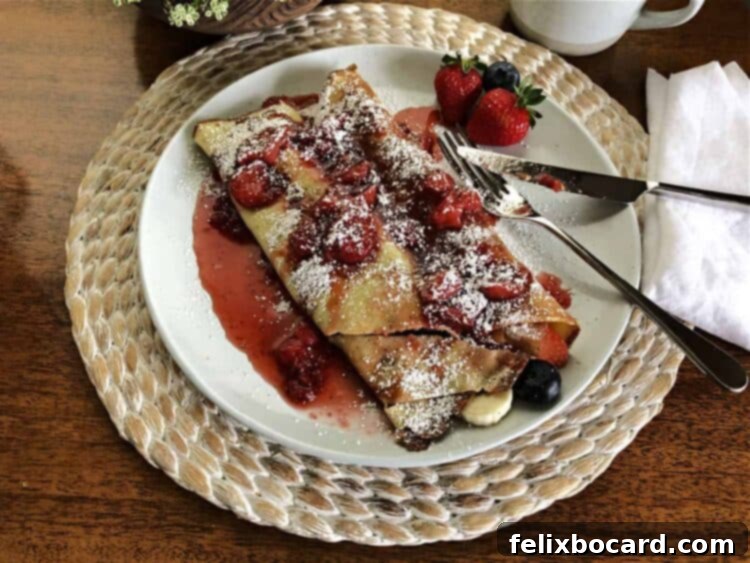
To fill, simply arrange a line of your chosen fruit down the middle of each crepe. Then, gently roll it up, creating a neat, elegant parcel. For an extra touch of indulgence and visual appeal, consider making a simple homemade berry sauce. Spoon some warm sauce generously over the rolled crepes, and finish with a delicate dusting of powdered sugar. The combination of tender crepe, fresh fruit, luscious sauce, and a hint of sweetness is simply divine.
But don’t stop there! The possibilities for fruit crepe fillings are truly endless. Imagine:
- Tropical Twist: Sliced mango, pineapple, and a sprinkle of shredded coconut.
- Citrus Burst: Orange segments, grapefruit, and a light lemon glaze.
- Apple Cinnamon Delight: Sautéed apple slices with cinnamon and a drizzle of caramel.
- Mixed Berry Medley: A colorful assortment of fresh raspberries, blackberries, and blueberries.
Each bite promises a burst of fresh flavor and a delightful texture, transforming your breakfast or dessert into an experience that will easily rival any restaurant creation. Get creative and enjoy the process of crafting your perfect fruit crepes!



Pro Tips for Making Perfectly Easy Crepes Every Time
While making crepes is indeed simple, a few expert tips can elevate your homemade creations from good to absolutely perfect. Pay attention to these details, and you’ll be flipping crepes like a seasoned pro:
- The Power of Batter Consistency: This is paramount! Your crepe batter should be thin, pourable, and completely lump-free. If it’s too thick, your crepes will resemble pancakes. If it’s too thin, they might tear easily. A good rule of thumb is that the batter should coat the back of a spoon lightly. As mentioned, an immersion blender or a regular blender is your best friend for achieving this silky-smooth texture effortlessly. If, after blending and resting, your batter seems too thick, add a teaspoon or two of milk or water until it reaches the desired pourable consistency.
- Don’t Skip the Rest: After mixing, let your batter rest for at least 15-30 minutes at room temperature, or even overnight in the refrigerator. This resting period allows the flour to fully hydrate, resulting in a more tender crepe texture and preventing a rubbery feel. It also allows any air bubbles created during blending to dissipate, leading to smoother crepes.
- Finding Your Perfect Heat Setting: The ideal cooking temperature is crucial and can vary slightly depending on your stove and pan. Start with medium heat. For the first side, aim for 1 to 2 minutes, looking for golden-brown edges and a set top surface before flipping. The second side usually cooks faster, often within 30 seconds to a minute. Don’t be discouraged if your very first crepe isn’t perfect; it’s often a test run to adjust the heat and batter quantity. Consider it a chef’s treat!
- Minimal Greasing is Key: Crepe pans or good non-stick skillets don’t require much grease. Too much oil can make your crepes greasy and prevent even browning. A small pat of butter or a tiny brush of oil for the first crepe, and then perhaps every few crepes, is usually sufficient. I find it helpful to remove each cooked crepe to a piece of paper towel momentarily. This gentle blot helps absorb any excess grease or moisture, preventing the crepes from becoming soggy as they stack. After a brief blot, immediately transfer, fill, and roll.
- Stacking and Storing Cooked Crepes: As you cook your crepes, stack them on a plate. If you want to keep them warm, you can place the plate over a pot of simmering water or cover it loosely with foil and place it in a very low oven (around 170°F / 75°C).
- Embrace Imperfection: Homemade crepes are rustic and charming. Don’t stress about every single one being a perfect circle. The slight variations in shape or color add to their homemade appeal!
With these tips in mind, you’re well on your way to creating a batch of delicious, easy crepes that will impress everyone at your table.
Troubleshooting Common Crepe Problems
Even with the best instructions, cooking can sometimes present little challenges. Here are some common crepe-making dilemmas and how to easily fix them:
- Crepes Sticking to the Pan:
- Possible Cause: Not enough grease, or your pan isn’t truly non-stick anymore.
- Solution: Ensure your pan is properly seasoned if it’s cast iron, or use a good quality non-stick pan. Lightly grease the pan with butter or oil between each crepe, or at least every few crepes. Make sure the pan is hot enough before pouring the batter.
- Crepes Tearing When Flipping:
- Possible Cause: Batter is too thin, crepe is undercooked, or pan is not hot enough.
- Solution: If the batter is too thin, add a tablespoon or two of flour and whisk well. Ensure the crepe cooks long enough on the first side (1-2 minutes) until the edges are set and slightly crispy before attempting to flip. Also, confirm your pan is at the correct medium heat.
- Crepes Are Too Thick (More Like Pancakes):
- Possible Cause: Batter is too thick, or too much batter is being poured into the pan.
- Solution: Add a tablespoon of milk or water to your batter at a time until it reaches a very pourable consistency. Also, remember to only use about ¼ cup of batter per crepe and swirl the pan immediately to spread it thinly.
- Crepes Are Pale and Don’t Brown:
- Possible Cause: Pan isn’t hot enough, or not enough sugar in the batter.
- Solution: Increase the heat slightly to medium. Ensure there’s a small amount of sugar in your batter (usually 1-2 tablespoons per recipe) to aid in browning.
- Crepes Are Greasy:
- Possible Cause: Too much oil/butter in the pan.
- Solution: Use a very light hand when greasing. Wipe out excess grease with a paper towel between crepes if necessary. The aim is a thinly coated surface, not a pooled layer of fat.
By understanding these common issues, you can quickly adjust your technique and ensure a successful batch of delicious homemade crepes every single time.
Easy Crepes Recipe Variations: Beyond Fruit
While fruit crepes are undeniably delicious, the beauty of this versatile dish is that the filling possibilities are truly endless, limited only by your imagination. Once you’ve mastered the basic crepe, you can embark on a culinary adventure with these inspiring ideas for both sweet and savory variations:
Sweet Crepe Variations:
- Nutella and Banana: A classic pairing! Spread a generous layer of Nutella, add slices of fresh banana, and roll it up. A sprinkle of chopped nuts adds a lovely crunch.
- Mascarpone and Fresh Fruit: Mix mascarpone cheese with a touch of powdered sugar and vanilla for a creamy, rich filling. Pair it with any fresh berries or stone fruit.
- Whipped Cream Dream: Simple, yet elegant. Fill crepes with freshly whipped cream, perhaps flavored with a hint of vanilla or almond extract. Serve with a scattering of berries or chocolate shavings.
- Sweetened Ricotta Cheese: Combine ricotta cheese with powdered sugar, a dash of vanilla or citrus zest, and a few chocolate chips for a delightful and slightly tangy filling.
- Lemon and Sugar: A traditional French favorite. Simply squeeze fresh lemon juice over a warm crepe and sprinkle with granulated sugar. Simple, bright, and refreshing.
- Jam or Preserves: A quick and easy option. Spread your favorite fruit jam or preserves (strawberry, raspberry, apricot) for a familiar and comforting treat.
- Chocolate Ganache or Sauce: For serious chocolate lovers, a warm chocolate ganache or sauce spread inside, or drizzled over, is pure bliss. Add some fresh raspberries for a touch of tartness.
- Custard or Pastry Cream: Fill with homemade vanilla custard or pastry cream for a truly decadent dessert crepe.
- Ice Cream Sundae Crepes: Serve warm crepes with scoops of your favorite ice cream, topped with hot fudge, caramel, and chopped nuts for an ultimate dessert experience.
Savory Crepe Variations:
Don’t forget the savory side of crepes! These make excellent light lunches, appetizers, or even a unique dinner.
- Ham and Cheese: A classic French “galette complète” style. Fill with sliced ham and your favorite melting cheese (like Gruyere or Swiss). You can even add a fried egg on top.
- Mushroom and Spinach: Sautéed mushrooms and wilted spinach with garlic, perhaps mixed with a creamy cheese like Boursin or goat cheese, make a flavorful vegetarian option.
- Smoked Salmon and Cream Cheese: Spread a thin layer of cream cheese, top with slices of smoked salmon, fresh dill, and a squeeze of lemon juice.
- Chicken and Asparagus with Hollandaise: Cooked shredded chicken and blanched asparagus spears, folded into a crepe and topped with a luxurious hollandaise sauce.
- Ratatouille Crepes: A vibrant vegetable filling inspired by the classic French dish, perfect for a lighter meal.
These variations demonstrate just how adaptable crepes are. Experiment with different combinations to find your new favorite!
Making Ahead and Storing Homemade Crepes (or Batter!)
This recipe yields about 8-10 delicious crepes, which, while perfect for a family breakfast, can be quite a generous amount for just two people. You might be tempted to cook the entire batch and save the leftover crepes for the next day, but based on my experience, reheating pre-cooked crepes often leads to disappointment. The texture tends to suffer, becoming a bit rubbery or dry, losing that delicate freshness that makes crepes so appealing.
My go-to strategy for enjoying fresh crepes multiple days in a row is to **save the extra batter** instead of the cooked crepes. Here’s how to do it effectively:
- Storing Crepe Batter:
- After mixing your batter, simply pour any unused portion into an airtight container or a jar with a tight-fitting lid.
- Refrigerate the batter for up to 2-3 days.
- When you’re ready to cook again, give the batter a good whisk or stir, as the flour might have settled at the bottom. If it appears too thick, add a teaspoon or two of milk or water until it returns to its thin, pourable consistency.
- Cook fresh crepes as usual. This method ensures you get that delicious, tender, freshly made texture every time! And believe me, when I serve crepes two mornings in a row, I never hear a single complaint! 😃
- Storing Cooked Crepes (If You Must):
- If you absolutely need to store cooked crepes, let them cool completely.
- Stack them with a piece of parchment paper or wax paper between each crepe to prevent sticking.
- Wrap the stack tightly in plastic wrap, then place it in an airtight container or a freezer-safe bag.
- Refrigerate for up to 2 days or freeze for up to 1 month.
- To reheat: Gently warm them in a lightly greased non-stick pan over low heat for a few seconds per side, or microwave briefly. Be aware that the texture may not be as delicate as freshly made crepes.
By storing the batter, you ensure that the delightful experience of fresh, tender crepes is always just a few minutes away, making them a perfect make-ahead option for busy mornings or spontaneous cravings.

I truly hope you give these easy fruit crepes a try. They are a wonderful way to elevate your breakfast or brunch and create memorable culinary moments right in your own kitchen!
📖 Easy Fruit Crepes Recipe Card

Print
Pin it!
Fruit Crepes
10
10
20
Breakfast
American
10
120
kcal
Sula
Ingredients
- 4 eggs lightly beaten
- 1 ⅓ cup milk
- 2 Tablespoons butter melted
- 1 cup flour all purpose
- 2 Tablespoons sugar
- Dash salt
Instructions
- In a large bowl, whisk together all ingredients until smooth. (Using an immersion blender or regular blender will ensure a very smooth batter).4 eggs,
1 ⅓ cup milk,
2 Tablespoons butter,
1 cup flour,
2 Tablespoons sugar,
Dash salt - Heat a non-stick skillet or crepe pan over medium heat. Add a small amount of butter or oil to lightly grease the pan. Spoon about ¼ cup of batter into the hot pan, and immediately tilt and swirl the pan to evenly spread the batter into a thin circle.
- Cook over medium heat for 1 to 2 minutes on the first side, or until the edges are golden brown and the surface looks set. Carefully flip the crepe with a spatula and cook for another 30 seconds to 1 minute, or until lightly golden.
- Fill with cut-up fresh fruit, roll up, and top with fruit sauce and powdered sugar, as desired. Serve immediately.
Video
Notes
Nutrition estimates are for a single plain crepe only, and do not include any filling or toppings.
Nutrition
Calories:
120
kcal
|
Carbohydrates:
14
g
|
Protein:
5
g
|
Fat:
5
g
|
Saturated Fat:
3
g
|
Cholesterol:
75
mg
|
Sodium:
59
mg
|
Potassium:
81
mg
|
Fiber:
1
g
|
Sugar:
4
g
|
Vitamin A:
218
IU
|
Calcium:
48
mg
|
Iron:
1
mg
Nutrition values are estimates only, using online calculators. Please verify using your own data.
If you’ve enjoyed these wonderful fruit crepes, I highly recommend exploring other delightful breakfast options like learning how to make a Dutch Baby or delicious, fluffy pancakes from scratch. Each recipe promises to help you create cherished breakfast memories!