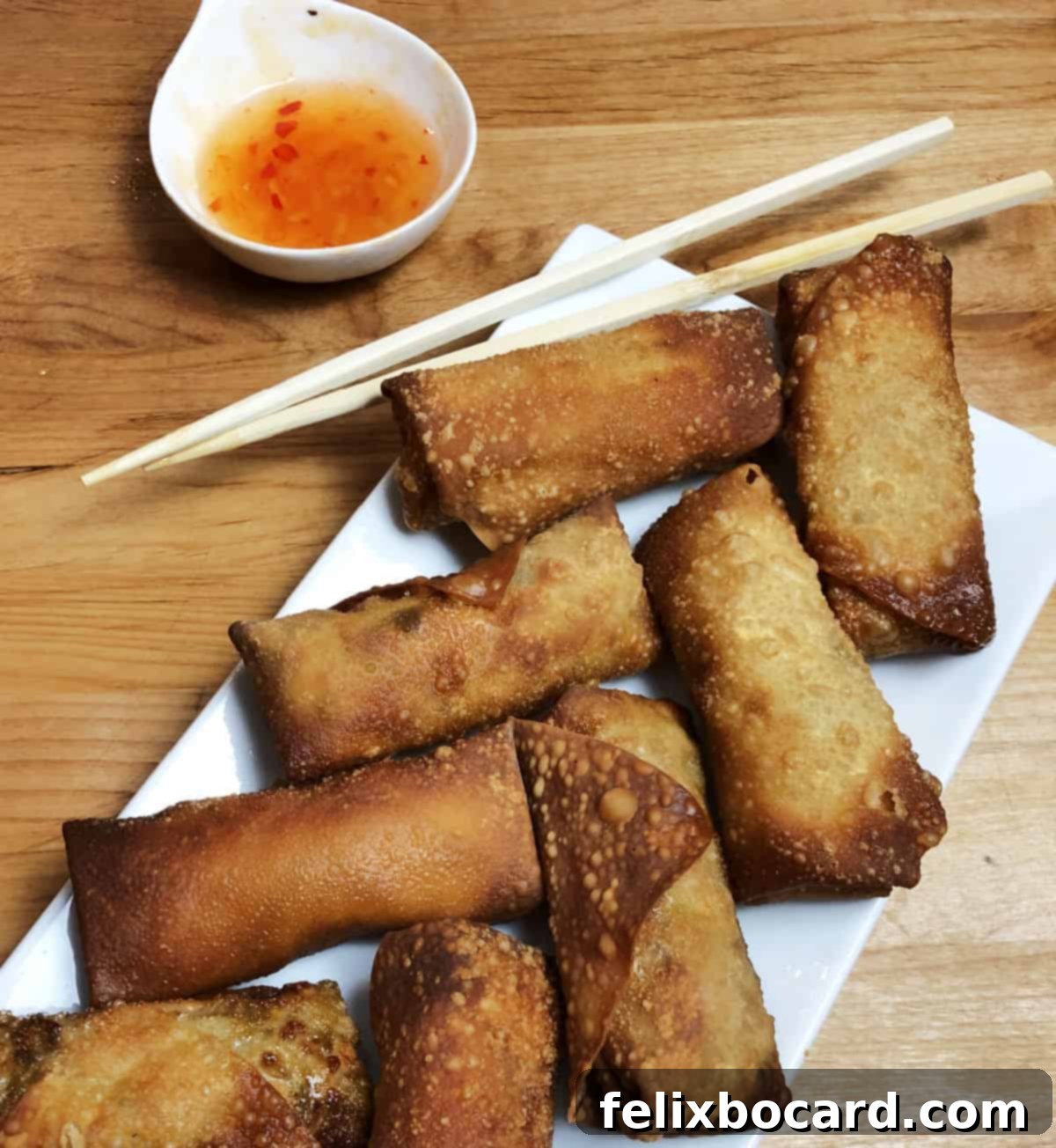
Have you ever thought about making egg rolls at home, or do you typically save them for those special restaurant visits? What if I told you that crafting your own crispy, flavorful egg rolls is not only simple but incredibly rewarding? For decades, I’ve refined my homemade egg roll technique, transforming a once daunting task into an enjoyable culinary adventure. Now, I’m thrilled to share all my accumulated wisdom, ensuring you can achieve perfectly golden, crunchy egg rolls right in your own kitchen.
And for those who dread the idea of deep-frying or don’t own a dedicated deep fryer, fear not! I’ll walk you through my tried-and-true method for frying these delights in a regular saucepan, guaranteeing consistently crispy results every single time without the need for specialized equipment.
Why Make Homemade Egg Rolls? Discover the Unbeatable Benefits
Making egg rolls from scratch might seem like a project, but the benefits far outweigh the effort. Homemade egg rolls offer unparalleled freshness, allowing you to control every ingredient for a healthier and more personalized meal. You can customize the filling to suit your taste, dietary needs, or what you have on hand, ensuring a perfect bite every time. Beyond the incredible flavor, there’s immense satisfaction in preparing a dish often considered restaurant-exclusive. Plus, it’s often more economical than ordering takeout, and you can make larger batches to enjoy later!
Essential Ingredients for Your Homemade Egg Rolls Recipe
Creating delicious homemade egg rolls starts with a selection of fresh, high-quality ingredients. My recipe focuses on classic flavors, but many components are highly adaptable to your preferences. Here’s what you’ll need to get started on your journey to the perfect crispy exterior and savory interior:
- Chicken breast
- Sherry
- Salt
- Cornstarch
- Celery
- Bean sprouts
- Lettuce
- Sugar
- Egg roll wrappers
- Peanut oil (or other neutral frying oil)
Step-by-Step Guide: How to Craft Homemade Egg Rolls
Step 1: Preparing the Flavorful Filling
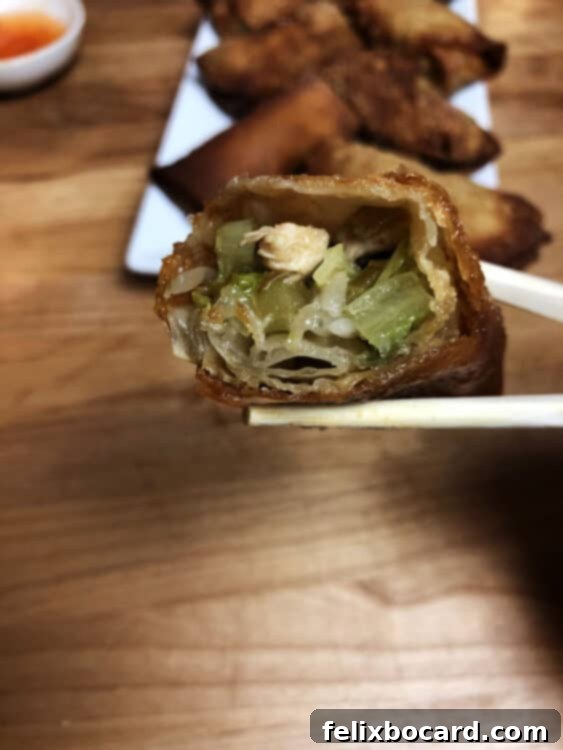
The heart of any great egg roll lies in its filling, and this recipe provides a fantastic foundation that’s incredibly versatile. While you can certainly get creative with substitutions, I find both celery and fresh bean sprouts to be crucial for achieving that authentic texture. Bean sprouts, in particular, lend a distinctive crunch that truly elevates the egg roll experience. I always make an effort to find fresh bean sprouts; their crispness is simply irreplaceable. In desperate times, I’ve even resorted to canned bean sprouts (gasp!), but fresh is always superior for that vibrant snap.
Begin by preparing your protein. Dice the chicken breast into small, manageable pieces. In a small bowl, combine the diced chicken with a teaspoon of sherry, a teaspoon of salt, and half a teaspoon of cornstarch. This marinade not only infuses the chicken with flavor but also tenderizes it and helps it retain moisture during cooking. Allow the chicken to marinate for at least 15 minutes while you prepare the other ingredients.
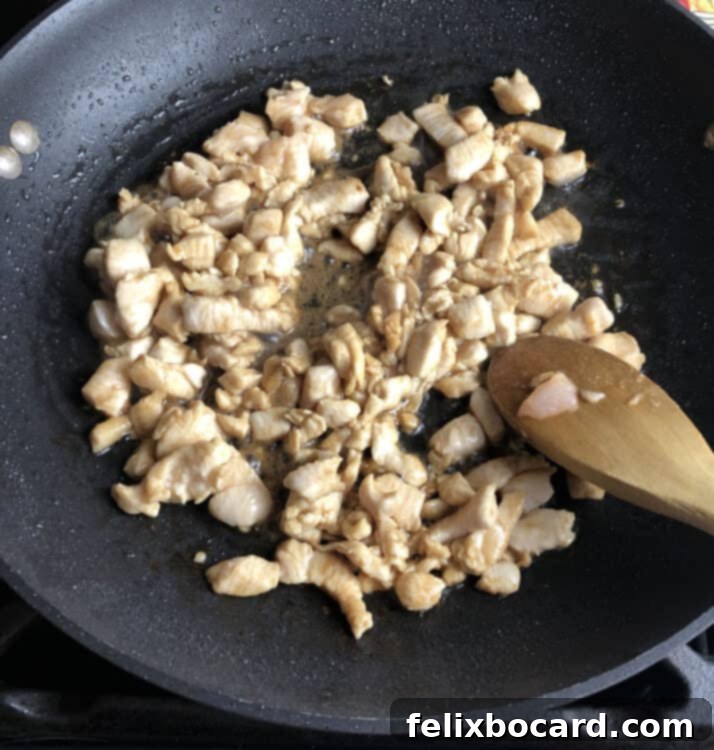
Next, heat about one tablespoon of peanut oil (or your preferred neutral oil) in a large skillet or wok over medium-high heat. Once the oil is shimmering, add the marinated chicken and stir-fry for 3-4 minutes, or until it’s fully cooked through and lightly browned. Remove the cooked chicken from the pan and transfer it to a medium-sized mixing bowl, setting it aside.
Add another three tablespoons of oil to the same pan. Once hot, add the chopped celery. Stir-fry the celery for 2-3 minutes until it starts to soften slightly but still retains a bite. Then, add half a teaspoon of sugar and one tablespoon of water to the pan. Cover the skillet and allow the celery to steam for about one minute. This step helps to further tenderize the celery without overcooking it, concentrating its flavor.
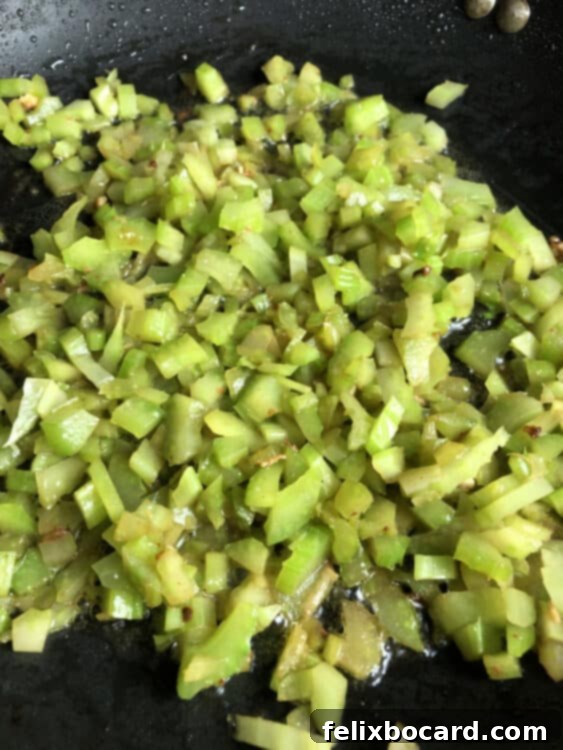
After steaming, uncover the pan and continue to stir-fry briefly until any remaining liquid has evaporated. This ensures your filling isn’t too wet, which could lead to soggy egg rolls. Remove the cooked celery from the heat and add it to the bowl with the chicken.
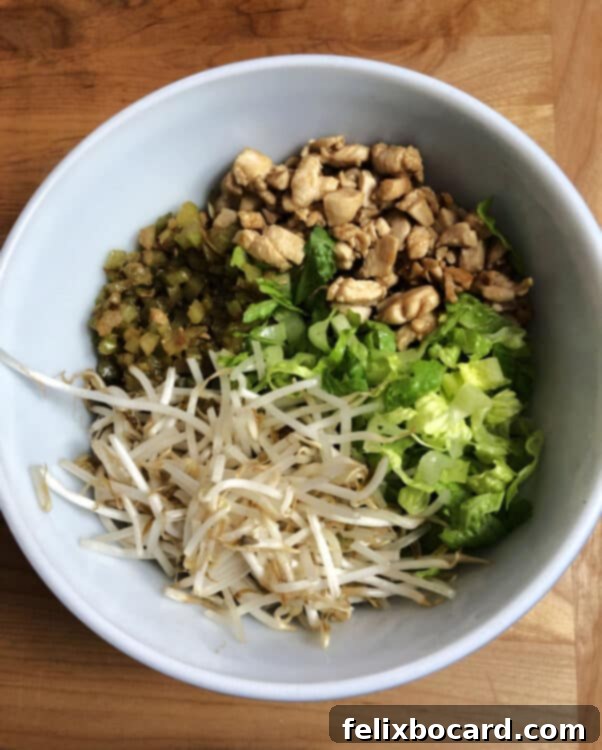
Finally, incorporate the remaining fresh ingredients: the bean sprouts (typically ½ to 1 cup, depending on your preference for crunch) and about 1 cup of shredded lettuce. Add these to the chicken and celery mixture while it’s still warm. The residual heat will slightly wilt the lettuce and bean sprouts, helping them integrate without losing their freshness and crunch.
Mix all the filling ingredients thoroughly. It’s crucial to allow the filling to cool completely before you begin rolling your egg rolls. A cool filling prevents the wrappers from becoming prematurely soggy or tearing during the rolling process. Set it aside, perhaps in the refrigerator, to ensure it’s perfectly chilled and ready.
Unleash Your Creativity: What Ingredients Can You Substitute in Your Egg Roll Filling?
The beauty of homemade egg rolls lies in their adaptability. While my recipe offers a delicious starting point, feel free to explore a wide array of substitutions to match your taste or dietary needs. The original recipe I learned used baby shrimp, but I found chicken breast to be a fantastic alternative. If you’re a fan of a meatier egg roll, don’t hesitate to double the chicken quantity. For other protein options, finely ground pork or chicken are incredibly popular choices, offering a rich flavor and tender texture. If you’re looking for a delightful seafood twist, shrimp (especially small, pre-cooked frozen shrimp or diced larger cooked shrimp) makes an excellent addition.
For vegetarian or vegan alternatives, scrambled egg can add a wonderful richness, while firm or extra-firm tofu works exceptionally well. When using tofu, I highly recommend pressing out excess water and seasoning it with a dash of soy sauce and/or toasted sesame oil to boost its savory profile. While some appreciate tofu’s subtle taste, others (and I’m not pointing fingers!) might prefer it with a little extra zest.
To amp up the crunch factor, consider chopping up some water chestnuts and adding them alongside the bean sprouts. Their crisp texture and mild flavor complement the other ingredients beautifully. When it comes to lettuce, almost any variety will work. My initial lessons even utilized simple iceberg lettuce. However, I often opt for shredded romaine for its slightly firmer texture. Cabbage is another fantastic choice; Chinese cabbage or Bok choy are particularly great. Since cabbage is tougher, it’s best to add it to the skillet towards the end of the stir-frying process, cooking it for just a minute or so until it’s slightly tender yet still wonderfully crunchy.
Regarding the sugar: a small amount is specified in many traditional recipes. I’ve often pondered its role, but it does contribute a subtle balance of flavor. If you prefer to omit it for a less sweet profile, feel free to do so. The versatility of this recipe means you can truly make it your own!
Step 2: Mastering the Art of Rolling Egg Rolls
Perfectly rolled egg rolls are not just about aesthetics; a well-sealed roll ensures the filling stays intact and prevents oil from seeping in during frying, leading to a crispier, more enjoyable result. Before you begin, have a small bowl of water nearby. This water will act as your “glue” to moisten the edges of the egg roll wrappers, ensuring they stick together securely.
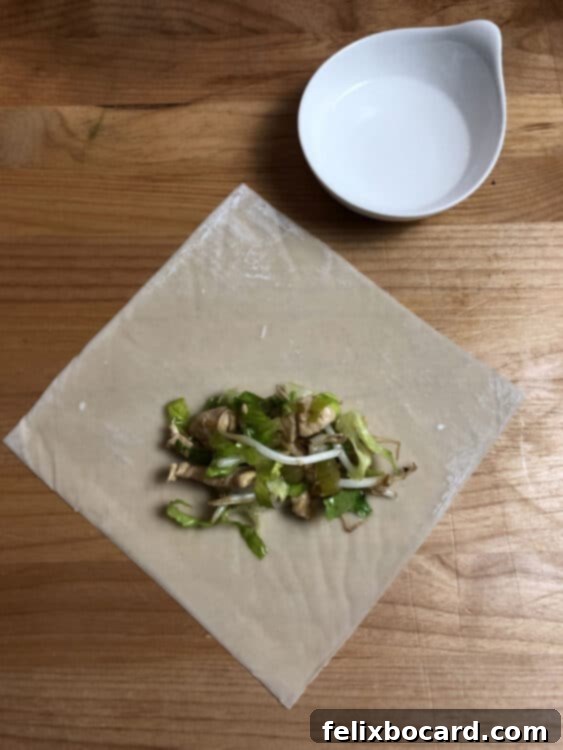
Lay a single egg roll wrapper on a clean, dry surface, orienting it like a diamond with one point facing directly towards you. Place approximately 1 to 2 tablespoons of the cooled filling onto the center of the wrapper, forming a compact log shape. Avoid overfilling, as this can make rolling difficult and lead to torn wrappers.
Take the pointed edge of the wrapper closest to you and fold it tightly over the top of the filling. Tuck the wrapper snugly around the filling, creating a firm base. This initial tight fold is crucial for a compact roll.
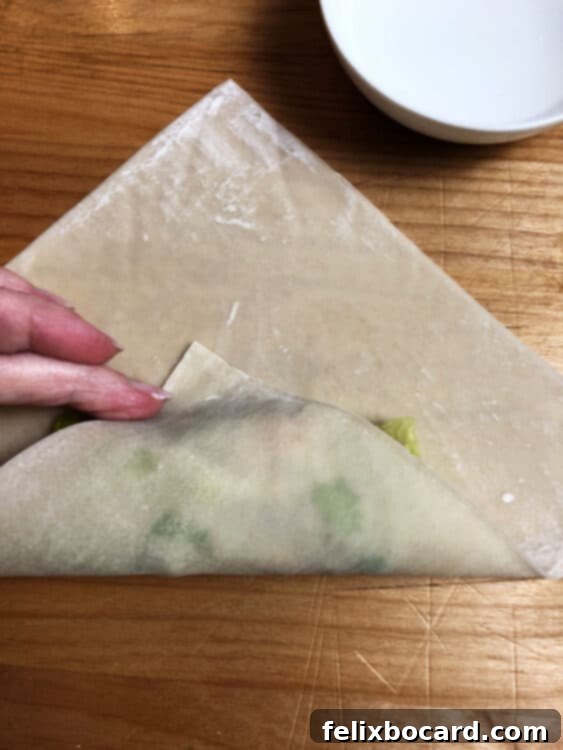
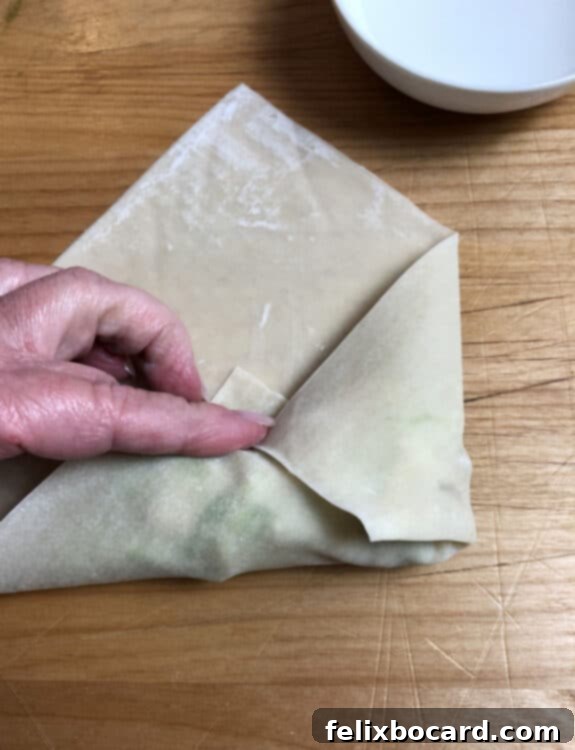
Next, bring each side point of the wrapper towards the center, one at a time, folding them inward to enclose the filling. Ensure these folds are also snug against the filling to create a neat, square-like shape.
Your egg roll should now resemble a semi-rolled package, with the filling mostly enclosed and only the top point of the diamond shape remaining unfolded. This technique is similar to wrapping a burrito, ensuring all sides are secured.
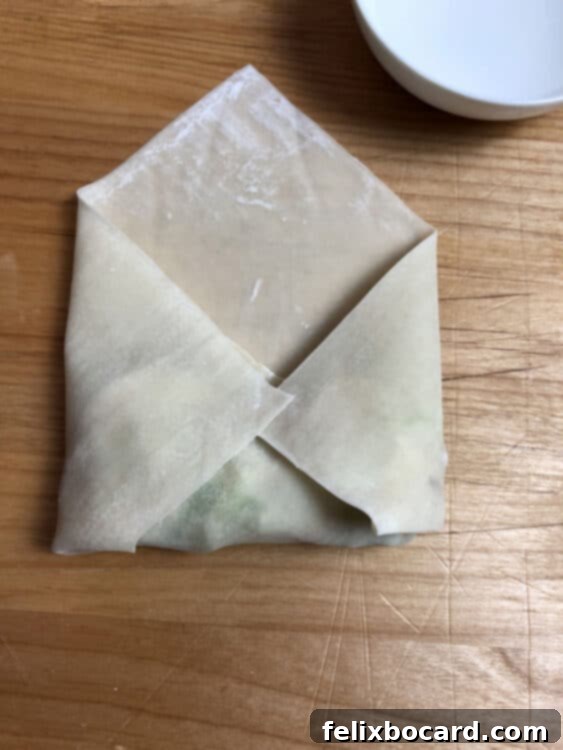
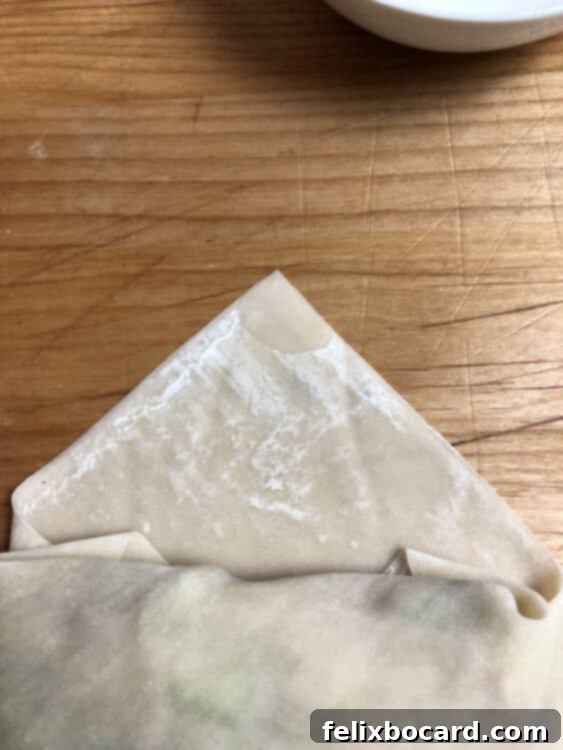
For the final seal, dip your finger into the small bowl of water and lightly moisten the remaining top point of the wrapper. This creates a sticky surface that will adhere to the rest of the wrapper.
Now, simply roll the egg roll forward, away from you, towards the moistened tip. Maintain gentle, even pressure to keep the roll tight and uniform.
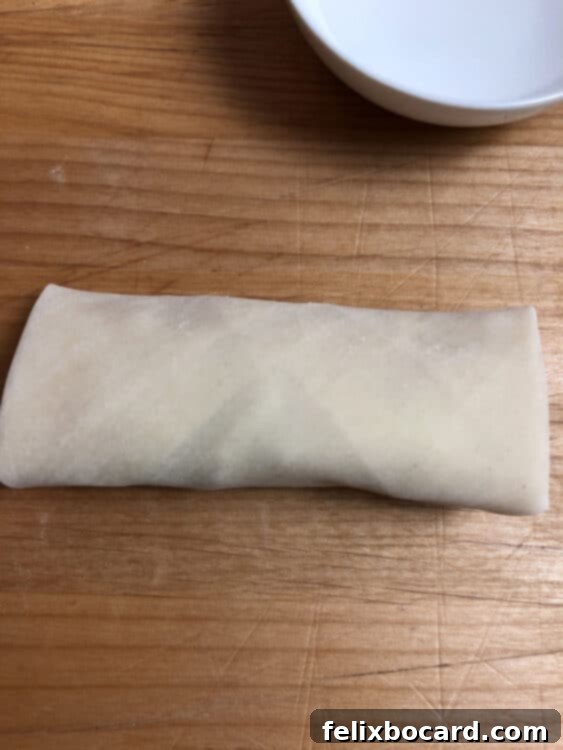
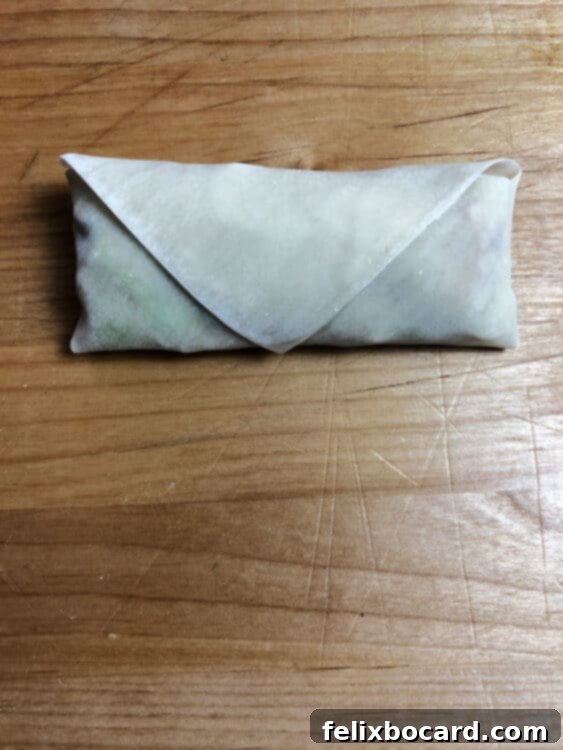
As the wrapper dough meets the wet edge, the two sections will firmly stick together, creating a perfectly sealed egg roll. Place the finished egg roll on a plate with the sealed seam facing down to help it set.
Continue this process with the remaining filling and wrappers until you have enough egg rolls. If you happen to have leftover filling, don’t let it go to waste! It’s delicious on its own or can be repurposed into a quick and easy egg roll in a bowl. As a helpful note, if your filling seems particularly juicy, line your plate with a paper towel before placing the wrapped rolls. This will absorb any excess moisture, preventing the wrappers from sticking to the plate and making them easier to handle for frying.
Step 3: Achieving Golden Perfection – Frying Your Egg Rolls
Let’s be honest: for truly authentic, incredibly crispy egg rolls, deep-frying is the gold standard. While the filling itself is quite healthy, this is where we embrace a little indulgence for that satisfying crunch! If you’re fortunate enough to own a deep fryer, now is its time to shine. For those of us without one, myself included for decades, a simple saucepan works wonders.
Here’s my proven method for deep-frying egg rolls in a saucepan, delivering perfectly crispy results every time:
Choose a saucepan with deep sides to minimize splatter and accommodate enough oil. Pour in at least 1 ½ inches of peanut oil (or canola, vegetable, or any other neutral oil with a high smoke point). A smaller saucepan will require less oil, but you’ll likely be limited to frying only 3-4 egg rolls at a time. Consider this trade-off between oil quantity and batch size before you start.
Heat the oil over medium-high heat. Determining the right temperature is key. You can test it by carefully flicking a tiny drop of water into the oil. If the oil is ready, it will “pop” and sizzle vigorously. Alternatively, a small piece of wrapper or filling dropped into the oil should immediately bubble and float to the surface. The ideal temperature is usually around 350-375°F (175-190°C).
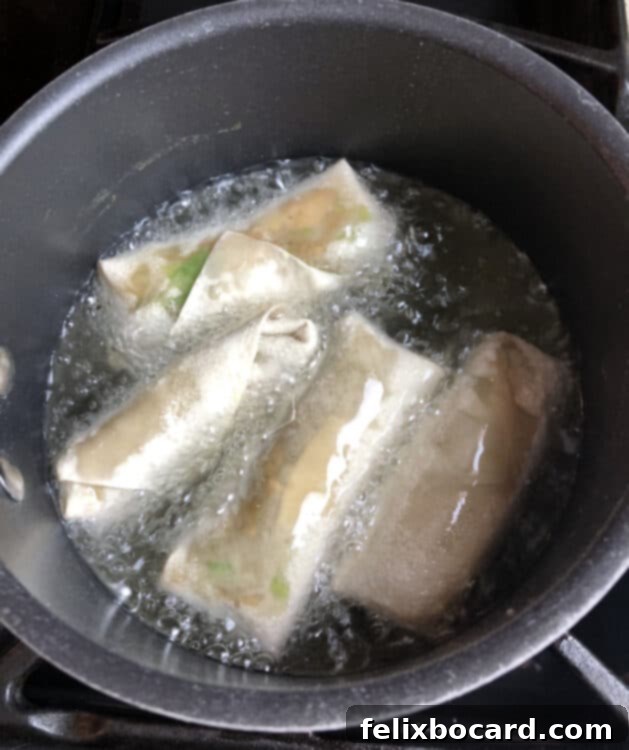
Carefully place the egg rolls into the hot oil, ensuring there’s a small amount of space between each one to allow for even cooking. Overcrowding the pan will lower the oil temperature and result in greasy, less crispy egg rolls. Work in batches as needed.
Exercise extreme caution during this step! Sometimes, moisture from the filling can leak out and cause the hot oil to splatter. If splattering occurs, you can partially cover the pan with a lid to contain it, but never seal it completely as this can trap steam and lead to more aggressive splattering. Use a splatter guard if you have one.
The egg rolls will float as they cook. Fry them for about 2 minutes on one side, or until they turn a beautiful, crispy golden brown. The real trick is getting all sides to brown evenly, especially in a shallow pan where they might not be fully submerged.
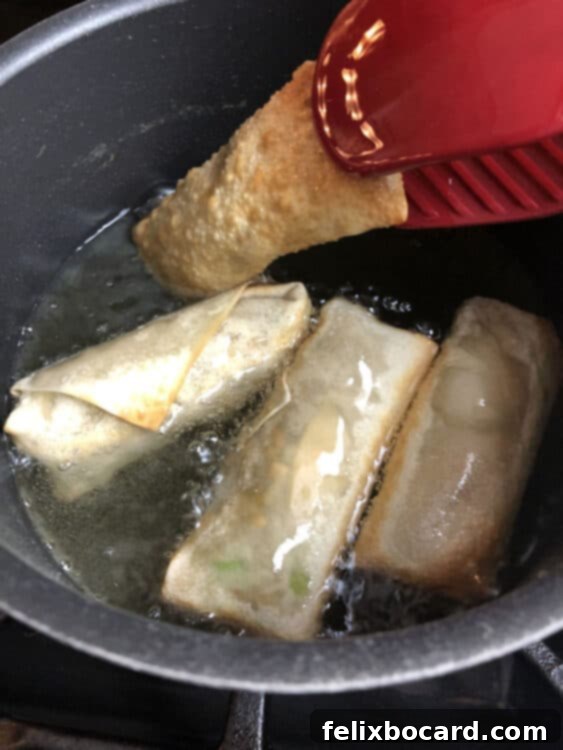
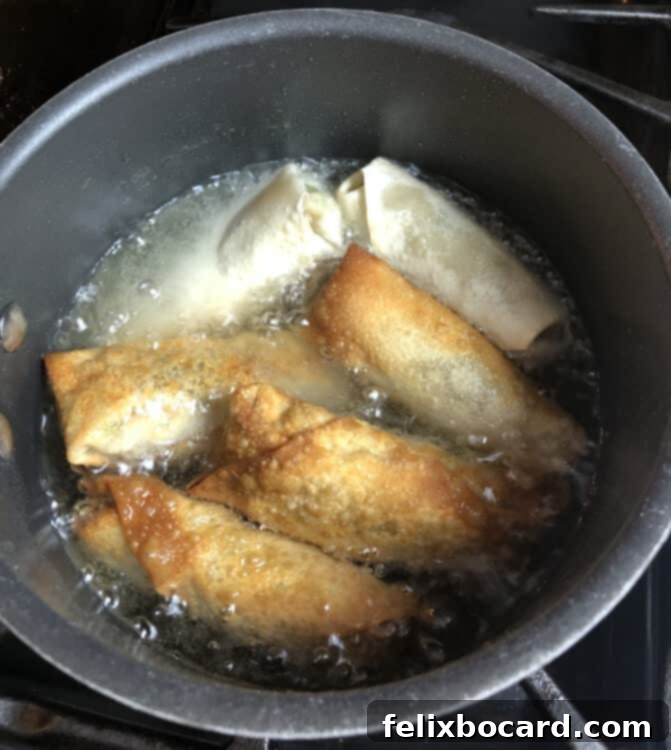
Using tongs, carefully turn the egg rolls to brown the other sides. If they are stubbornly refusing to stay turned, a clever trick is to wedge a couple of uncooked egg rolls into the pot. Their weight and positioning can help prop up the ones you’re trying to brown, ensuring all sides get that perfect golden crispness. Continue frying, turning occasionally, until all sides are evenly browned and crispy, typically another 2-3 minutes.
Once the egg rolls are thoroughly browned and cooked to crispy perfection, remove them from the oil using tongs or a spider strainer. Transfer them immediately to a plate lined with several layers of paper towels. This allows the excess oil to drain away, ensuring your egg rolls remain delightfully crispy and not greasy. Let them cool for a few minutes before serving, as the filling will be extremely hot.
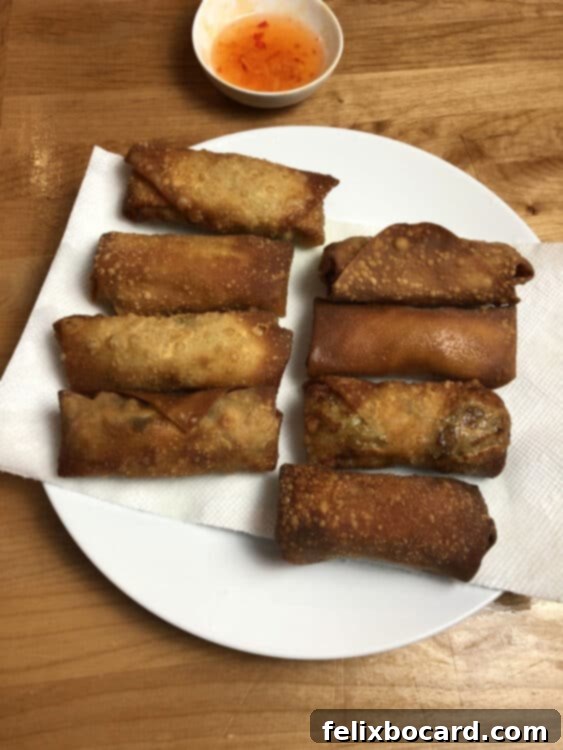
Repeat this frying process with the remaining batches of egg rolls until they are all cooked.
Chicken Egg Roll Recipe Variations: Get Creative with Your Fillings
One of the most exciting aspects of making homemade egg rolls is the endless potential for customization. While our classic chicken filling is undeniably delicious, feel free to get adventurous and experiment with different ingredients to create your unique flavor profiles. Here are a few exciting variations to inspire your culinary exploration:
- **Savory Ground Pork:** Swapping the chicken for finely ground pork is a traditional and incredibly delicious choice. Pork brings a rich, savory depth that pairs wonderfully with the crisp wrapper and fresh vegetables. You can season it similarly to the chicken, or add a dash of five-spice powder for an extra layer of authentic Asian flavor.
- **Delectable Shrimp:** For a fantastic seafood egg roll, shrimp is an excellent protein. Look for packages of small, frozen cooked shrimp, which can be easily thawed and added to your filling. If you have larger shrimp, simply dice them into smaller pieces before incorporating. The delicate sweetness of shrimp is a delightful contrast to the other savory ingredients.
- **Vegetarian Delight with Tofu or Egg:** If you’re looking for a meat-free option, firm or extra-firm tofu, crumbled and seasoned, creates a satisfying texture. Alternatively, scrambled eggs can add a fluffy, rich element to your vegetarian egg rolls. Ensure your tofu is well-pressed to remove excess moisture for the best texture.
- **Exotic Game Meat:** For those feeling truly adventurous, I once used pheasant in place of chicken, and the results were magnificent! Don’t hesitate to experiment with other lean game meats if you have access to them and are looking for a unique gourmet twist.
- **Spice It Up:** Add a pinch of red pepper flakes or a dash of sriracha to your filling for a fiery kick.
- **Mushroom Medley:** Sautéed shiitake or cremini mushrooms, finely chopped, can add an umami depth and earthy flavor to any filling.
- **Nutty Crunch:** A tablespoon of finely chopped peanuts or cashews can introduce a lovely texture and nutty flavor to your filling.
Can You Bake Egg Rolls for a Lighter Option?
Absolutely! If you’re seeking a lighter alternative to traditional frying, baking egg rolls is a great option. While they won’t achieve the exact same deep-fried crispiness, they will still be incredibly flavorful and satisfying. To bake them, assemble your egg rolls as usual. Then, lightly brush each one with a neutral oil, such as peanut or canola oil; this is key to helping them crisp up in the oven. Place them on a baking sheet lined with parchment paper to prevent sticking. Bake in a preheated oven at 400°F (200°C) for 15 to 20 minutes, flipping them halfway through to ensure even browning on both sides. For an even crispier, faster bake, an air fryer works exceptionally well, typically requiring 8-12 minutes at 375°F (190°C).
Serving Your Delicious Homemade Chicken Egg Rolls
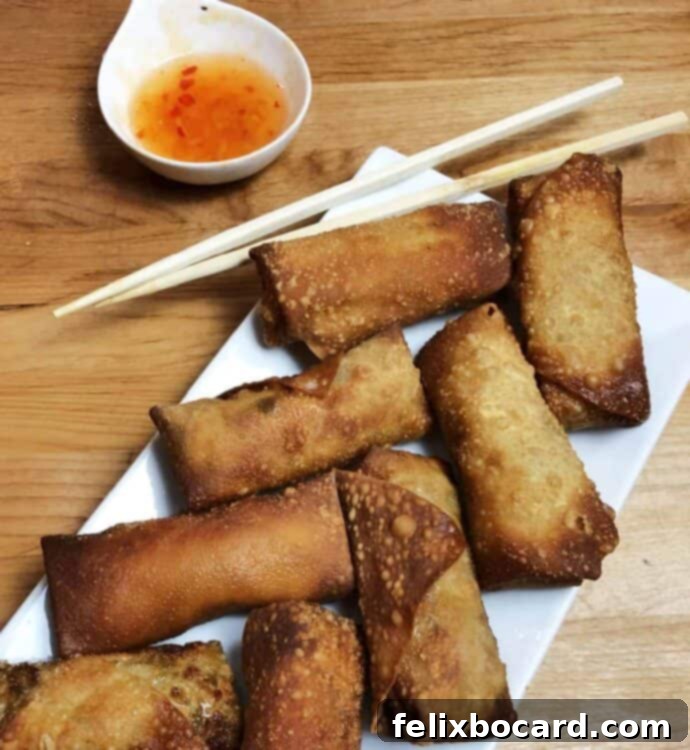
Once your egg rolls emerge golden and crispy from the fryer or oven, remember that they will be incredibly hot! Allow them to cool for a few minutes on the paper towel-lined plate before serving. This brief cooling period not only makes them safe to handle but also allows the internal heat to settle, intensifying the flavors.
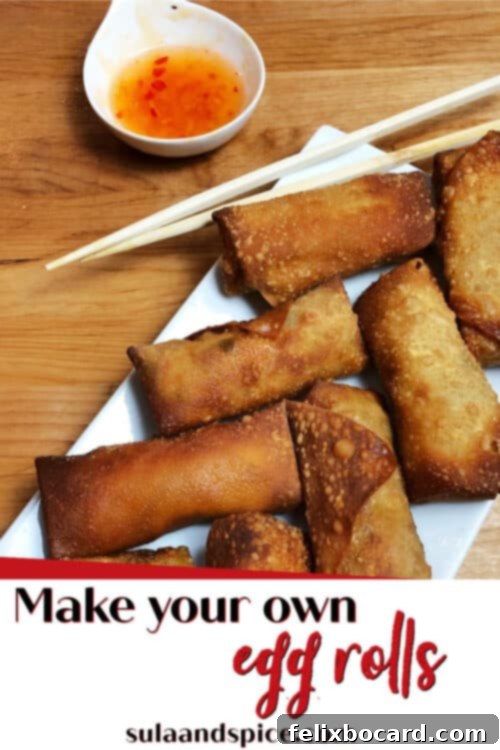
No egg roll experience is complete without the perfect dipping sauce! I love to offer a selection, typically bottled duck sauce and/or a good quality soy sauce, allowing everyone to choose their favorite. But don’t limit yourself – feel free to use any sauce that tickles your fancy. To make a well-rounded meal, I often serve these crispy delights with a side of fluffy white rice. It’s a simple addition that provides a comforting contrast to the richness of the egg rolls.
In my experience, serving rice on the side was the only effective strategy to slow down my kids when these egg rolls hit the table – they disappeared otherwise! Whether as a standalone snack, a delightful appetizer, or the star of your dinner, these homemade egg rolls are always a hit. If you’re serving them as an appetizer and need a fantastic main dish to accompany them, I highly recommend checking out xoxobella’s recipe for black pepper chicken for a truly restaurant-quality meal at home.
What are the Best Dipping Sauces for Egg Rolls?
The right dipping sauce can truly elevate your egg roll experience. Offering a couple of options ensures everyone finds a favorite. Here are some top recommendations:
- **Sweet and Sour Sauce or Duck Sauce:** These two are quite similar and are classic pairings. They offer a delightful balance of tanginess and sweetness that complements the savory filling beautifully.
- **Soy Sauce:** A timeless and simple choice, providing a salty, umami kick. For a touch of complexity, try a low-sodium soy sauce or add a splash of rice vinegar.
- **Hoisin Sauce:** Thick, sweet, and savory, hoisin sauce adds a rich, aromatic flavor. It’s fantastic for those who enjoy a deeper, more robust dipping experience.
- **Plum Sauce:** This sweet and fruity sauce is one of my personal favorites, though it can sometimes be a bit harder to find. Its unique blend of sweet and tart notes is incredibly refreshing.
- **Honey Mustard:** While not traditionally Asian, honey mustard offers a surprisingly delicious and fun alternative for dipping. Its sweet and tangy profile appeals to many palates.
- **Sriracha Mayo:** For those who love a bit of heat, mixing Sriracha with mayonnaise creates a creamy, spicy dip that’s incredibly addictive.
Storing and Reheating Your Homemade Chicken Egg Rolls
Having a batch of homemade egg rolls ready to go is a game-changer for quick meals or unexpected cravings. Proper storage is key to maintaining their quality.
If you’ve prepared more uncooked egg rolls than you plan to cook immediately, you can easily store them for later. Tightly wrap the uncooked egg rolls individually in plastic wrap, then place them in an airtight container. Store them in the refrigerator, and make sure to cook them within 2 days for the best results.
For leftover cooked egg rolls, allow them to cool completely before transferring them to an airtight container. They will keep well in the refrigerator for up to 3-4 days. This makes them perfect for meal prepping!
How to Reheat Egg Rolls for Maximum Enjoyment
Reheating egg rolls properly is essential to bring back their crisp texture. You have a few excellent options, depending on your preferred outcome:
- **In the Oven (for Crispy Results):** This is arguably the best method for restoring crispiness. Preheat your oven to 350°F (175°C). Place the cooked egg rolls on a baking sheet, ideally on a wire rack to allow air circulation. Heat for 10-15 minutes, or until they are heated through and the wrapper is crispy once more.
- **In the Air Fryer (for Quick Crispness):** The air fryer is a fantastic tool for reheating egg rolls, offering speed and excellent crispiness. Place the egg rolls in a single layer in your air fryer basket. Reheat at 350°F (175°C) for 5-7 minutes, checking halfway, until they are hot and crispy.
- **In the Microwave (for Speed, not Crispness):** While nothing beats the microwave for sheer speed, be aware that this method will not result in a crispy wrapper. The egg roll wrapper will become soft. When I microwave leftover egg rolls, I often enjoy them “deconstructed” – meaning I heat them, then remove the filling to enjoy on its own, perhaps drizzled with a little extra sauce. It’s a convenient option for a quick, warm snack.
📖 Recipe
Would you like to save this recipe?
I’ll email this post to you, so you can easily come back to it later!

Print
Pin it!
SaveSaved!
Easy Homemade Egg Rolls
Equipment
- Saucepan or deep fryer
Ingredients
- 1 package egg roll wrappers
- 1 large chicken breast diced
- 1 teaspoon sherry
- 1 teaspoon salt
- ½ teaspoon cornstarch
- 2 cups diced celery about 2-3 ribs
- ½ teaspoon sugar
- 1 TB water
- ½ – 1 cup fresh bean sprouts
- 1 cup shredded lettuce
- Peanut oil
Instructions
- In a small bowl combine chicken, sherry, salt and cornstarch. Let stand 15 minutes.
- Heat 1 tablespoon oil in a skillet or wok. Add chicken and stir fry until cooked through – about 3-4 minutes. Remove cooked chicken to a medium bowl.
- Heat an additional 3 tablespoons oil in the pan, then add celery. Stir fry 2-3 minutes. Add sugar and water. Cover and steam for one minute. Remove cover and stir fry until liquid evaporates. Add cooked celery to bowl with chicken.
- Add bean sprouts and lettuce to bowl and mix. Set aside to cool.
- Roll wrappers into egg rolls using 1-2 tablespoons of filling for each.
- Deep fry egg rolls for about 2-4 minutes, until crispy and brown.
- Serve with sauce of choice.
Notes
Nutrition
Nutrition values are estimates only, using online calculators. Please verify using your own data.
If you find yourself with leftover filling from your homemade egg rolls, there’s no need to worry about waste! It’s incredibly versatile. You can transform it into a quick and healthy Egg Roll in a Bowl, or even use it as the delicious foundation for Potstickers (Chinese Dumplings). To complete your Asian-inspired menu, consider pairing your egg rolls with Chinese Chicken on a Stick for a truly satisfying feast.