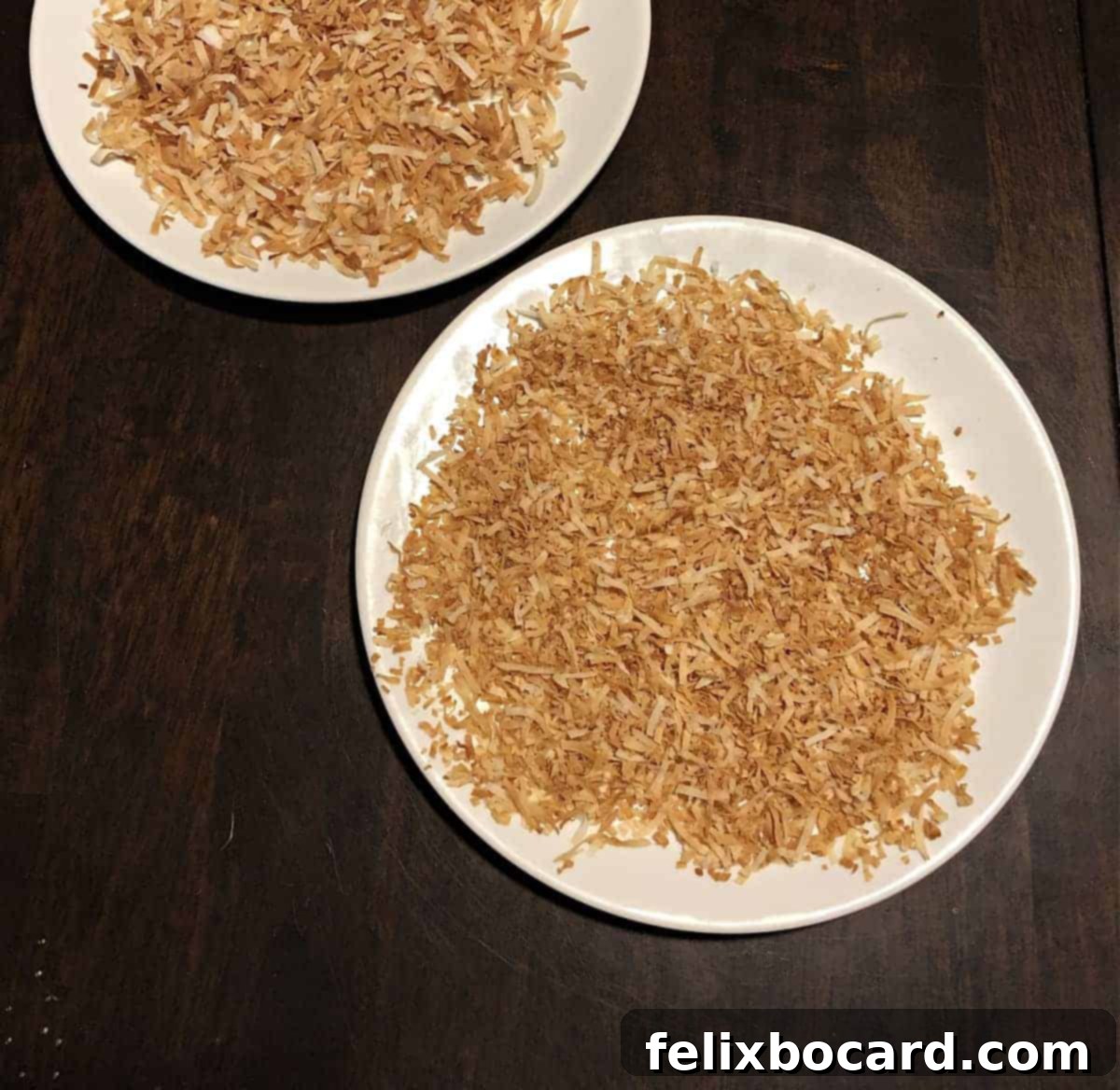
The delightful crunch and intensified flavor of toasted coconut have long captivated culinary enthusiasts. While coconut in its raw form offers a subtle sweetness, the simple act of toasting transforms it into a golden, aromatic, and crispy ingredient that elevates a wide array of dishes. From enhancing the texture of your morning granola to providing an exotic touch to savory main courses, toasted coconut is a versatile addition that deserves a place in every kitchen.
For those eager to unlock this incredible flavor and texture, mastering the art of toasting coconut is a game-changer. But how exactly do you achieve that perfect golden brown crispness? There are several popular methods, each with its unique advantages and considerations. To guide you through this culinary journey, we’ve explored three distinct techniques – using the microwave, oven, and skillet – comparing their results with both sweetened and unsweetened coconut flakes. Discover which method best suits your needs, whether you’re looking for speed, evenness, or a hands-on approach.
Why Toast Coconut? Unlocking Flavor and Texture
Toasting coconut is far more than just a step; it’s a transformation that significantly enhances its intrinsic qualities. The heat from toasting causes the natural sugars within the coconut to caramelize, leading to a deeper, richer, and more complex flavor profile. This process also coaxes out the coconut’s natural oils, intensifying its tropical aroma and making it even more fragrant. But perhaps the most appealing change is in texture: plain coconut can be chewy, but toasted coconut achieves an irresistible crispness that adds a satisfying crunch to any dish.
Imagine sprinkling golden, crunchy coconut flakes over a vibrant fruit salad, a creamy yogurt bowl, or a scoop of rich ice cream. The added texture and depth of flavor are simply unparalleled. Beyond desserts, toasted coconut can be a fantastic addition to savory dishes, offering a sweet and nutty counterpoint to curries, stir-fries, or as a coating for seafood like shrimp or chicken. It even makes an exquisite rim for tropical cocktails, like a zesty coconut pineapple margarita. Essentially, toasting coconut elevates it from a simple ingredient to a culinary star, capable of bringing a touch of exotic sophistication and delightful crunch to countless recipes.
Sweetened vs. Unsweetened Coconut: A Comparative Look
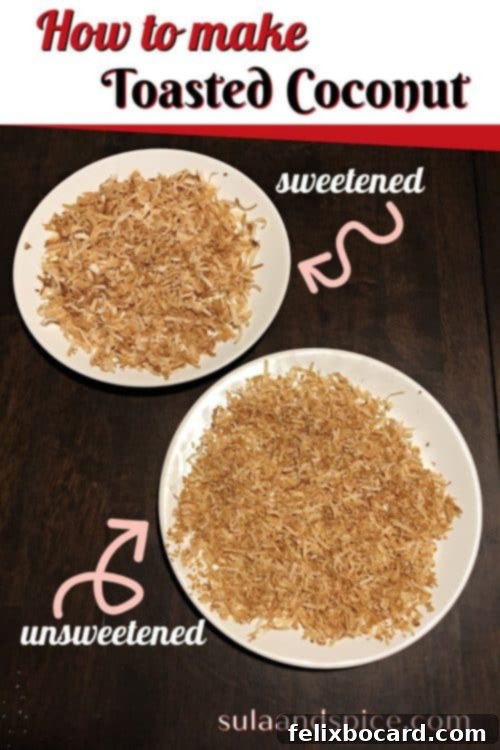
Before diving into toasting methods, it’s essential to understand the fundamental differences between sweetened and unsweetened coconut flakes, as these distinctions significantly impact the toasting process and final outcome. The initial appearance alone offers a hint: unsweetened coconut, especially organic varieties, tends to have a more natural, slightly off-white hue, reflecting its pure composition. Sweetened coconut, on the other hand, often appears brighter white and fluffier due to the added sugar and sometimes other ingredients.
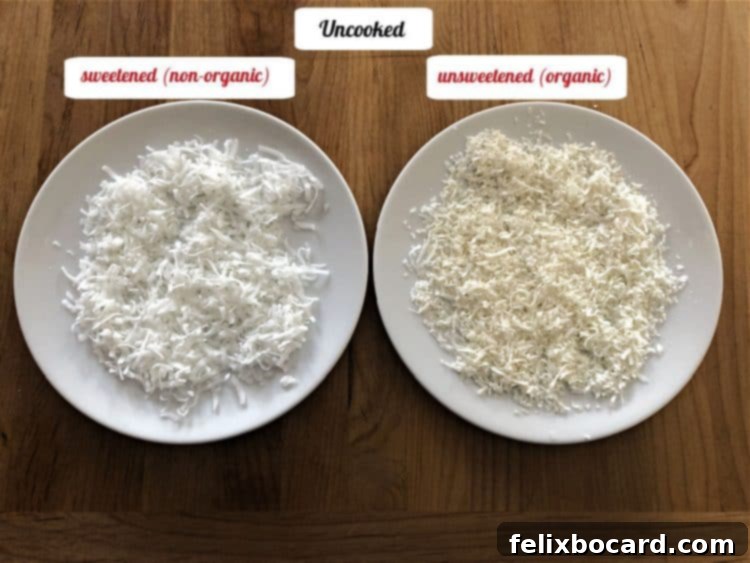
When you examine the ingredients list, the differences become even clearer. Unsweetened coconut typically contains just one ingredient: coconut. Organic varieties further ensure that you’re getting a product free from pesticides and artificial additives, allowing the pure, natural flavor of the coconut to shine. Sweetened coconut, however, often includes sugar as a primary ingredient, along with water, propylene glycol (a humectant to keep it moist), salt, and sodium metabisulfite (a preservative to maintain its bright white color). These additives not only alter the taste but also affect how the coconut browns and crisps during toasting. The presence of sugar means sweetened coconut will caramelize much faster and more intensely, which requires careful monitoring to prevent burning. Understanding these differences is crucial for selecting the right type of coconut for your recipe and adjusting your toasting method accordingly.
Toasting Coconut in the Microwave: The Quick Fix
For those moments when you need a small batch of toasted coconut in a flash, the microwave can be an unexpectedly convenient tool. While it might not offer the perfectly even browning of an oven, it excels in speed and minimal cleanup, making it a favorite for busy cooks. However, the microwave method truly highlights the disparities between sweetened and unsweetened coconut, with noticeable differences in both speed and uniformity of toasting.
How to Toast Coconut in the Microwave:
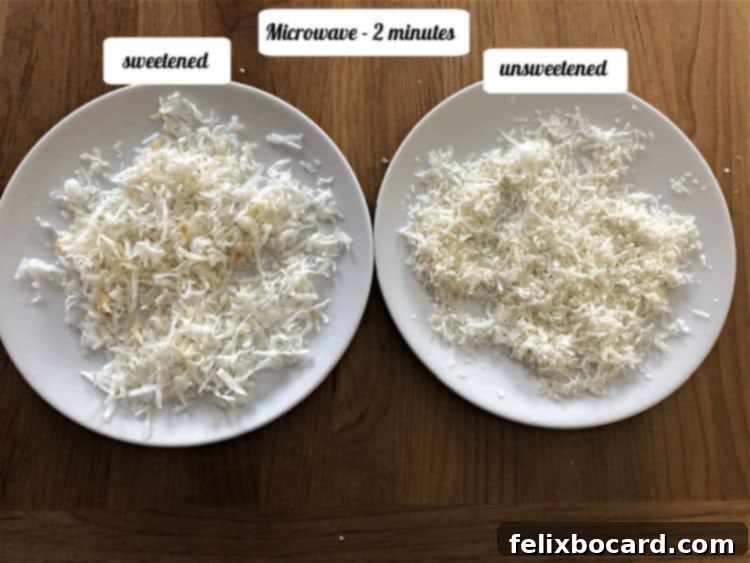
To toast coconut flakes in the microwave, spread a thin, even layer of flakes on a microwave-safe plate. Begin by microwaving on high for 30-second intervals. After each interval, carefully remove the plate, stir the coconut thoroughly to promote even cooking, and then return it to the microwave. Repeat this process until the coconut flakes reach your desired golden brown color and crisp texture. It’s crucial to stay vigilant, as coconut can go from perfectly toasted to burnt in a matter of seconds.
Results and Tips:
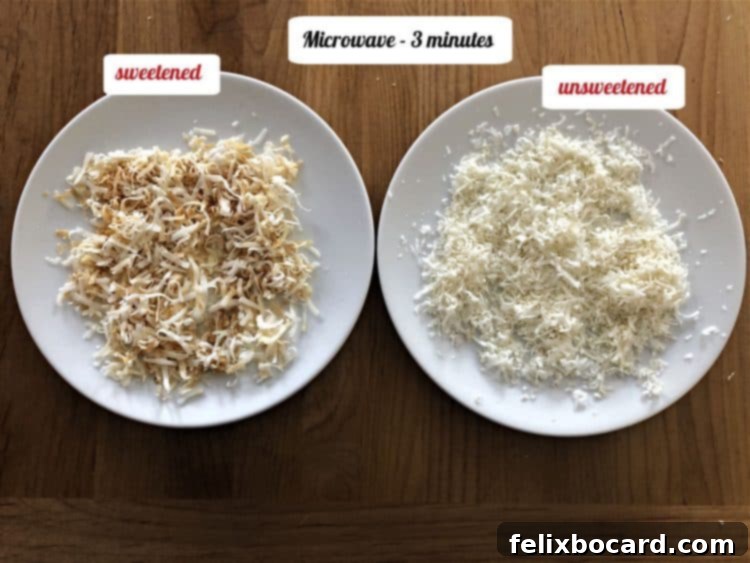
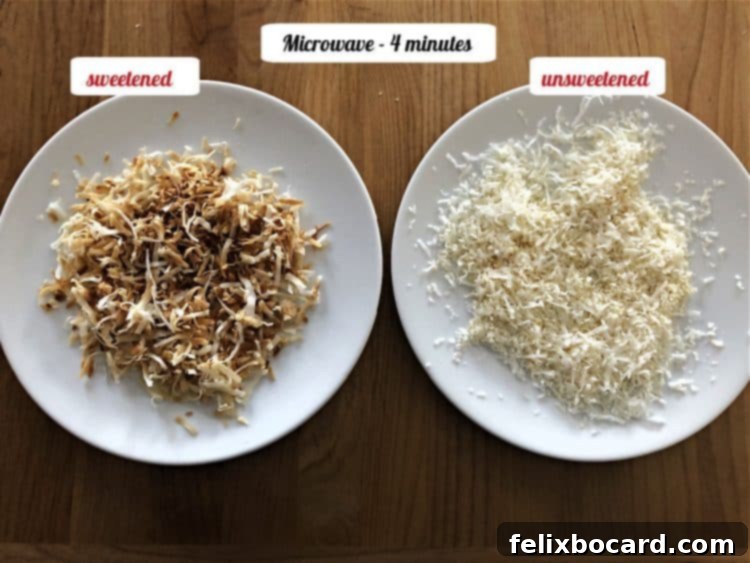
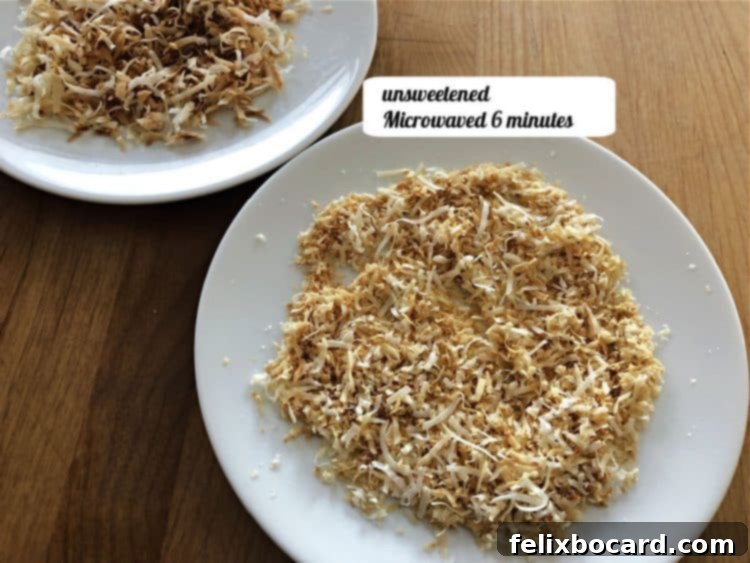
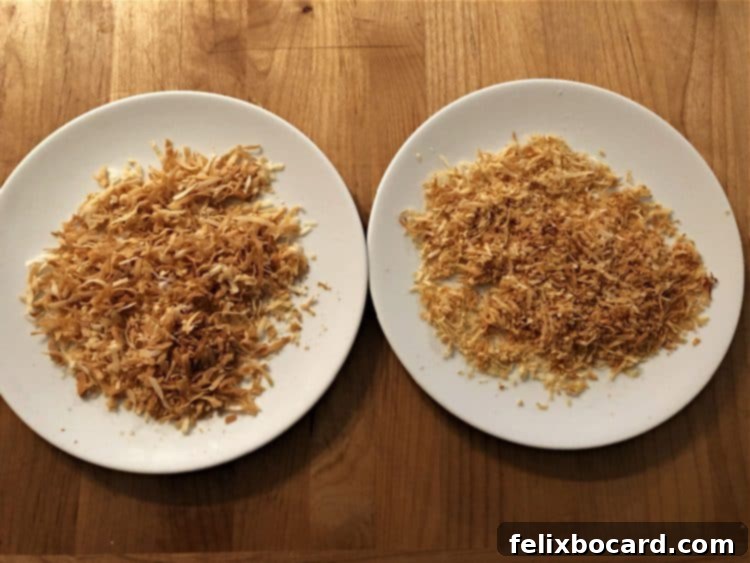
Our tests revealed that sweetened coconut toasts significantly faster in the microwave compared to unsweetened varieties. Sweetened flakes often achieve a golden hue in about 3-4 minutes total, requiring around 6-8 stirring intervals. Unsweetened coconut, lacking the added sugar to caramelize quickly, took approximately 5-6 minutes, or about 10-12 stirring increments, to reach a similar level of toastiness. A key characteristic of microwave-toasted coconut, particularly the sweetened kind, is its tendency for uneven coloration. Some flakes might be deeply golden while others remain lighter. While this variegated look can be visually appealing, if you’re aiming for absolute uniformity, this might not be your preferred method. The frequent stopping and stirring can feel a bit hands-on, but for small quantities and when multitasking in the kitchen, the microwave offers a quick and easy solution. Always ensure your flakes are in a single layer to maximize exposure to heat and stir diligently to prevent hotspots and burning.
Oven-Toasted Coconut: The Even Browning Champion
When it comes to achieving consistently golden and evenly toasted coconut flakes, the oven method is often considered the gold standard. It provides a more uniform heat environment, which is ideal for larger batches and results in a beautifully consistent crunch throughout. This method allows you to toast a significant quantity of coconut at once, making it perfect for meal prep or when preparing for a big event.
How to Toast Coconut in the Oven:
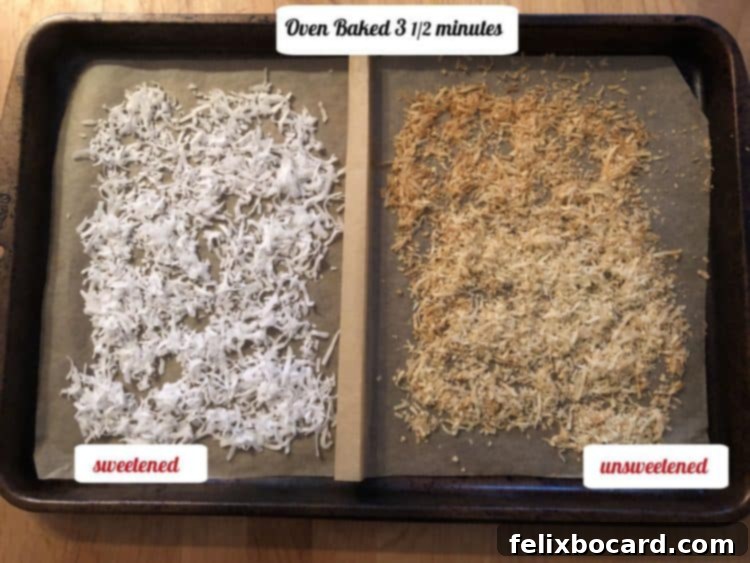
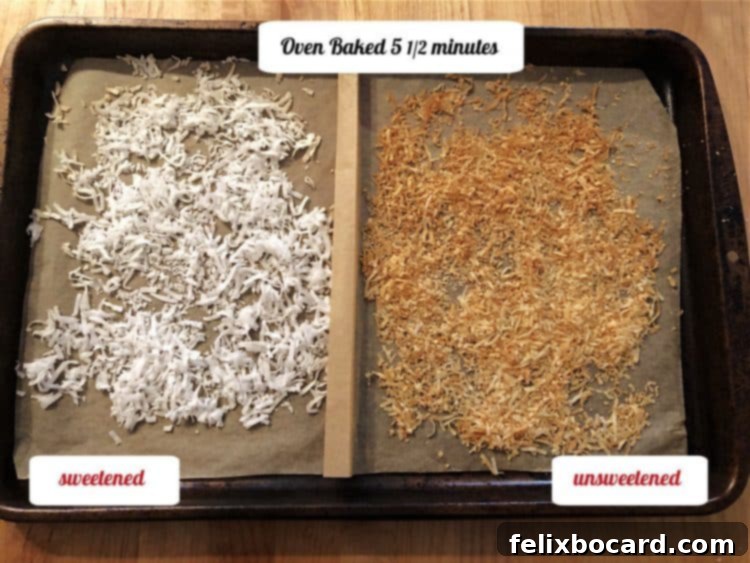
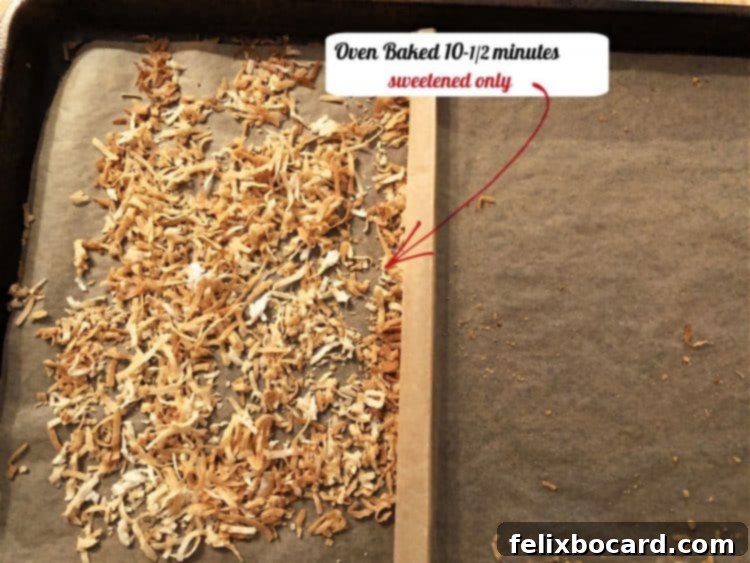
Preheat your oven to 325°F (160°C). Spread your coconut flakes in a single, thin layer across a baking sheet. For accurate comparison, we toasted both sweetened and unsweetened coconut on the same sheet, divided, to ensure identical oven conditions. Place the baking sheet in the preheated oven. Bake for a total of 5-10 minutes, but critically, remember to stir the coconut thoroughly halfway through the baking time, typically after 3-4 minutes. This stirring is essential to promote even coloration and prevent hot spots from burning the edges.
Results and Tips:
Interestingly, when toasting in the oven, our unsweetened coconut toasted much faster than its sweetened counterpart. The unsweetened flakes reached a perfect golden brown and crisp texture in just about 5 to 6 minutes, with one stir at the 3.5-minute mark. The sweetened coconut, however, required closer to 10 to 11 minutes of total baking time, necessitating stirring every 3-4 minutes to manage its faster caramelization. This difference might be partly attributed to variations in flake size, as the sweetened flakes often tend to be slightly larger. Regardless, the oven method consistently delivered the most evenly toasted coconut of all techniques. Each individual flake appeared uniformly golden and crisp, which translated into an exceptional crunch. If you prioritize consistent texture and color, and need to toast a larger amount, the oven is undoubtedly the superior choice. Always keep a close eye on the coconut, especially towards the end of the baking time, as it can go from perfectly golden to burnt quickly.
How to Toast Coconut Flakes in a Skillet: The Interactive Method
For those who prefer a more hands-on approach and don’t want to wait for an oven to preheat, toasting coconut flakes in a skillet on the stovetop is an excellent alternative. This method offers unparalleled control over the browning process, allowing you to visually monitor and adjust the heat as needed. It’s particularly great for small to medium batches and delivers quick results, often within minutes.
How to Toast Coconut Flakes in a Skillet:
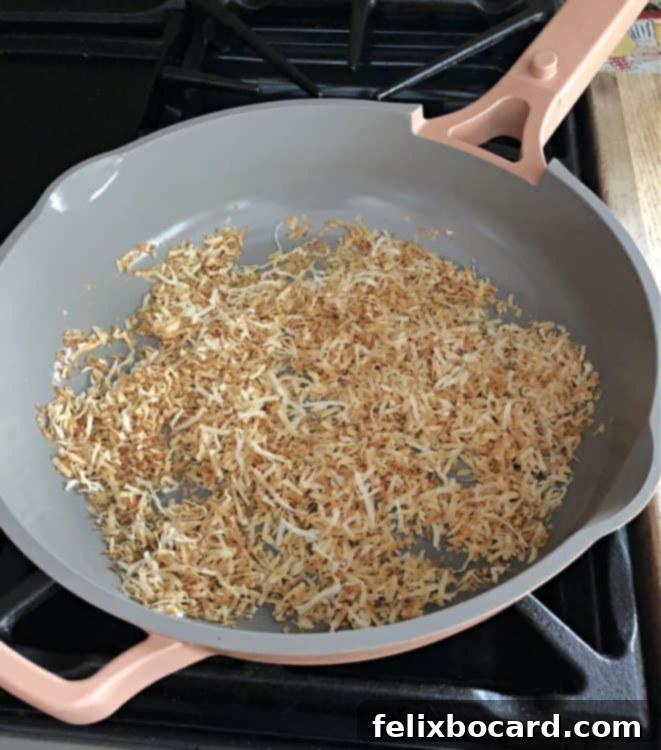
Place your desired amount of coconut flakes in a dry skillet (no oil needed) over medium-low heat. The key to successful skillet toasting is constant motion. Stir the coconut frequently, almost continuously, using a spatula or wooden spoon. This ensures that all flakes come into contact with the hot surface of the pan and heat evenly. Continue stirring until the flakes achieve a beautiful golden brown color and become aromatic. This process typically takes about 4 to 5 minutes.
Results and Tips:
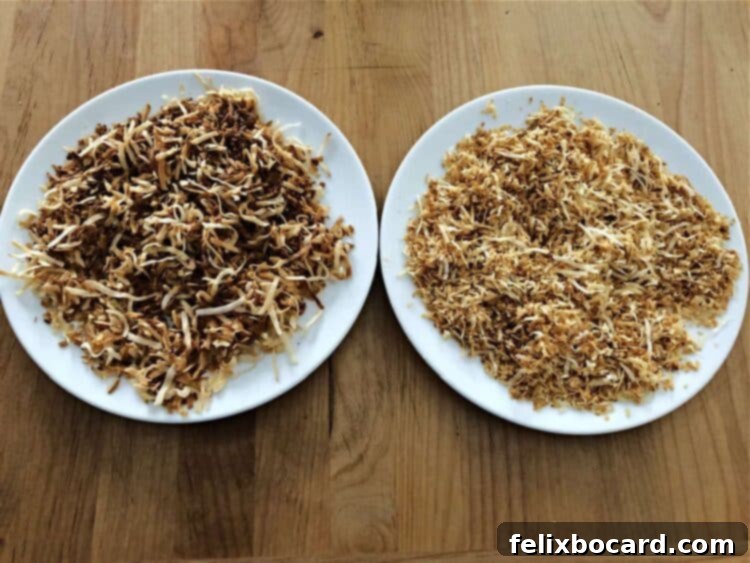
Both sweetened and unsweetened coconut flakes toasted at very similar rates in the skillet, typically taking 4 to 5 minutes. Sweetened coconut might start to brown slightly faster due to its sugar content, but the overall time to achieve full toastiness was comparable for both types. While the skillet method offers excellent control, achieving perfectly even browning can be a bit more challenging than with the oven. This is because not all flakes are in direct contact with the heat source simultaneously, making constant stirring absolutely essential. If you pause stirring for even a moment, some flakes can quickly over-toast and become overly dark or even burnt. This interactive nature is both a pro and a con; you have complete command over the color, but it demands your full attention. Our experience showed that trying to get every single flake perfectly brown often resulted in some becoming quite dark. Therefore, aim for “mostly golden brown” for the best results, pulling the coconut off the heat just before it reaches your ideal color, as it will continue to darken slightly from residual heat.
Delicious Ways to Use Toasted Coconut Flakes
Once you’ve mastered the art of toasting coconut, the possibilities for incorporating this flavorful ingredient into your cooking are endless. Its crunchy texture and rich, nutty-sweet aroma make it a versatile garnish and addition to both sweet and savory dishes. Here are some inspiring ideas to get you started:
- **Breakfast Booster:** Sprinkle over a creamy yogurt and granola bowl, add to oatmeal, or mix into pancake batter for an extra textural dimension.
- **Smoothie Bowl Topping:** Elevate your morning smoothie bowl with a generous scattering of toasted coconut for crunch and tropical flavor.
- **Dessert Perfection:** Use as a delightful topping for ice cream, puddings, fruit tarts, or cupcakes. It adds an irresistible chew and a visual appeal.
- **Baked Goods Enhancement:** Fold into cookie dough, muffin batter, or sprinkle on top of cakes and quick breads before baking for added flavor and texture.
- **Cocktail Garnish:** Create a festive and flavorful rim for tropical beverages like piña coladas, margaritas, or a rum punch.
- **Savory Sensations:** Incorporate into curries, stir-fries, or rice dishes for an unexpected depth of flavor and texture. It pairs wonderfully with chicken, shrimp, or tofu.
- **Salad Enhancer:** Add to green salads, fruit salads, or grain salads for a unique crunch and a hint of sweetness.
- **Homemade Granola/Trail Mix:** A key ingredient in homemade granola, or simply add to your favorite trail mix for an energy-boosting snack.
No matter how you prepare it, toasted coconut is sure to add a special touch to your favorite foods. Enjoy experimenting with this fantastic ingredient!
No matter how you make it, I hope you enjoy some toasted coconut soon!
How to Store Toasted Coconut
Proper storage is key to maintaining the crispness and flavor of your freshly toasted coconut. Once your coconut flakes have achieved that perfect golden brown, immediately transfer them from the hot pan or baking sheet to a plate or a separate cool surface to prevent further cooking from residual heat. Allow them to cool completely at room temperature before storing.
Once cooled, place the toasted coconut in an airtight container. This will protect it from moisture and air, which can cause it to lose its crispness and flavor. You can store it at room temperature in your pantry for up to one week, making it readily available for everyday use. For longer storage, transfer the airtight container to the refrigerator, where it will stay fresh for up to a month. If you’ve made a larger batch and want to extend its shelf life even further, toasted coconut freezes beautifully. Simply place the airtight container in the freezer for up to three months. When you’re ready to use it, simply thaw it at room temperature or re-crisp it gently in a dry skillet over low heat for a few minutes.
📖 Recipe

Toasting Coconut – 3 Ways
Ingredients
- 1 cup coconut flakes unsweetened
- See notes for toasting sweetened
Instructions
Microwave Method:
- Spread a thin layer of coconut flakes evenly on a microwave-safe plate. Microwave in 30 second increments, stirring after each. Repeat until flakes are golden brown, about 4 minutes for sweetened and about 6 minutes total for unsweetened.
Oven Method:
- Preheat oven to 325F. Spread coconut in a thin layer on a baking sheet.
- Bake 5 to 10 minutes, stirring 3 to 4 minutes into baking time to ensure even color. Unsweetened estimated time is close to 5 minutes, sweetened is closer to 10 minutes baking time.
Skillet Method:
- Place coconut in a large skillet.
- Cook over medium-low heat, stirring frequently.
- Coconut is done when the flakes are mostly golden brown, about 4 to 5 minutes.
Video
Nutrition
Nutrition values are estimates only, using online calculators. Please verify using your own data.