Discovering Madagascar’s Unique Lemurs: An Unforgettable Journey into an Island Paradise
My recent journey to Madagascar was an experience unlike any other, a captivating adventure into a world brimming with unparalleled biodiversity. This fourth-largest island on Earth, Madagascar, boasts a history of isolation, having split from the Indian subcontinent approximately 88 million years ago. This geological solitude allowed its native flora and fauna to evolve in extraordinary ways, resulting in an astonishing 90% endemism – meaning 90% of Madagascar’s wildlife is found nowhere else on the planet. It truly is a living laboratory of evolution, a treasure trove for any nature enthusiast.
Among the island’s many marvels, the lemurs stand out as perhaps the most iconic and beloved. Many assume the lemur is a single species, but the reality is far more diverse and fascinating. Madagascar is home to nearly 100 known species of lemurs, each with its own unique characteristics and behaviors. While it was impossible to encounter all of them during my two-week expedition, my tour group was incredibly fortunate to spot 17 distinct species, offering a comprehensive glimpse into their diverse world.
Lemurs, being primates, can sometimes be elusive and shy, making photography a genuine challenge. Capturing these nimble creatures in their natural habitat often requires patience, a keen eye, and a steady hand. I must give immense credit for the majority of these stunning photographs to Robbin Merritt, a fellow member of our touring group and a truly gifted photographer whose skill brought these beautiful animals to life. My personal contribution mostly involved holding the flashlight during our nocturnal treks, ensuring the perfect “exceptional lighting” for those nighttime shots! Such teamwork ensured we captured the magic of these incredible beings.
Encounters with the Smallest: The Elusive Mouse Lemurs
Our journey into the world of lemurs began with the smallest of their kind: the mouse lemurs. These diminutive primates hold the title of the smallest primates in the world. It is believed that all 24 known species of mouse lemurs descended from a common ancestor roughly 10 million years ago, a testament to their long evolutionary history on this isolated island. Their nocturnal nature means that observing them required braving the Malagasy jungle after sunset, guided by our knowledgeable local guides. These night walks were an adventure in themselves, offering a unique perspective on the forest ecosystem once daylight fades. We would typically embark on a quick expedition right after sunset, allowing us to return to our lodge in time for a well-deserved dinner. Here are some of the fascinating mouse lemur species we were privileged to encounter:
Gray Mouse Lemur
Where seen: Ifaty
Our stay at Le Paradisier Hotel in Ifaty provided an unexpected opportunity to spot these tiny creatures. Many guests reported seeing gray mouse lemurs near their bungalows, particularly in the surrounding trees. While I personally only caught a glimpse of one during a dedicated night walk, its swift movement made capturing a clear image challenging. These creatures are masters of disguise, blending seamlessly into the dense foliage.
During our night walks, it was often their reflective eyes, gleaming like tiny embers in our flashlight beams, that gave away their presence. Their incredible agility meant that a fleeting moment was often all we got, making each sighting a memorable victory.
Brown Mouse Lemur
Where seen: Ranomafana
Our search for mouse lemurs met with greater success during our stay at the Setam Lodge in Ranomafana. Here, our local guide led us on a clever nocturnal walk along a quiet road bordering the forest. While spotting wildlife on a road might seem counterintuitive, our guide had a unique and effective strategy: he smeared banana on tree branches along the roadside. The sweet scent proved irresistible to the hungry lemurs, drawing them out and allowing us to observe these shy animals up close as they indulged in the treat. This clever technique highlighted the ingenuity of local guides in facilitating incredible wildlife encounters.
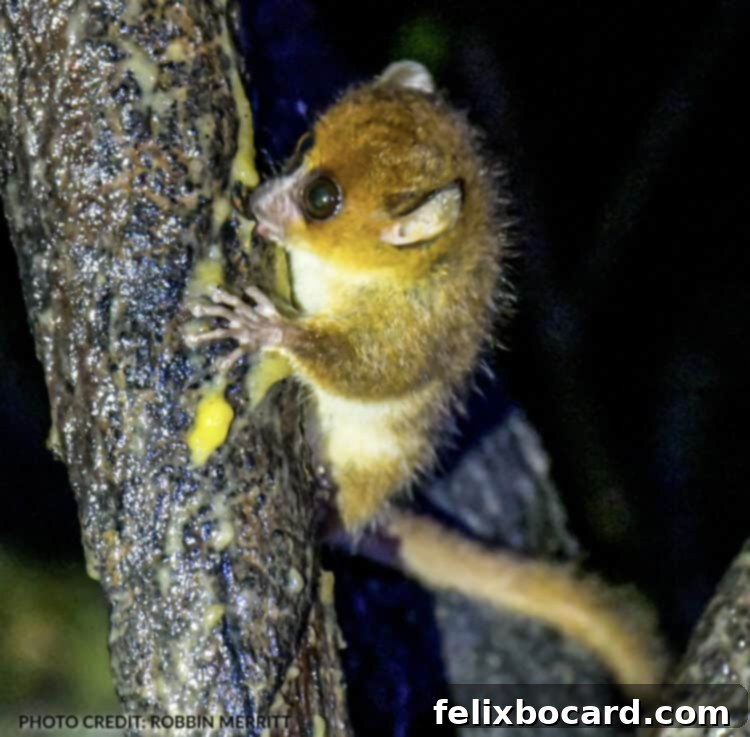
This particular species is also widely recognized as the “Rufous Mouse Lemur,” easily identifiable by its reddish-brown fur. Witnessing them in their natural environment, albeit with a little incentive, was a truly rewarding experience, showcasing their delicate features and quick movements.
Goodman’s Mouse Lemur
Where seen: Andasibe
In Andasibe, while staying at the charming Mantadia Lodge, another nocturnal walk along a quiet road yielded sightings of Goodman’s Mouse Lemur. This time, our guide opted for a different, equally fascinating method, relying on basic physics rather than bananas. He explained that after sundown, the asphalt of the road retains heat, attracting various insects. These insects, in turn, become an easy meal for the omnivorous mouse lemurs, drawing them out into the open. It was a remarkable demonstration of how these animals adapt to their environment and how local guides possess an intimate knowledge of their behavior.
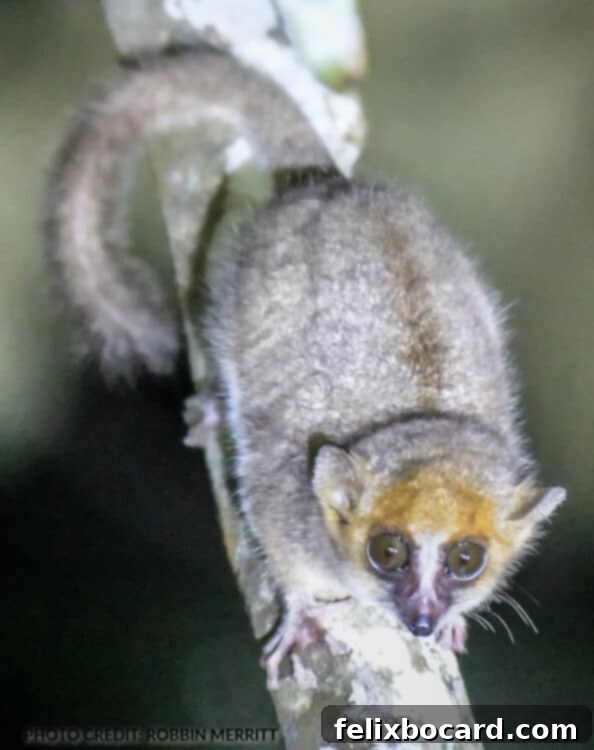
Goodman’s Mouse Lemurs are incredibly tiny, weighing an average of only 45-48 grams, which is less than two ounces. Their minute size makes spotting them an accomplishment, and observing their foraging habits in the wild provides valuable insight into their ecological role.
Mid-Sized Marvels: Familiar Faces and Unique Personalities
Moving beyond the minute, we encountered a variety of medium-sized lemurs, many of which are more widely recognized due to their distinctive appearances and behaviors. This group includes some of the most emblematic lemur species, each contributing to the rich tapestry of Malagasy wildlife.
Sportive Lemur spp
Where seen: Ifaty (Spiny Forest)
The sportive lemur, despite its name, is predominantly nocturnal, making our daytime sighting of one in Ifaty’s Spiny Forest a truly fortunate event. Perched high in a tree, this particular individual was difficult to identify to a specific species (there are 26 known sportive lemur species!). Even our expert guide could only confirm it was a member of the sportive family. Seeing a nocturnal creature awake during the day added an extra layer of wonder to the encounter.
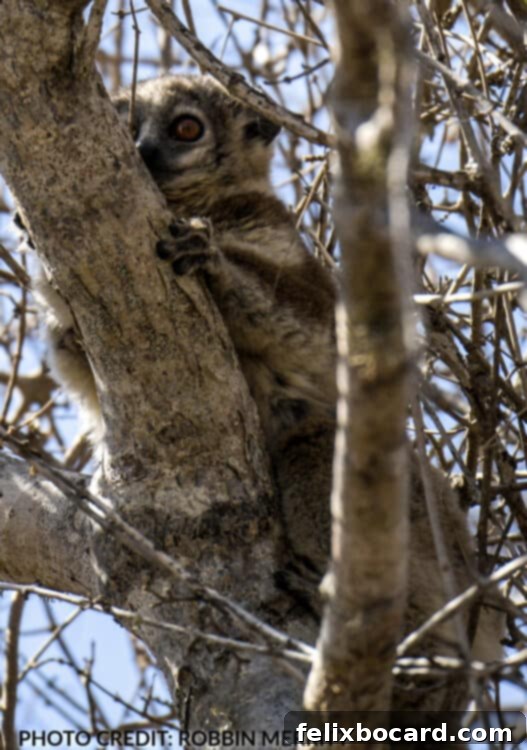
This “sporty” lemur seemed quite content to be left undisturbed, likely wishing to resume its interrupted nap. Their calm demeanor, even when observed, speaks to their inherent wildness and the respect required when approaching them in their natural habitat.
Zombitse Sportive Lemur
Where seen: Zombitse-Vohibasia National Park
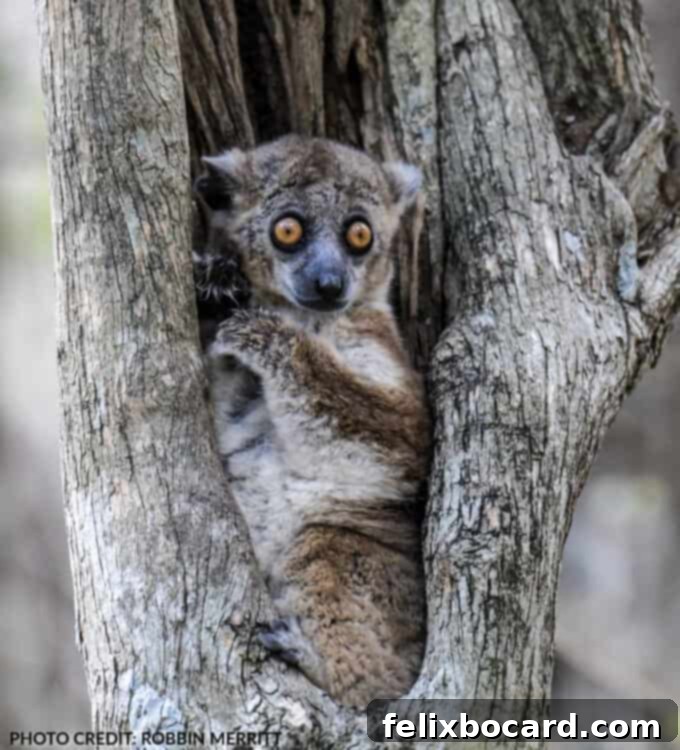
Another nocturnal sportive lemur, this one found in Zombitse-Vohibasia National Park, also appeared as though it preferred to be fast asleep. Its expression was quite relatable, perhaps mirroring my own before that essential first cup of coffee in the morning! These sightings of sleeping lemurs offer a glimpse into their hidden lives, reminding us that even in their rest, they are an integral part of Madagascar’s vibrant ecosystems.
Common Brown Lemur
Where seen: VOIIMA community reserve, near Andasibe; Vakona Lemur Island
These charismatic creatures are truly charming! We had the delightful opportunity to observe a family group of common brown lemurs interacting high in a treetop, near Andasibe’s VOIIMA community reserve. A tiny baby lemur, full of youthful curiosity, would venture short distances away from its mother along a branch, only to quickly lose courage and scamper back to the safety of her embrace. This tender interaction was incredibly heartwarming. Witnessing such moments led another member of our group and me to conclude that “Common” simply didn’t do them justice. We affectionately christened them the “Uncommon Mocha Lemurs,” a name we hope will catch on given their lovely brown hues and distinct personalities!
This video captures a precious moment between a mom and her baby in the VOIIMA community reserve, a testament to the strong family bonds within lemur groups. Such observations highlight the social intelligence and nurturing aspects of these primates.
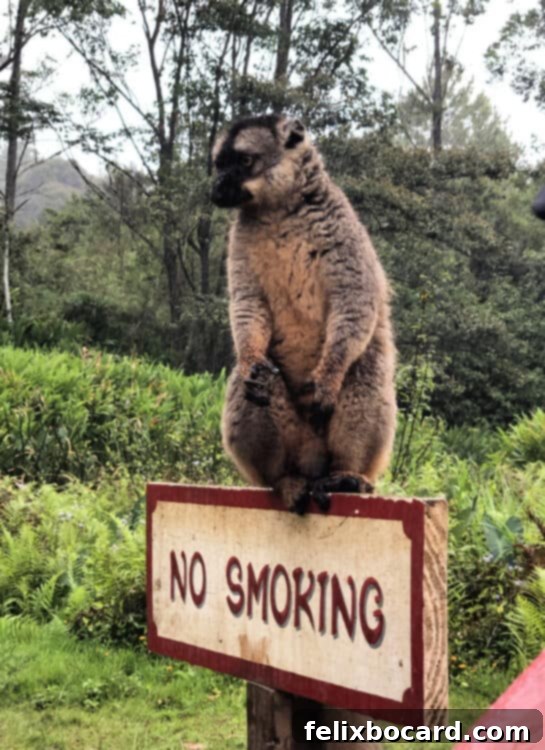
The “Uncommon Mocha Lemur” (officially the Common Brown Lemur) is widespread throughout Madagascar and particularly friendly and accustomed to human presence in places like Vakona Lemur Island. This particular individual offered a warm greeting as we disembarked from our boats, demonstrating their remarkable adaptability.
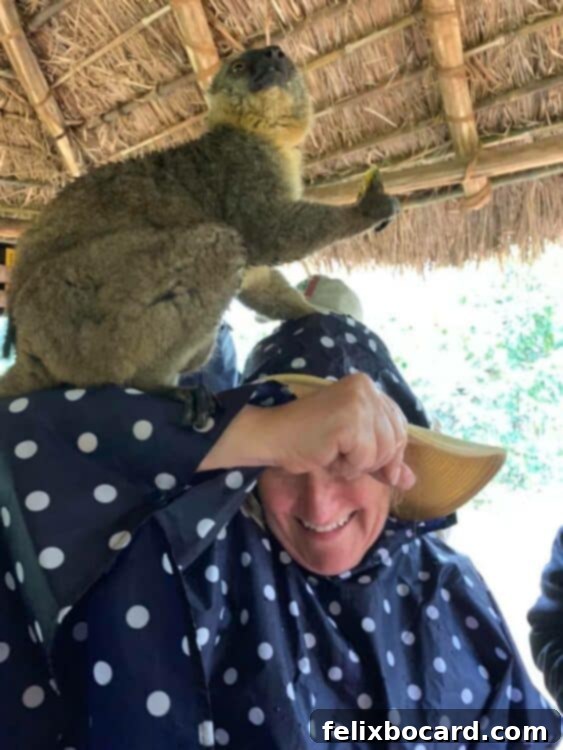
It’s incredible to note their bold behavior on Lemur Island, where they are famously known to jump onto visitors, playfully seeking a banana snack. This direct interaction provides an exhilarating, albeit controlled, encounter with these intelligent and food-motivated primates.
Ring-Tailed Lemur
Where seen: Isalo National Park; Anja Community Reserve
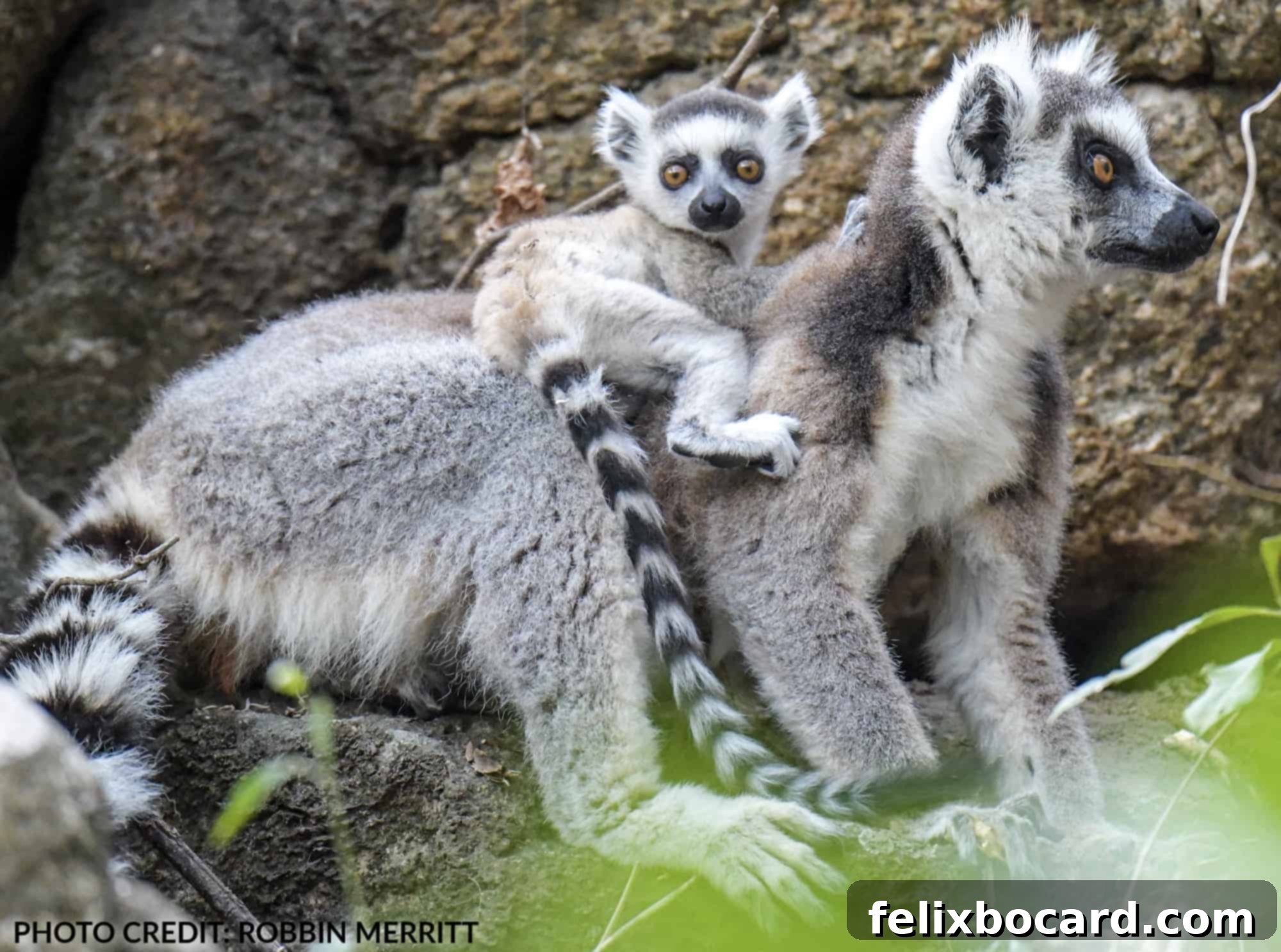
For many, the Ring-Tailed Lemur is the quintessential symbol of Madagascar, instantly recognizable from nature documentaries and, of course, the popular Dreamworks animated movie “Madagascar.” These distinctive lemurs, with their iconic black and white striped tails, are primarily found in the southern regions of the island. We were thrilled to observe them in two significant locations: the dramatic landscapes of Isalo National Park and the community-managed Anja Community Reserve, both offering unique opportunities to see them thriving in their natural habitat.
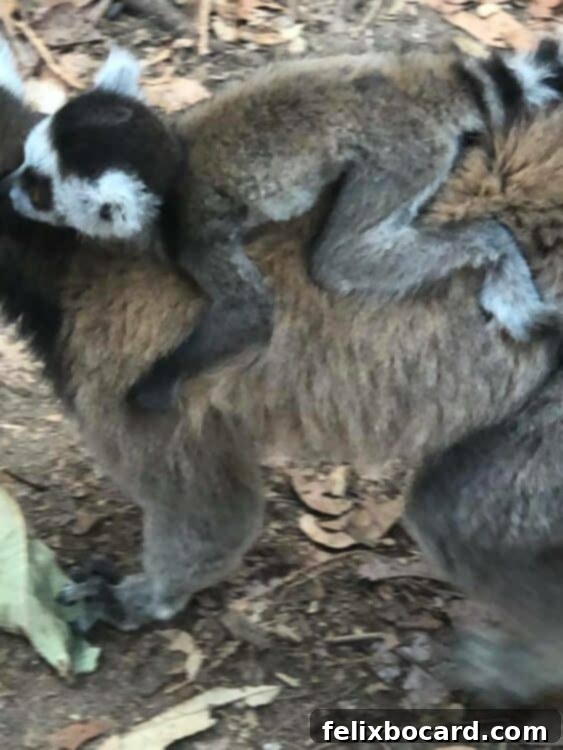
What struck me most about these lemurs was their remarkable nonchalance around humans. They moved with an air of dignified indifference. In a particularly memorable moment, a mother lemur gracefully walked right past me on the trail, her tiny baby clinging securely to her back. It was an utterly adorable and humbling experience, highlighting their comfort in protected areas.
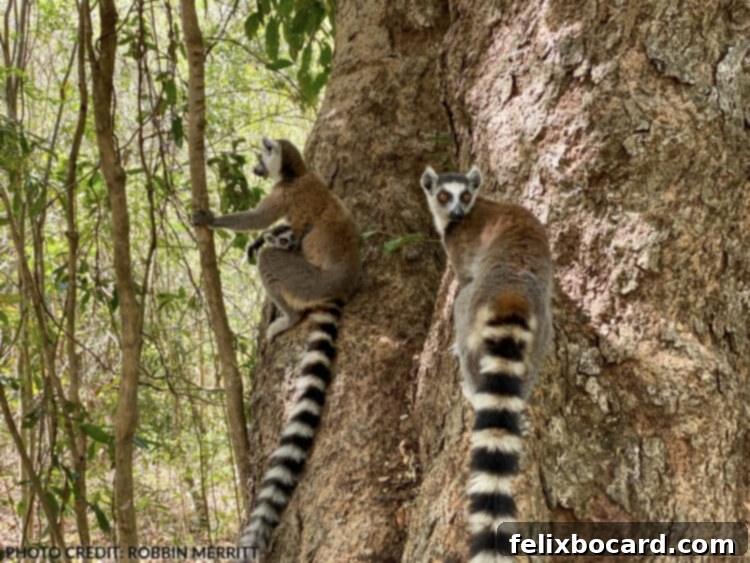
With their alert, curious expressions and graceful, almost feline movements, ring-tailed lemurs often evoke comparisons to cats or foxes. However, their eyes are distinctly larger than a cat’s, and their tails are famously longer than their bodies, serving as crucial balancers and communication tools within their complex social structures.
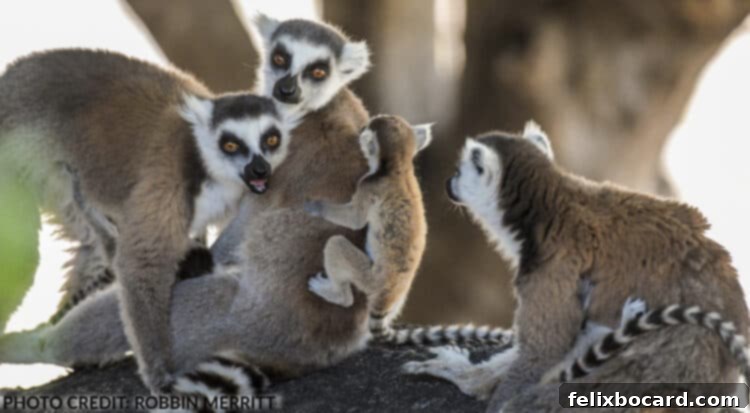
Ring-tailed lemurs are highly sociable animals, living in large, well-structured groups called troops. We rarely, if ever, saw an individual in isolation; they were always part of a bustling group, often with several babies hitching rides on their mothers’ backs. These troops are notably female-dominant, a social hierarchy that, I think, makes perfect sense in the natural world!
Red Ruffed Lemur
Where seen: Vakona Lemur Island
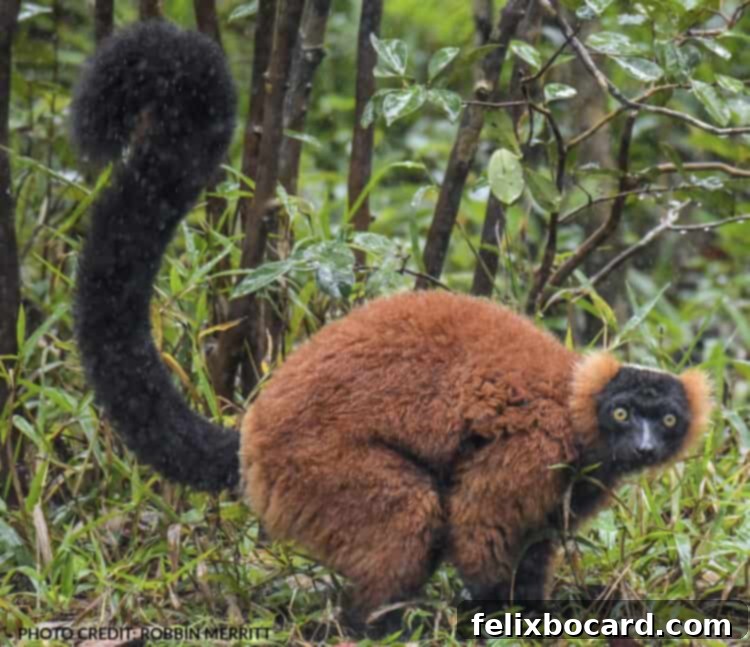
Our encounter with the magnificent Red Ruffed Lemur on Vakona Lemur Island was particularly poignant. This individual was actually out of its typical range, as Red Ruffed Lemurs are native to the dense rainforests of northeastern Madagascar. This solitary fella resided alone on a small, separate island, distinct from the other lemurs. Its striking beauty and unusual predicament evoked a sense of sorrow, highlighting the complexities of wildlife management and conservation efforts outside of their natural distribution.
Black and White Ruffed Lemur
Where seen: Vakona Lemur Island
The Black and White Ruffed Lemur is a species of critical conservation concern, classified as critically endangered. These stunning primates inhabit the eastern rainforests of Madagascar, facing immense pressure from various threats. Sadly, it comes as no surprise that the greatest challenge to their survival is human activity, primarily habitat loss due to deforestation, logging, and agricultural expansion. Their declining numbers serve as a stark reminder of the urgent need for robust conservation strategies to protect Madagascar’s unique biodiversity.
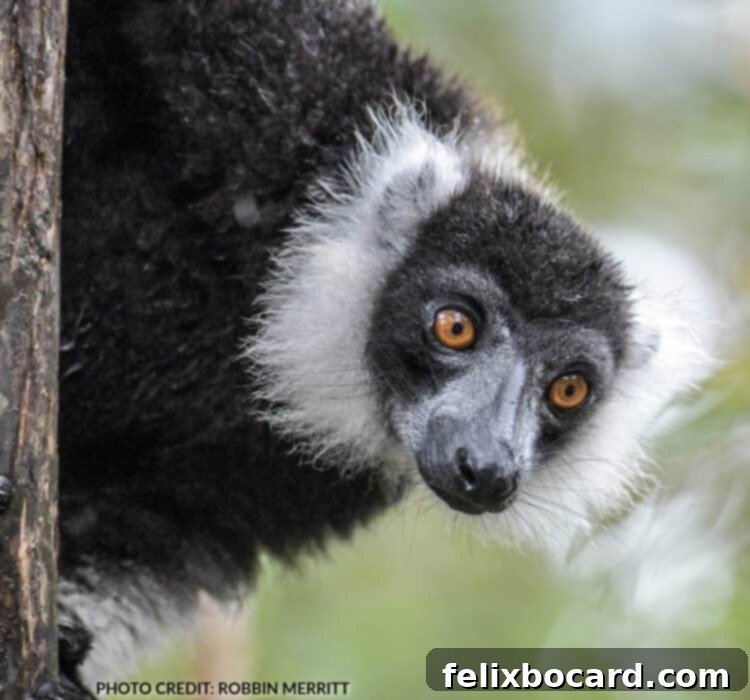
These majestic lemurs are primarily frugivores, meaning their diet consists largely of fruit, playing a vital role in seed dispersal within the rainforest ecosystem. Similar to the ring-tailed lemurs, their social groups are also dominated by females. This female dominance is thought to be an evolutionary adaptation, possibly ensuring that females have priority access to food resources, which is crucial for successful reproduction and raising offspring in a challenging environment.
The Dancing Lemurs: Sifaka’s Unique Acrobatics
Among the most visually captivating lemurs are the Sifaka, often affectionately called “dancing lemurs.” This moniker stems from their truly unique mode of terrestrial locomotion. Unlike many other lemurs that move on all four limbs when on the ground, Sifakas propel themselves with powerful leaps on their two back feet, holding their forelimbs upright for balance. This distinctive, almost balletic hop creates an impression of a square dancer searching for a partner. I was fortunate enough to witness this “dance” briefly and was astonished by their speed and agility, covering ground with incredible efficiency.
Beyond their remarkable movement, Sifakas are easily recognized by their distinctive round, hairless black faces, which lend them a wise and ancient appearance. Their family name itself is an onomatopoeia, mirroring their characteristic vocal alarm call: a sharp, resonant “shi-fak” (pronounced SHEE-FAK!!). Hearing this alarm reverberate through the forest is an unforgettable auditory experience, alerting both fellow lemurs and keen-eared visitors to potential threats.
Verreaux’s Sifaka
Where seen: Zombitse; Isalo National Park
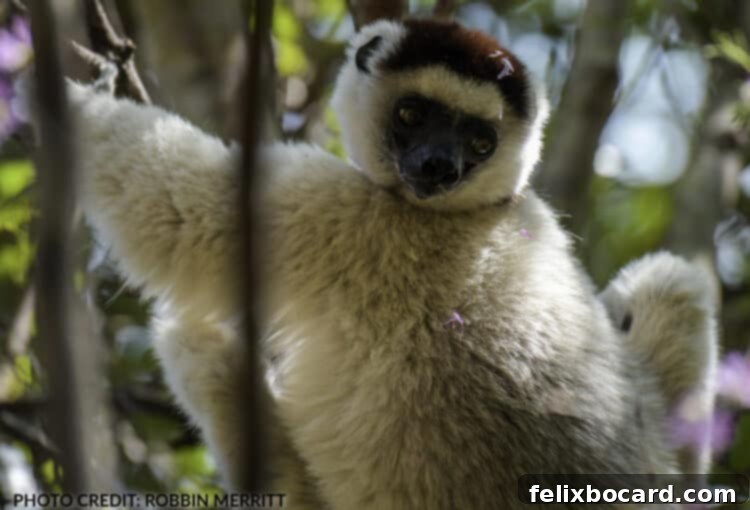
We had the pleasure of observing the elegant Verreaux’s Sifaka in two different spectacular locations: within the dry deciduous forests of Zombitse-Vohibasia National Park and amidst the rugged canyons of Isalo National Park. Their striking white fur with dark markings makes them particularly photogenic, and witnessing their ground-level “dancing” was a highlight of our wildlife encounters.
Diademed Sifaka
Where seen: Andasibe
This magnificent Diademed Sifaka, also known as the Golden Sifaka, graced us with its presence in Andasibe. The term “diadem” refers to a headband or crown, and this lemur’s regal appearance, particularly its vibrant golden coloring, certainly lives up to its name. Its majestic fur, coupled with its engaging movements, made it an unforgettable sight against the lush green backdrop of the rainforest.
The Giants of the Forest: The Revered Indri Indri
Our journey culminated with the awe-inspiring Indri Indri, the largest species of lemur still in existence today, capable of weighing up to 21 pounds. It’s a humbling thought to consider that even larger, now-extinct lemur species once roamed Madagascar, some reaching the size of a gorilla. This serves as a potent reminder that even the biggest creatures are not immune to the forces of extinction. The Indri is unique among lemurs for having only a nub of a tail, a distinguishing feature that sets it apart from its long-tailed relatives.
The Indri holds a deeply sacred place in the culture and folklore of the Malagasy people, who refer to it as “babakoto,” meaning “ancestor” or “father of Koto.” Their human-like characteristics and haunting, melodic calls have woven them into many local legends. One prominent legend recounts the tale of a man who ventured into the forest to hunt but never returned. His son, consumed by worry, followed his father’s path, only to disappear as well. When the rest of the villagers bravely entered the forest searching for them, they discovered not the lost father and son, but two large lemurs sitting peacefully in the trees – the very first indris. In this touching myth, the man and his son had transformed, becoming the guardians of the forest. Other versions suggest only the son transformed, and the melancholic wailing of the babakoto is said to be analogous to the father’s sorrowful cries for his lost child, forging an unbreakable spiritual bond between the Indri and the Malagasy people.
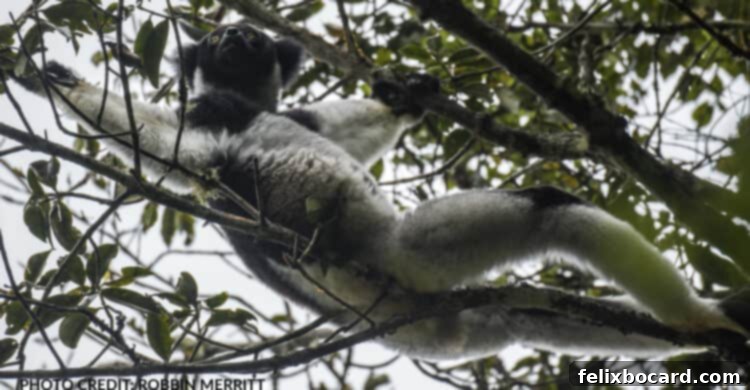
Beyond these captivating legends and their human-like calls, Indris are known to form strong, monogamous bonds, living in small, cohesive family groups. This social structure allows for communal care of young and efficient foraging within their rainforest territories.
Indris also captivate observers with another fascinating, human-like behavior: sun-bathing. Each morning, these majestic creatures will position themselves on a tree branch, facing the rising sun. With eyes half-closed, legs crossed, back straight, and hands either held low with palms facing outwards or resting gently on their knees, they absorb the warmth. While biologists cautiously attribute this behavior to thermoregulation or aid in digestion, many Malagasy people hold a profound belief that the Indri are actually worshipping the sun, further deepening their spiritual connection to these magnificent animals.
Perhaps the most striking, and undeniably saddening, observation shared by our guide concerned the tragic effects of captivity on the Indri. Despite dedicated efforts, no Indri has ever been successfully bred in captivity, and all captured individuals have tragically died within a year. Our guide recounted that, when held captive, the Indri appears to be in a constant state of distress, often described as “crying.” This heart-wrenching detail underscores their profound bond with their natural habitat and the critical importance of protecting them in the wild.
Overall, my journey reaffirmed that the most profound and authentic sightings of these incredible lemurs occurred within Madagascar’s national parks and designated conservation areas. There is a palpable and growing awareness of the urgent need to conserve the habitats of these rare and special creatures. The dedication of conservationists, coupled with the deeply rooted cultural beliefs of the Malagasy people, offers a beacon of hope. It is my sincere hope that these concerted efforts will continue to protect these beautiful animals, allowing them to thrive in their natural homes for generations to come, preserving Madagascar’s unparalleled biodiversity.
Reflecting on this extraordinary adventure, I’m already envisioning my next exploration. Perhaps a road trip to discover more of the stunning landscapes and hidden gems of our own beautiful country. One thing is certain, though: I will definitely be investing in some packing cubes! My roommate in Madagascar had these, and I was incredibly impressed by how organized they kept her suitcase. I found some fantastic options and even more brilliant travel ideas in Best Road Trip Gifts for Travelers. It’s a great resource for anyone planning their next great escape!