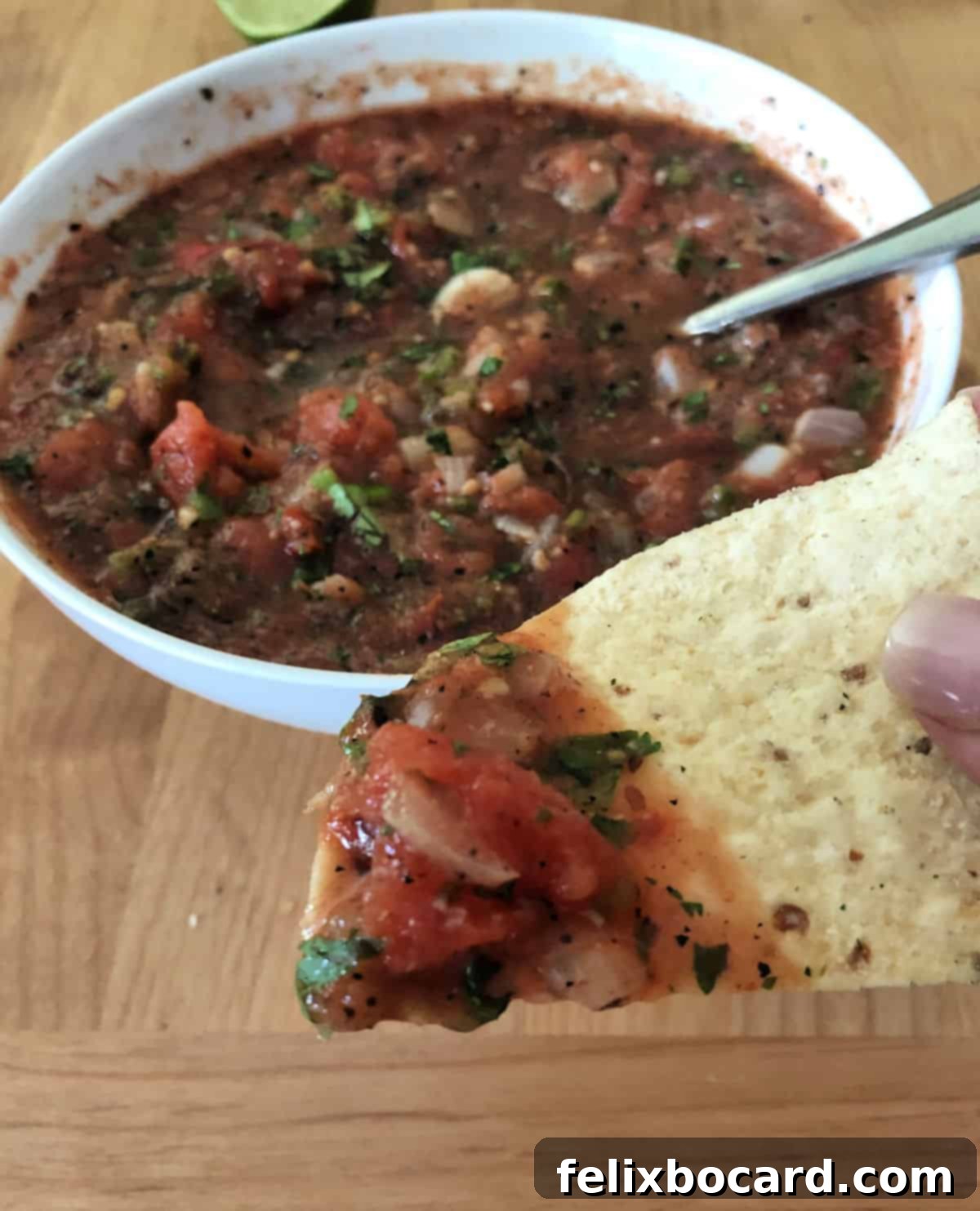
Unleash Flavor: Your Ultimate Guide to Homemade Roasted Salsa
There’s a special kind of magic that happens when fresh, ripe tomatoes meet the intense heat of a broiler. Their natural sweetness deepens, their skins caramelize, and their juicy insides transform into a smoky, robust foundation for an incomparable salsa. If you’re currently blessed with an abundance of tomatoes – whether from your garden, a local farm stand, or a bustling farmer’s market – then you’re holding the key ingredients to a truly exceptional culinary experience. Forget the store-bought jars; crafting your own roasted salsa at home is not only simple and fun but also allows for unparalleled customization, ensuring every batch perfectly suits your palate.
This comprehensive guide will walk you through the process of making fire-roasted salsa, from selecting the best produce to mastering the art of charring, blending, and seasoning. We’ll explore how to dial in the perfect level of heat, achieve your preferred texture, and infuse your salsa with layers of vibrant flavor. Get ready to impress your friends and family with a homemade condiment that far surpasses any store-bought alternative.
The Art of Customization: Crafting Your Perfect Roasted Salsa
One of the greatest joys of making salsa from scratch is the freedom to experiment. While the base recipe provides a fantastic starting point, the real fun begins when you tailor it to your individual taste. This is where you become the chef, adjusting flavors and heat levels to create a truly personalized masterpiece. My own journey to the perfect roasted salsa involved a few delightful detours, proving that a little experimentation can lead to incredible results.
My first attempt, strictly adhering to an inspiring recipe from a Bon Appetit issue, yielded a salsa that was far too watery and intensely spicy for my liking. It was a good learning experience, highlighting just how much control a home cook truly has. This initial outcome prompted me to make some significant adjustments, which I’m happy to share. Remember, these modifications are easily reversible if you prefer a spicier kick!
Controlling the Heat: From Mild to Fiery
The heat level in your roasted salsa primarily comes from the peppers you choose and how you handle them. Here’s how you can adjust it:
- Pepper Selection: I opted to replace the original recipe’s serrano peppers with milder jalapenos. Serrano peppers pack a serious punch, typically ranging from 10,000 to 23,000 Scoville Heat Units (SHU). Jalapenos, on the other hand, are much milder, generally between 2,500 and 8,000 SHU. For an even gentler heat, consider using poblanos or even bell peppers. If you crave intense heat, habaneros or ghost peppers can be introduced, but use them sparingly!
- Seed Removal: The majority of a pepper’s capsaicin (the compound responsible for its heat) resides in the seeds and the white pith (placenta). After roasting the peppers, carefully remove the seeds and pith before adding them to your salsa. This step significantly reduces the heat without sacrificing the roasted flavor of the pepper flesh. For those who enjoy a spicier salsa, you can leave some or all of the seeds in.
- Quantity Control: Start with fewer peppers than you think you need. For instance, I initially used two cooked and chopped jalapenos, reserving a third until after taste-testing. Ultimately, I found two to be perfect for my preference. It’s always easier to add more heat later than to try and remove it.
Fine-Tuning the Flavor Profile
Beyond heat, other ingredients play a crucial role in shaping your salsa’s overall taste:
- Onion Choice: The original recipe called for white onion, which can have a sharper, more pungent flavor when raw or lightly cooked. I found that replacing it with a mellower yellow onion provided a sweeter, less intense base that harmonized beautifully with the roasted tomatoes. Red onions can also offer a slightly sweeter, milder alternative, and they add a lovely color.
- Garlic: Roasting unpeeled garlic cloves transforms their sharp bite into a sweet, mellow, almost creamy flavor. Don’t skip this step – it’s fundamental to the depth of flavor in roasted salsa.
- Cilantro and Lime: These fresh additions are critical for brightness and acidity. Always add them after the salsa has cooled to preserve their vibrant flavor and aroma. Adjust quantities to your liking; some prefer a strong cilantro presence, while others use it more subtly.
- Salt: Essential for bringing all the flavors together. Always season to taste, adding small amounts and mixing before re-tasting.
The Roasting Process: Building Flavor from the Ground Up
The heart of fire-roasted salsa lies in the roasting. This step intensifies the natural sugars in the vegetables, creates a smoky depth, and adds a beautiful charred dimension that sets this salsa apart.
Prepare Your Vegetables for Roasting
The preparation for roasting is straightforward, focusing on setting your ingredients up for even cooking and optimal charring:
- Tomatoes: Select firm, ripe tomatoes. Core them to remove the tough stem end, then cut them in half crosswise. Placing them cut-side down on the baking sheet allows their moisture to steam off while the skin side gets beautifully charred.
- Onion: Cut your chosen onion (yellow or white) into thick slices. This ensures they soften and caramelize without burning too quickly.
- Peppers: Use whole peppers. The skins will blister and char, which contributes to the smoky flavor and makes them easier to peel later if desired.
- Garlic: Leave the garlic cloves unpeeled. The papery skin protects the garlic during the intense heat of the broiler, allowing the cloves to roast to a sweet, tender perfection without burning.
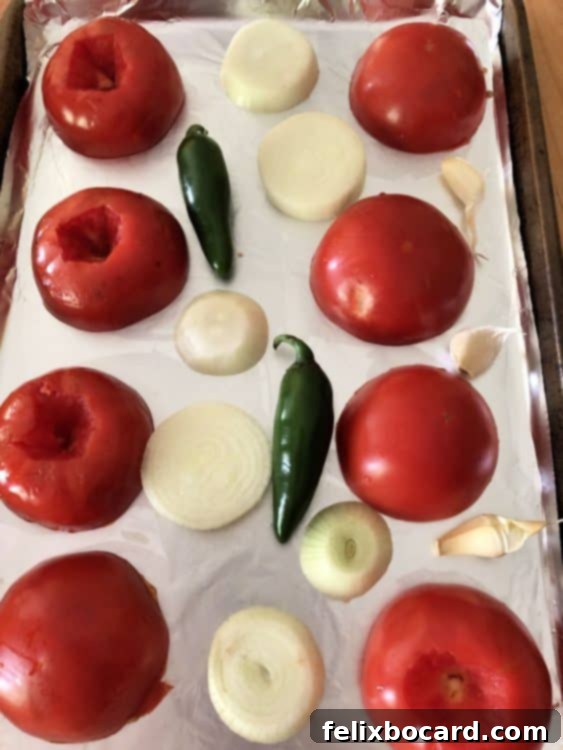
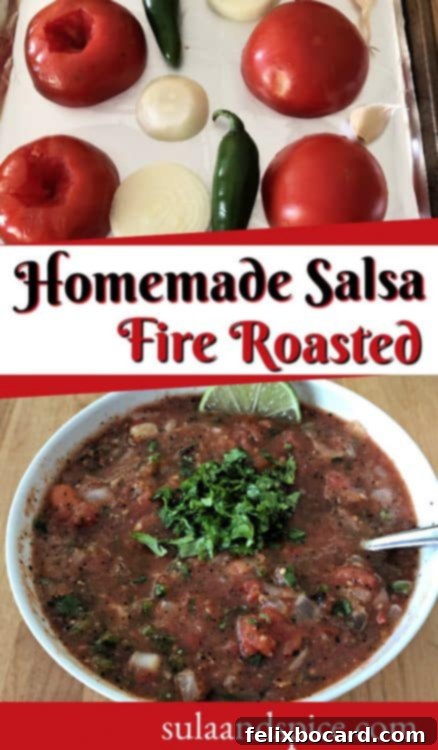
Arrange your prepared tomatoes, onion slices, whole peppers, and unpeeled garlic cloves on a foil-lined, rimmed baking sheet. Using foil makes cleanup a breeze and prevents vegetables from sticking. Ensure the vegetables are in a single layer and not overlapping too much to allow for even roasting and charring. The roasting process itself is quick, typically less than 20 minutes, but it requires active monitoring to prevent burning and ensure proper caramelization.
Mastering the Broiler Technique
The broiler is your secret weapon for achieving that coveted fire-roasted flavor. Its intense, direct heat mimics grilling, creating perfectly charred surfaces in a fraction of the time. The key is to manage the different cooking times of your vegetables effectively. Here’s a simplified breakdown of the broiling schedule I found most effective:
- Preheat: Start by heating your broiler to high. Position an oven rack about 6 inches from the heat source.
- Initial Broil (3 minutes): Place the baking sheet with all the vegetables into the oven. Set a timer for 3 minutes.
- First Turn & Continue Broiling (3 minutes): After 3 minutes, carefully open the oven and, using tongs, turn the chilis (peppers). Close the oven and set the timer for another 3 minutes. At this point, the chilis and garlic should be lightly charred and fragrant.
- Remove Chilis & Garlic, Turn Onions (10 minutes): After the second 3-minute interval, remove the chilis and garlic from the pan. Turn the onion slices. Return the pan (now containing only tomatoes and onions) to the broiler for an additional 10 minutes. The tomatoes should be softened and deeply charred on the skin side, and the onions should be tender with caramelized edges.
- Final Removal: Once the 10 minutes are up, carefully remove the pan from the oven and turn off the broiler.
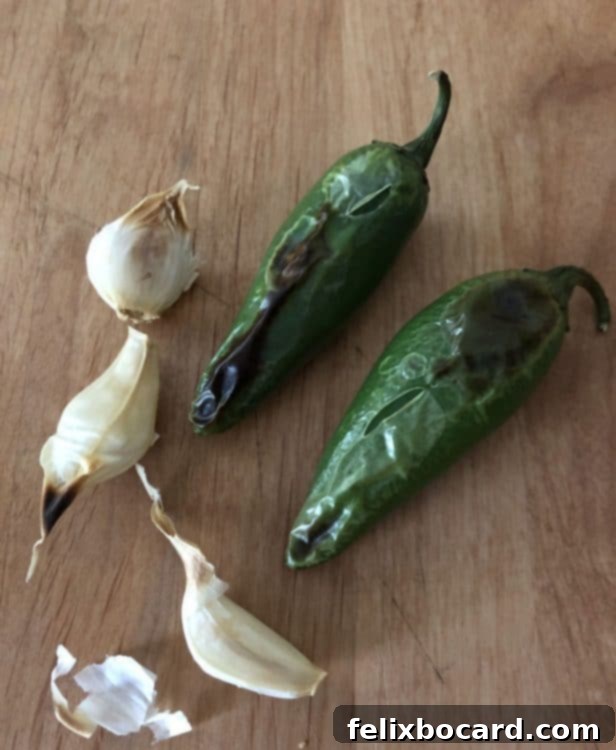
The outcome of this timed broiling process is a beautiful array of roasted vegetables, some with tender, blackened skins and surfaces. Don’t be alarmed by the char; it’s exactly what you want!
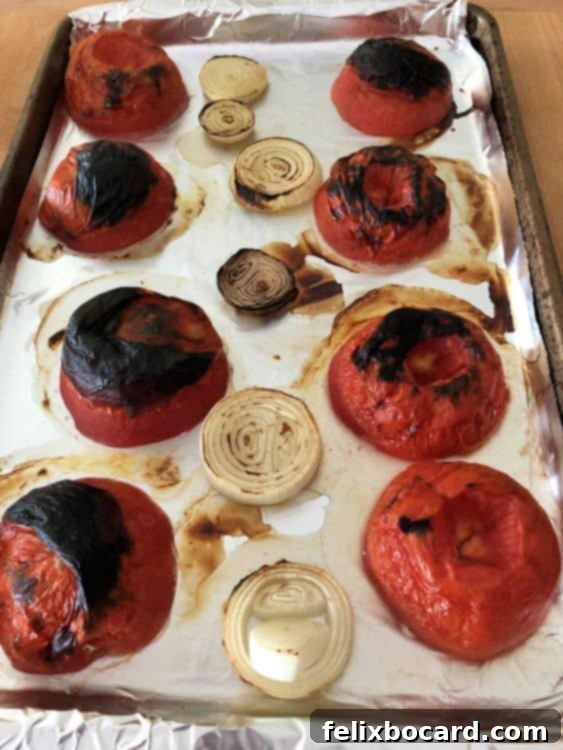
While it might seem counterintuitive, those blackened tomato skins are flavor gold! My initial instinct was to discard them, but trust me, leaving them in only enhances the smoky depth and authentic character of your salsa. They contribute to a more complex and rich flavor profile, so embrace the char!
Transforming Roasted Vegetables into Salsa
Once your vegetables are beautifully roasted and cooled slightly, it’s time to bring them together into a harmonious salsa. The method you choose for chopping and blending will significantly impact the final texture of your salsa, allowing you to create anything from a smooth puree to a chunky, rustic dip.
Chopping and Blending for Desired Texture
Achieving the perfect consistency is crucial for salsa. Here’s a breakdown of how to handle your roasted vegetables:
- Garlic Prep: Start by peeling the roasted garlic cloves. They should be soft and easily squeezed from their skins.
- Initial Blend: Place the peeled garlic cloves and half of your roasted tomatoes into a food processor or blender. Blend until this mixture is smooth. This creates the foundational liquid component of your salsa. If using a blender, be mindful not to over-blend everything at once, as you risk ending up with a thin puree rather than a textured salsa.
- Managing Tomato Moisture for Chunky Salsa: For a thicker, chunkier salsa – my personal preference – I highly recommend managing the liquid content of the remaining tomatoes. Place the second half of the roasted tomatoes into a colander over the sink. Gently squeeze them to press out some of their excess juice. This simple step prevents your salsa from becoming too “soupy.” Allow them to drain for a few minutes.
- Adding Remaining Vegetables: Once the tomatoes have drained (if you chose that step), chop them roughly. Then, finely chop the roasted onion slices and the roasted peppers (remembering to remove seeds and stems if you’re aiming for less heat).
- Combining for Texture: Add the chopped tomatoes, onions, and peppers to the bowl with your smooth tomato-garlic base. If you’re using a food processor and aiming for a slightly chunkier texture, you can add the remaining tomatoes and other chopped vegetables to the processor and pulse it just a few times until roughly chopped, avoiding over-processing into a fine puree. Since I don’t have a full-sized food processor, I often blend the first half, then hand-chop the second half of the tomatoes, onions, and peppers, and combine everything in a bowl. This method gives me excellent control over the final consistency.
Mixing, Seasoning, and the Final Flourish
Once your roasted vegetables are prepped and combined, it’s time to bring all the flavors together and add the fresh elements that elevate salsa to its best.
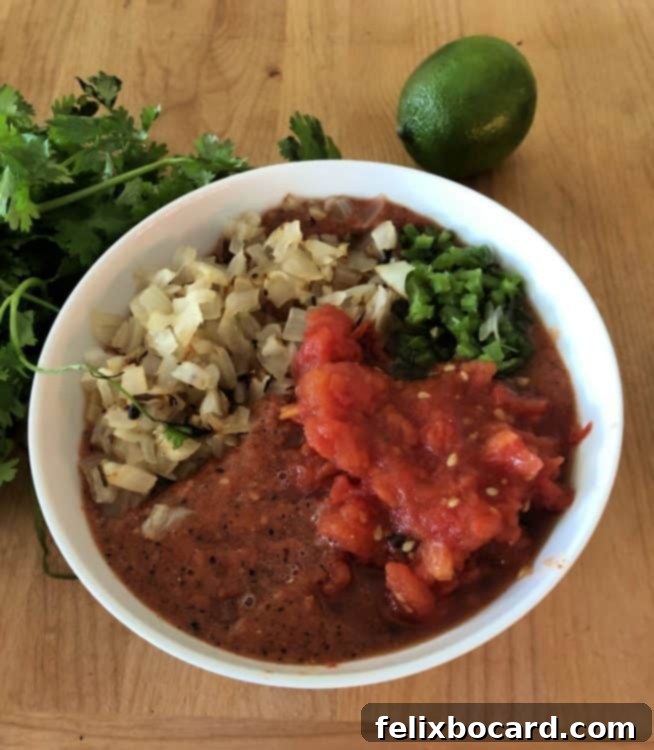
Combine all the processed and chopped ingredients in a medium bowl. Give it a good stir to ensure everything is well-integrated. Now, season generously with salt to taste. Salt is vital for enhancing all the complex flavors you’ve built through roasting.
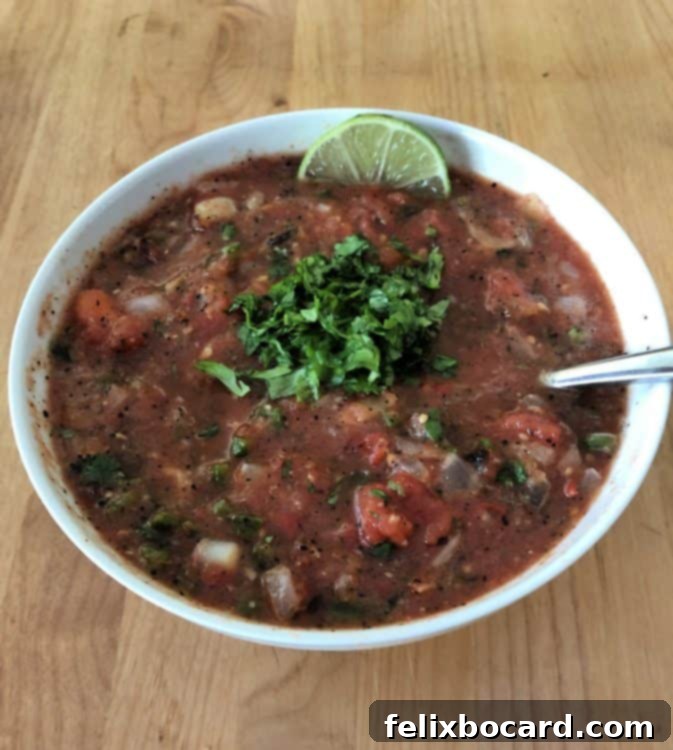
If your mixture is still warm from the roasted vegetables, allow it to cool down to at least room temperature before adding the final, delicate ingredients: fresh lime juice and finely chopped cilantro. Adding these vibrant elements to hot salsa can diminish their freshness and brightness. The lime juice provides a crucial tangy counterpoint to the smoky, sweet vegetables, while cilantro adds an aromatic, herbaceous lift. Stir them in thoroughly, then give your salsa one final taste test, adjusting salt, lime, or even a touch more chopped chili if needed.
The result is a truly delicious, deeply flavorful salsa that is infinitely customizable. Each batch can be tweaked to suit your family’s preferences and your “hot-o-meter” setting, making it a truly versatile and satisfying kitchen creation.
Benefits of Making Your Own Roasted Salsa
Beyond the sheer joy of cooking, there are numerous practical advantages to whipping up your own batch of roasted salsa:
- Unmatched Flavor: The roasting process creates a depth of flavor that simply cannot be replicated by raw salsas or those made with canned tomatoes. The smoky, caramelized notes are truly distinctive.
- Freshness and Quality Control: You control every ingredient, ensuring you use the freshest produce available and avoiding any unwanted additives, preservatives, or excessive sodium often found in commercial salsas.
- Customization: As explored, you have complete command over the heat level, texture, and flavor profile. This means you can create a salsa that is genuinely perfect for you.
- Cost-Effective: Especially during peak tomato season, making your own salsa is often more economical than buying high-quality gourmet varieties from the store.
- Sense of Accomplishment: There’s immense satisfaction in serving something delicious that you’ve crafted from scratch.
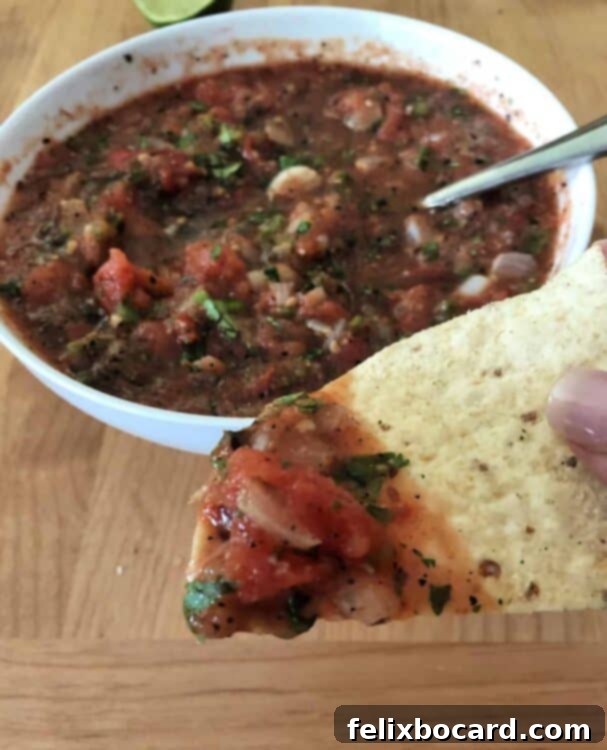
Don’t hesitate, give this roasted salsa a try! It’s genuinely a fun and rewarding cooking experience, and the aroma alone will have your kitchen feeling like a vibrant taqueria.
📖 Roasted Salsa Recipe

★★★★★
Print
Pin it!
Roasted Salsa
Ingredients
- 2 lb. tomatoes about 4 medium, cored and cut in half crosswise
- 1 medium yellow onion use white onion for hotter salsa
- 2-3 jalapeno peppers use serrano peppers for hotter salsa
- 3 garlic cloves unpeeled
- Salt to taste
- 2 TB lime juice from approx. ½ a lime
- 2 TB finely chopped cilantro
Instructions
- Heat broiler to high. Place tomatoes, cut side down, on a foil-lined, rimmed baking sheet.
- Fit onions, chilis and unpeeled garlic cloves around the tomatoes on the baking sheet so that everything is snug but not overlapping.
- Place pan in broiler (rack about 6 inches from heat). Broil for 3 minutes, then turn the chilis. Broil for 3 more minutes, then remove the chilis and garlic from the pan. Turn the onions. Broil for an additional 10 minutes before removing the pan from the oven.
- Peel the roasted garlic cloves and place them in a blender or food processor along with half of the roasted tomatoes. Blend until smooth. Transfer this mixture to a medium bowl.
- Place the remaining roasted tomatoes in a colander over the sink and squeeze gently to remove excess liquid, allowing them to drain for a few minutes. Then, roughly chop these drained tomatoes and add them to the bowl of puree.
- Finely chop the roasted peppers (removing seeds and stem for less heat) and the roasted onion. Mix these into the tomato-garlic base and season generously with salt to taste.
- Allow the salsa to cool completely to room temperature.
- Once cooled, stir in the fresh lime juice and finely chopped cilantro. Taste and adjust seasonings as needed. Serve immediately or chill for enhanced flavor.
Nutrition
Nutrition values are estimates only, using online calculators. Please verify using your own data.
Creative Ways to Enjoy Your Homemade Roasted Salsa
While the classic pairing of chips and salsa is always a winner, your versatile homemade roasted salsa is capable of so much more. Its rich, smoky flavor profile makes it a fantastic accompaniment to a wide range of dishes:
- Taco Night Essential: Elevate your tacos, burritos, and enchiladas with a dollop of this flavorful salsa. It’s perfect for both meat and vegetarian fillings. Consider using it in a delicious Taco Dip for your next gathering!
- Breakfast Booster: Spoon it over scrambled eggs, omelets, or breakfast burritos for a bright and savory start to your day. It pairs wonderfully with avocado and a sprinkle of cheese.
- Grilled Meats and Fish: Serve your roasted salsa alongside grilled chicken, steak, pork, or white fish. The smoky notes in the salsa complement the charred flavors of grilled proteins beautifully.
- Flavorful Topping: Use it as a vibrant topping for baked potatoes, sweet potatoes, or even simple rice bowls.
- Soup and Chili Enhancement: Stir a spoonful or two into your favorite chili or black bean soup to add an extra layer of smoky depth and freshness.
- Healthy Snack: Enjoy it with vegetable sticks like cucumber, carrots, or bell peppers for a healthy and satisfying snack.
Once you discover the ease and deliciousness of homemade roasted salsa, you’ll find countless ways to incorporate it into your meals. It’s a versatile condiment that brightens and deepens flavors in an instant.
Storage Tips for Freshness
Your freshly made roasted salsa is best enjoyed within a few days. Store it in an airtight container in the refrigerator for up to 5-7 days. The flavors tend to meld and deepen even further after a day or two, making it an excellent make-ahead option. For longer storage, this salsa also freezes beautifully. Simply transfer it to freezer-safe bags or containers, leaving a little headspace for expansion, and freeze for up to 3 months. Thaw in the refrigerator overnight before serving, and stir well to reincorporate any separated liquids.
If you’re a fan of bold and spicy flavors, don’t stop at salsa! You might also love this Jalapeno Popper Hasselback Chicken for a truly irresistible meal. The creamy, cheesy, and spicy elements are a guaranteed hit!
And for another fantastic spicy sauce that seems to complement just about everything, be sure to try this Taco Bell Quesadilla Sauce Copycat. It’s surprisingly versatile and incredibly addictive!