Mastering Grilled Pizza: From Classic Vegetarian to Savory Meat Lover’s Perfection
There’s an undeniable charm to the sizzle of a summer grill, and what better way to celebrate the season than by combining it with America’s favorite food: pizza! While some might associate pizza exclusively with a hot oven or a dedicated pizza stone, grilling pizza opens up a world of smoky flavors, crispy crusts, and effortless outdoor cooking. Forget the delivery menu; this comprehensive guide will transform your backyard grill into a gourmet pizzeria, empowering you to craft delectable pizzas, whether you crave a vibrant vegetarian delight or a hearty meat lover’s feast.
Grilled pizza isn’t just a meal; it’s an experience. The direct heat of the grill imparts a unique char and a wonderfully chewy texture to the crust, a quality difficult to replicate indoors. Moreover, cooking outdoors keeps your kitchen cool during those warm summer evenings. Imagine gathering friends and family around the grill, each person customizing their own pizza with fresh ingredients before watching it transform into a culinary masterpiece right before their eyes. It’s a fun, interactive, and incredibly rewarding way to enjoy pizza that promises both delicious results and memorable moments.
The Art of Grilling Pizza: Technique and Tips for Success
Grilling pizza is more about mastering a specific technique, particularly when it comes to handling the dough and managing grill temperatures. Once you confidently navigate these initial steps, the creative possibilities for toppings are truly limitless. This method empowers you to personalize every pie to perfection, catering to all tastes and dietary preferences with ease.
For this guide, we’ll focus on using a gas grill due to its consistent temperature control, making it ideal for beginners and seasoned grill masters alike. While it’s theoretically possible to use a charcoal grill, achieving and maintaining the precise heat required can be more challenging for a consistent outcome. It’s important to approach grilled pizza with a bit of patience and a willingness to learn. Like any new culinary skill, it might take a couple of attempts to get the hang of it. We highly recommend practicing this technique a few times on your own or with a small group before hosting a large gathering. Think of it as a delicious experiment – the more you practice, the more confident and creative you’ll become, turning every grilled pizza night into a resounding success.
The foundation of any great pizza is its dough, and the beauty of homemade or semi-homemade pizza extends to your dough choice. If you have a cherished family recipe for pizza dough, or a favorite ready-made option like the popular Ooni pizza dough recipe, by all means, use it here! The fundamental principles of grilling pizza remain consistent, regardless of your dough source. However, for ultimate convenience and to simplify the process, especially for those new to grilling pizza, we’ve opted for readily available frozen pizza dough and a quality store-bought pizza sauce. This “easy button” approach ensures that anyone can enjoy the delights of perfectly grilled pizza without the added stress of making everything from scratch.
Selecting and Preparing Your Pizza Dough for Grilling
The base of any exceptional grilled pizza is its dough, and careful preparation is paramount for success. We’ve found that using a high-quality frozen pizza dough, such as Rhodes brand, yields consistently excellent results with minimal effort. This streamlined approach maximizes convenience without compromising on flavor or texture, making grilled pizza accessible to everyone. Here’s how to expertly prepare your dough:
Thawing the Dough Gradually for Optimal Texture
Begin by carefully removing the frozen dough from its original packaging. Place it gently on a plate or in a bowl large enough to accommodate its expansion. To prevent the dough from sticking and drying out, cover it tightly with plastic wrap that has been lightly sprayed with cooking spray on the side facing the dough. Transfer the covered dough to the refrigerator and allow it to thaw slowly overnight. This gradual thawing process is crucial; it helps the dough develop superior flavor and a more manageable texture, which are both vital for successful grilling.
Bringing Dough to Room Temperature for Pliability
The following day, after the dough has thoroughly thawed in the refrigerator, remove the plate or bowl. It is absolutely essential to let the dough warm to room temperature for at least an hour before you begin shaping it. During this critical time, the dough will relax its gluten structure and rise slightly, becoming significantly more pliable and less resistant to rolling. Attempting to roll cold dough can lead to tearing and an uneven crust, so do not skip this step for a perfectly thin and evenly cooked pizza.
Working with the Dough: Semolina and Strategic Shaping
Find a spacious, clean surface to work on, such as a large cutting board or a clean countertop. Liberally dust this surface with semolina flour. Semolina flour is coarser than regular all-purpose flour, providing an excellent non-stick barrier that helps prevent the dough from adhering to your work surface and, crucially, to the hot grill grates. It also contributes a subtle, desirable crispness to the crust. Carefully transfer the thawed and warmed dough from its bowl or plate onto the semolina-dusted surface.
For easier handling on the grill, especially if you are new to this technique, we strongly recommend dividing the dough into two equal pieces. Attempting to grill one large pizza can be quite challenging, as larger dough pieces are more difficult to transfer and maneuver on the intense heat of the grill. Splitting the dough into two creates two smaller, more manageable pizzas that are easier to control throughout the grilling process.
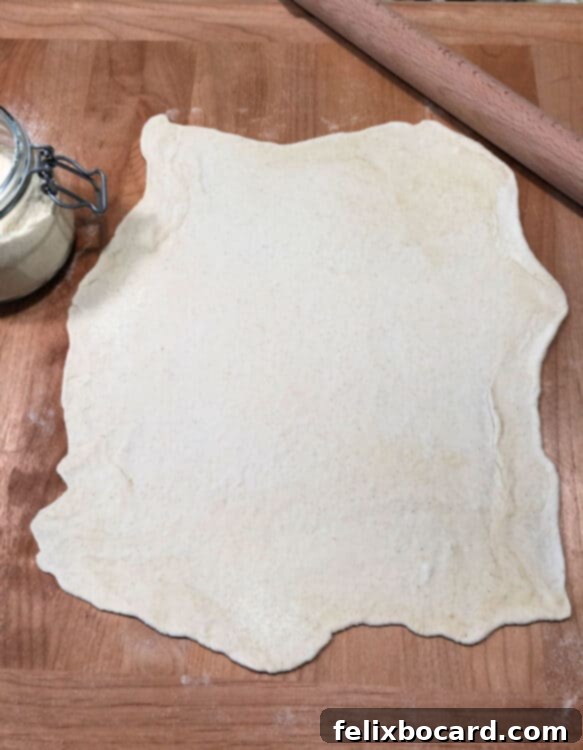
Using a rolling pin, gently begin rolling out one portion of the dough. Continue to dust both sides with semolina flour as needed, roll out, turn the dough over, and roll again until it reaches your desired size and thickness. Aim for a relatively thin crust, about ⅛ to ¼ inch thick, as this will cook quickly and achieve that ideal crispy-chewy balance on the grill. A rectangle or square shape often works best for fitting onto standard grill grates.
The Grilling Process: Achieving the Perfect Crust
The secret to exceptional grilled pizza lies in how you cook the crust. It’s a two-stage process designed to create that signature smoky flavor and perfect texture: first, partially cooking the dough directly on the grill to achieve a crisp base and structural integrity, and then adding toppings for the final bake. Here’s a detailed breakdown of how to execute this technique flawlessly:
Preheating Your Grill to High Heat for Optimal Sear
Before you even think about placing dough on the grates, ensure your grill is intensely hot. Turn all burners to their highest setting and close the lid, allowing the grill to preheat thoroughly for at least 10-15 minutes. On most gas grills, the temperature gauge should reach over 400°F (200°C) – ideally closer to 500°F (260°C). This initial high heat is absolutely crucial for quickly charring the dough, creating distinct grill marks, and preventing it from sticking to the grates. A well-preheated grill is the first step towards a delightful smoky flavor and a perfectly crisp crust.
Expertly Transferring and Grilling the Dough
Once your grill is fully preheated and searing hot, give the rolled-out dough one final, light roll to ensure it’s flat and evenly shaped. Then, carefully carry the entire cutting board with the dough out to your grill. This minimizes handling the raw, pliable dough, reducing the risk of tearing or misshaping it before it hits the heat.
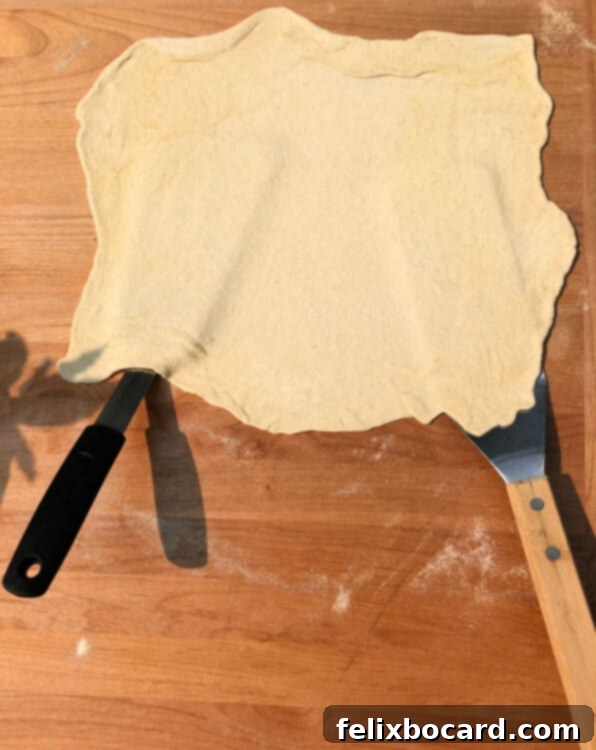
You’ll need two large, sturdy spatulas for this critical step. The raw dough is inherently very pliable and can be quite floppy, making it challenging to transfer without tearing or deforming. Use both spatulas simultaneously to carefully lift and slide the dough onto the hot grill grates, doing your best to maintain its intended shape as it settles.
As soon as the dough makes contact with the intensely hot grill, it will begin to cook immediately. Keep the grill lid open during this initial phase to closely monitor the crust’s progress. You’ll observe the dough starting to firm up, developing a slight sheen, and forming small bubbles across its surface as the yeast activates and gases expand.
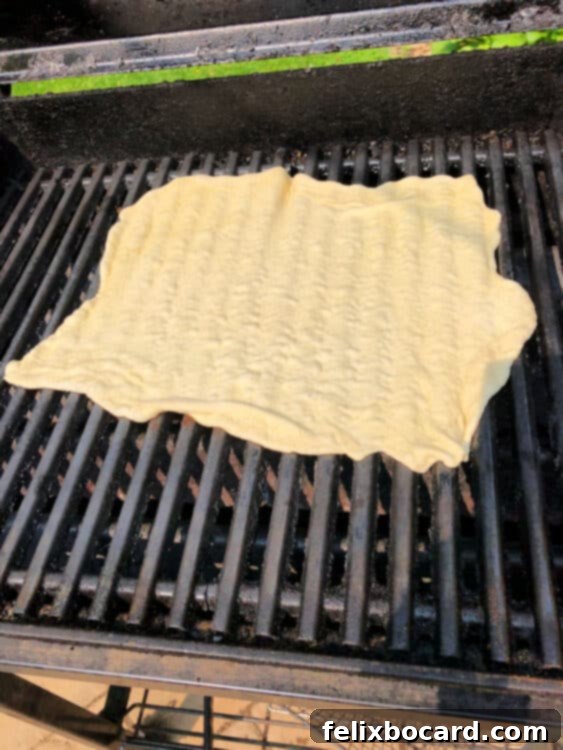
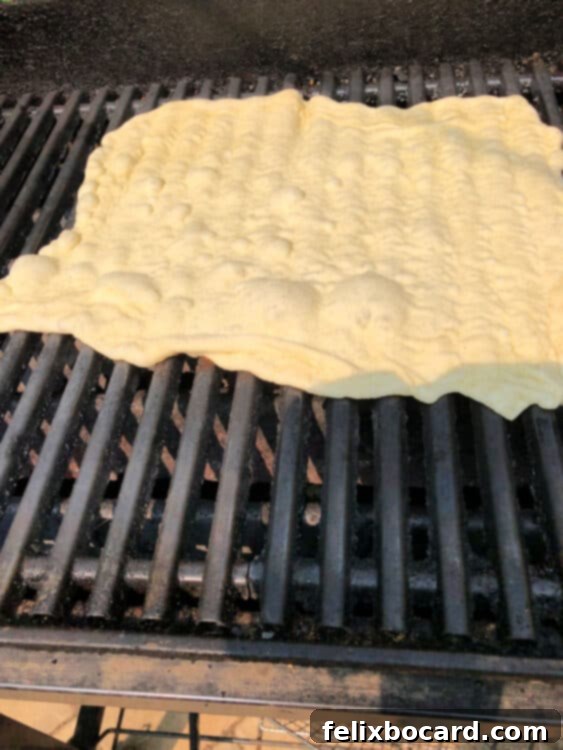
It’s perfectly normal for bubbles to start forming in the dough while it is cooking. These are simply air pockets expanding from the direct, intense heat.
If large, unruly bubbles appear and threaten to make your crust uneven, simply and gently smash them down with one of your spatulas. This technique helps to ensure that the crust cooks evenly and maintains a relatively flat surface for your toppings.
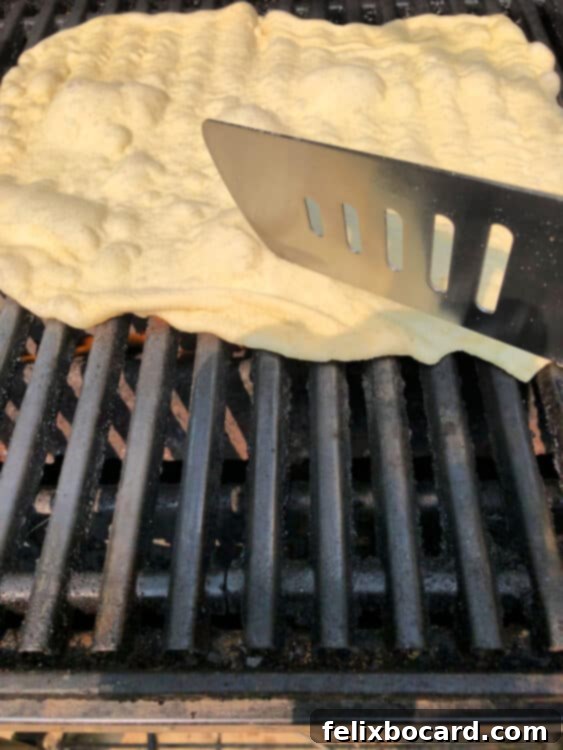
Knowing When to Flip the Crust for Perfection
Allow the dough to cook uncovered for only a brief period—typically one to two minutes—on the first side. This step is incredibly quick, so stay vigilant! Use a spatula to carefully lift an edge of the crust and peek at the underside. You are looking for a few light char marks, golden-brown patches, and distinct grill lines. Once you observe these indicators, it’s the perfect moment to flip the crust.
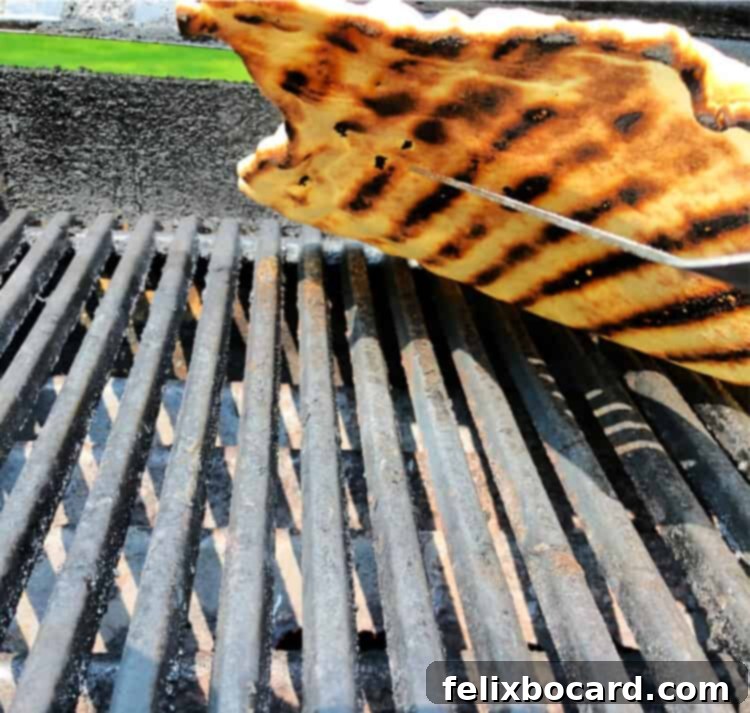
A beautifully charred underside, complete with appealing grill marks, signals that the crust has begun to set and is ready for its flip, locking in that desirable smoky flavor.
Using both spatulas, carefully pick up the dough and swiftly flip it over. We highly recommend flipping it from right to left or left to right, rather than front to back, as this technique often proves easier and minimizes the risk of mishandling. Cook the second side for another minute or two, again looking for similar light charring and firming. Remember, the primary goal of this initial grilling stage is to “set” the dough and give it structural integrity, making it sturdy enough to hold your toppings. The pizza will finish cooking once the toppings are added, so do not feel compelled to fully cook the crust at this step; a partially cooked, sturdy base is exactly what you want.
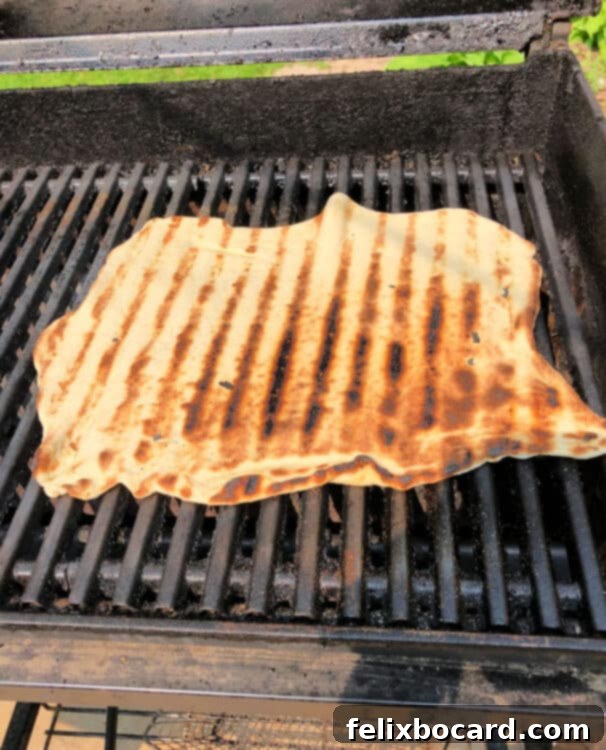
Once both sides are lightly grilled and the crust has achieved a semi-firm texture, carefully remove it from the grill and place it back on your cutting board. Immediately turn the burners on your grill down to medium heat. This crucial adjustment is necessary for the second stage of cooking, ensuring that your toppings melt beautifully and cook through without the risk of burning the bottom of the crust.
Customizing Your Masterpiece: Adding Pizza Toppings
Now comes the most exciting and creative part of the grilled pizza process: adding your favorite toppings! This is where you can truly let your culinary imagination shine and tailor each pizza to individual tastes and preferences. The partially cooked crust serves as the perfect canvas for your edible artistry. A useful tip for optimal cooking: if one side of your grilled crust appears more charred or cooked than the other, strategically place your toppings on that side. This allows the less-cooked side to receive more direct heat during the final bake, ensuring an even finish and preventing any part of the crust from being undercooked.
Vegetarian Grilled Pizza: A Fresh and Flavorful Ensemble
For a delightful and vibrant vegetarian grilled pizza, envision a colorful array of fresh, seasonal ingredients. Begin by spreading a thin, even layer of your preferred pizza sauce. For an extra punch of herbaceous flavor, consider mixing your pizza sauce with a spoonful of pesto before spreading. Next, generously sprinkle a base layer of shredded mozzarella cheese. Enhance the freshness with thinly sliced fresh tomatoes, which will burst with juiciness as they heat, and distribute bite-sized pieces of fresh mozzarella for that irresistible creamy, melted texture. Other fantastic vegetarian additions could include colorful bell peppers, thinly sliced red onions, sautéed mushrooms, briny olives, or tender spinach. The key to success with toppings is not to overload the pizza; too many ingredients can make the crust soggy, prevent even cooking, and ultimately lead to a less satisfying result.
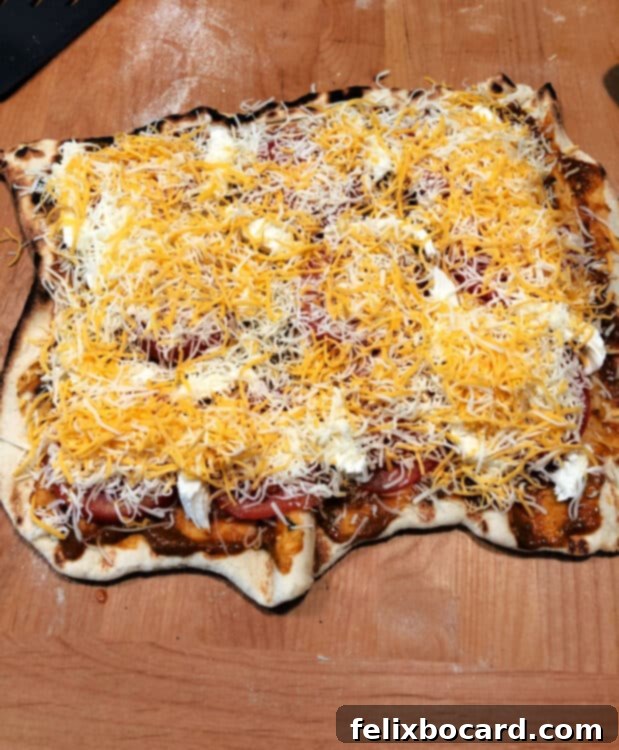
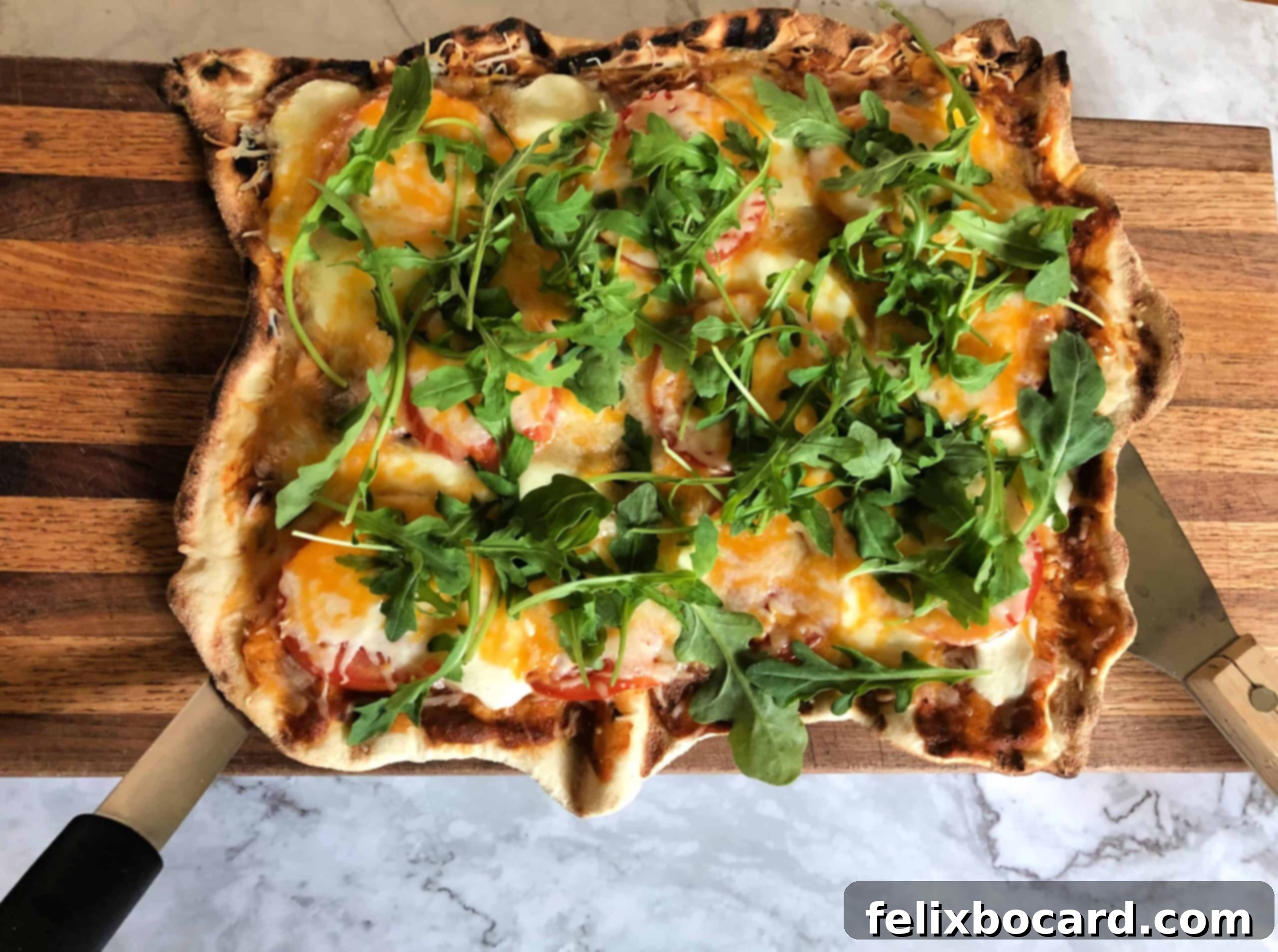
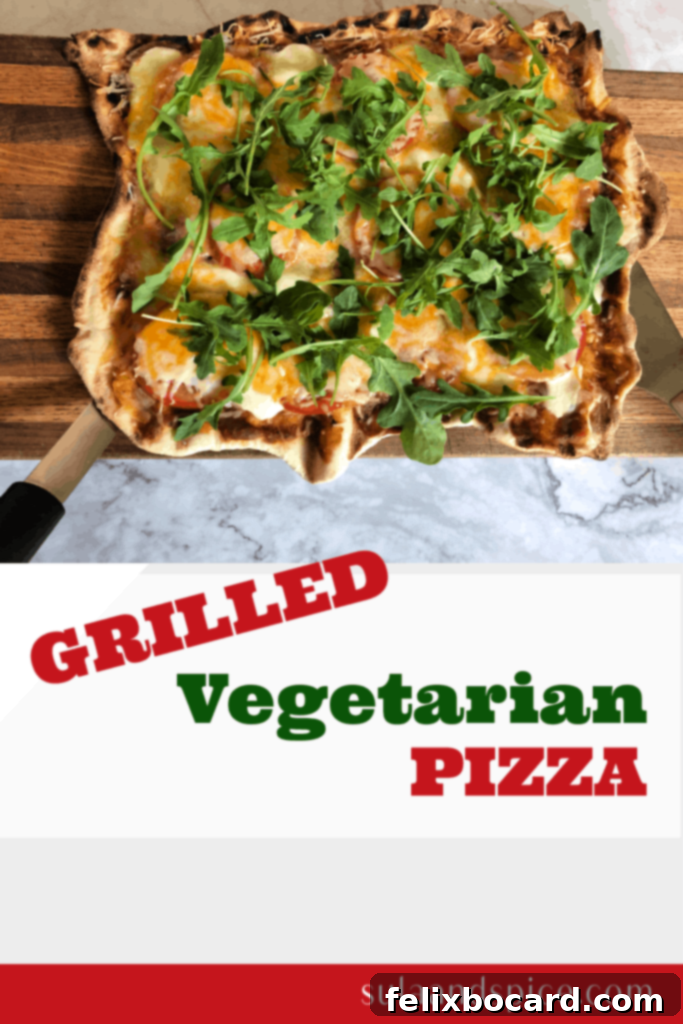
This enticing vegetarian version features a classic combination of vibrant sliced tomatoes, creamy fresh mozzarella, and a generous, melting layer of shredded cheese, creating a harmonious blend of Mediterranean-inspired flavors and delightful textures.
Meat Lover’s Grilled Pizza: A Hearty and Satisfying Feast
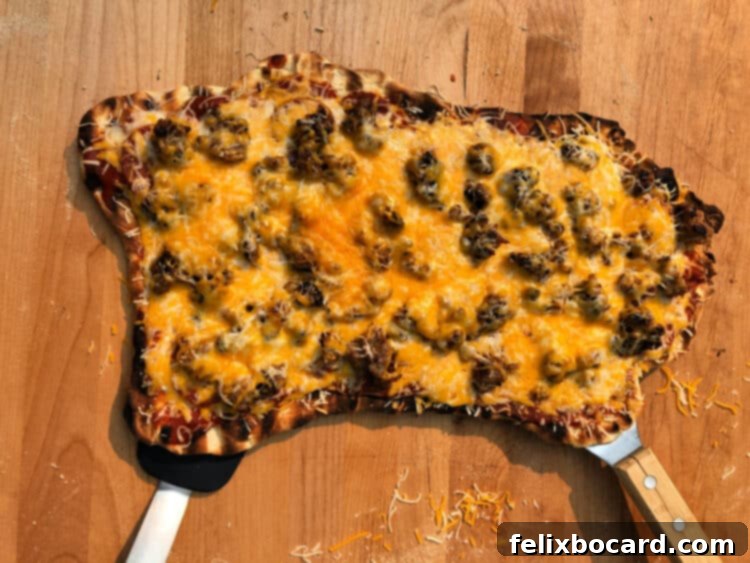
If your palate leans towards a more robust and savory experience, a meat lover’s grilled pizza is the ultimate choice. Begin, as with the vegetarian option, with a layer of your favorite pizza sauce, followed by a generous spread of shredded cheese. For the meat components, it is crucial to pre-cook any raw meats, such as Italian sausage or ground beef, beforehand. Crumble the fully cooked Italian sausage evenly over the cheese, and then artfully arrange slices of classic pepperoni. You can also experiment with other delicious additions like crispy cooked bacon, savory diced ham, or even pre-grilled chicken. As always, exercise restraint and avoid excessive toppings to ensure the pizza cooks through properly and the crust remains delightfully crisp.
The Final Grill: Melting and Perfecting Your Pizza
With your chosen toppings artfully arranged on the partially cooked crust, it’s time to return your pizza to the grill for its final, transformative bake. This stage requires a gentler, more controlled heat to allow the cheese to melt beautifully into a bubbling, golden blanket and the toppings to warm through and cook perfectly, all without overcooking or burning the crust. The ultimate goal is a flawlessly golden crust, irresistibly bubbling cheese, and tender, perfectly heated toppings.
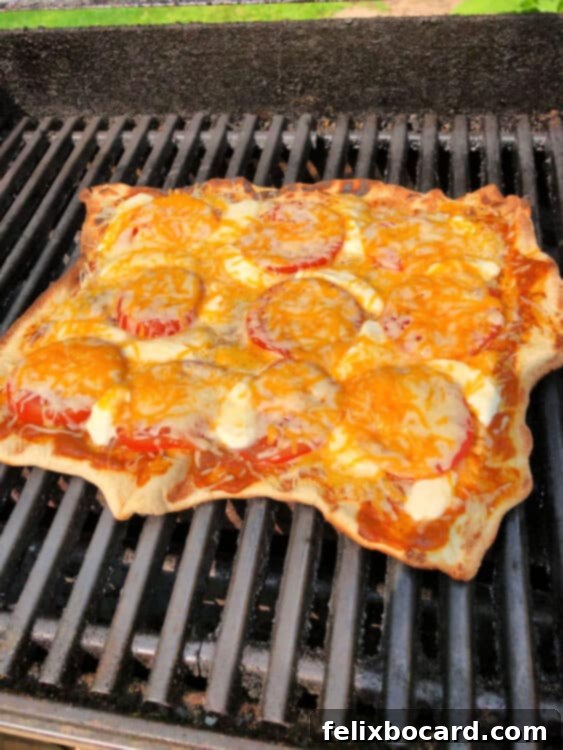
Carefully transfer the topped pizza back onto the grill grates, which should now be operating at a stable medium heat. Close the grill lid to allow the heat to circulate evenly, effectively turning your outdoor grill into a high-performance convection oven. Slower cooking is paramount during this phase. If the heat is too high, you risk encountering a common and disheartening pizza tragedy: a burnt crust with unmelted cheese, a truly sad outcome for any pizza enthusiast. Every grill behaves differently and has its own hot spots, so maintain a watchful eye throughout this stage. On average, this final grilling process typically takes approximately 10-15 minutes, but always defer to visual cues of doneness.
You’ll instinctively know your pizza is done when the cheese is fully melted, bubbling invitingly, the crust has achieved a golden-brown hue and appears crispy, and any raw toppings are tender and cooked through. Once it reaches this stage of visual perfection, use your two large spatulas to carefully and confidently remove it from the grill. Place the hot pizza on your cutting board and allow it to rest for a few crucial minutes before slicing. This brief resting period allows the molten cheese and toppings to set slightly, which is essential for preventing everything from sliding off when you make that first cut.
Enhancing Vegetarian Pizza with Fresh Arugula
For those making a vibrant vegetarian grilled pizza, a simple yet incredibly impactful addition of fresh arugula after grilling can elevate the flavors and textures immensely. The peppery, slightly bitter bite of fresh arugula provides a refreshing contrast to the rich cheese and savory, smoky crust. If you wish to incorporate this delightful finishing touch, spread a generous handful of fresh arugula evenly over the top of the pizza immediately after removing it from the grill. The residual heat from the freshly cooked pizza will slightly wilt the greens, softening their texture and intensifying their distinct flavor. It’s an incredibly delicious and visually appealing enhancement!
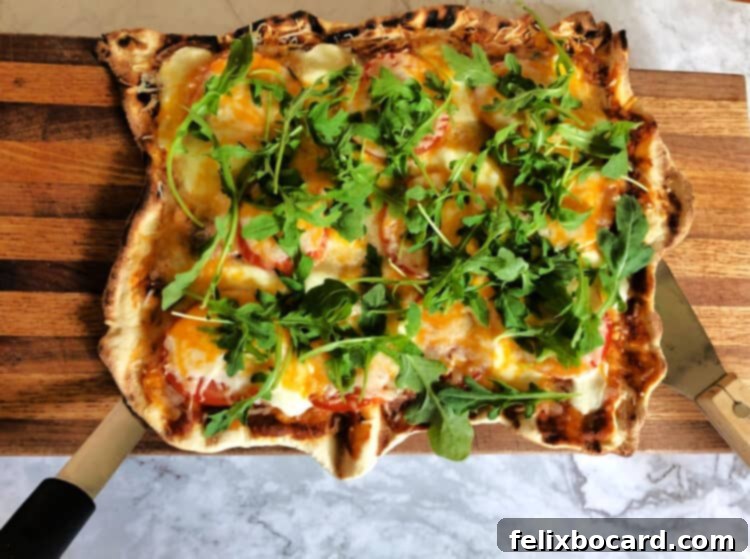
Fresh arugula, added right after the vegetarian grilled pizza is removed from the heat, wilts beautifully from the residual warmth, adding a delicious peppery note and a touch of freshness to every slice.
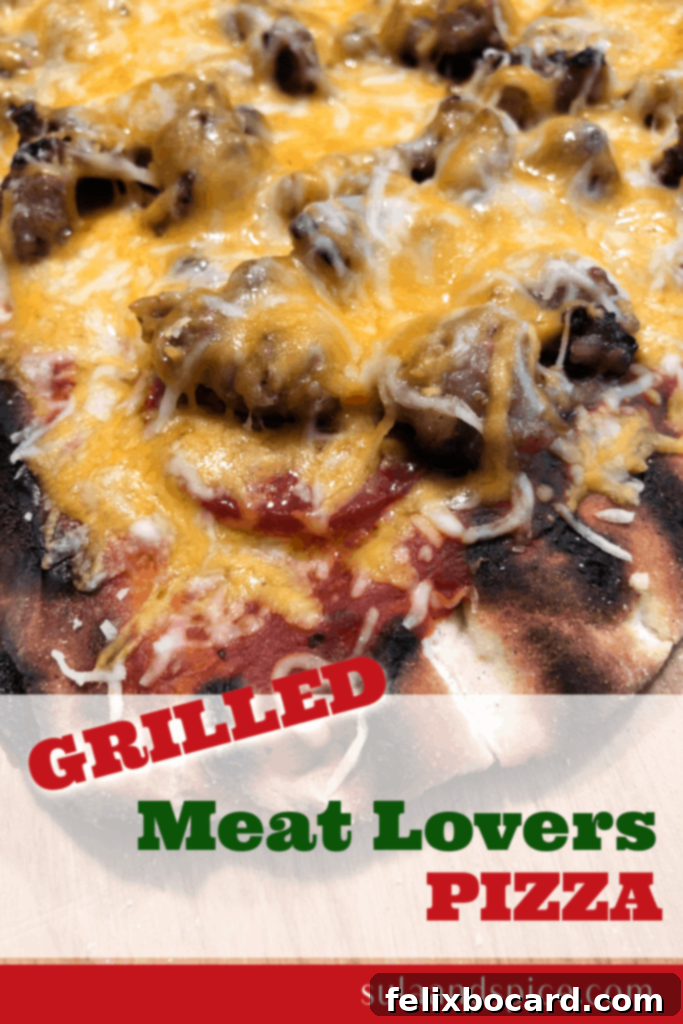
Of course, not everyone craves a vegetarian option, and for the carnivores among us, a hearty meat lover’s grilled pizza is the perfect indulgence. This succulent creation, generously topped with savory cooked Italian sausage and classic pepperoni, is sure to satisfy even the most discerning pizza enthusiast with its rich, deep flavors.
The true joy and enduring appeal of making your own grilled pizza lies in the endless possibilities for customization and creative expression. From classic margheritas featuring simple, fresh ingredients to elaborate, gourmet combinations, your grill is your culinary canvas. Don’t hesitate to experiment with different types of cheeses, explore various sauces beyond the traditional tomato, and integrate an assortment of fresh vegetables and flavorful meats to discover your unique signature grilled pizza. This versatile and engaging cooking method promises a delicious and interactive meal experience every time, perfect for any occasion.
So, gather your ingredients, fire up your grill, and embark on a delicious journey to create fantastic grilled pizza! It’s an unforgettable way to enjoy one of the world’s favorite foods and truly make the most of your outdoor cooking space this season.
📖 Grilled Pizza Recipes

Print
Pin it!
Grilled Pizza – Vegetarian
Ingredients
- ½ frozen pizza dough
- 4 oz ½ cup pizza sauce
- 2 TB pesto
- 2 cups cheese shredded
- 2 oz fresh mozzarella cheese torn into bite-sized pieces
- 2 small tomatoes sliced
- ½ cup arugula
- ¼ cup semolina flour as needed
Instructions
- The day before making the pizza, remove the dough from the freezer. Place it on a plate or bowl. Spray plastic wrap with cooking spray and use this to cover the dough, with the sprayed side toward the dough. Place in refrigerator to thaw overnight.
- The following day, remove the plate/bowl with dough from the refrigerator and allow it to come to room temperature, for at least an hour. The dough will rise slightly.
- Prepare a large cutting board or similar surface with semolina flour. Transfer the dough to the prepared surface and dust some more flour on top. Take a knife and cut the dough into two portions. Reserve one of the portions for a separate pizza.
- Using a rolling pin, begin rolling out one portion of the dough. Continue to dust with flour, roll out, turn over and roll again until it is the desired size. A rectangle or square shape works the best.
- Preheat gas grill by turning on all burners to high and closing the lid as it preheats. If the grill has a temperature gauge, once it reads over 400 you should be good to go.
- Take the entire cutting board out to the grill. Using two large spatulas transfer the pizza dough onto the hot grill. Leave the grill cover open and monitor the dough – it will only need about 2 minutes per side. Peek at the bottom of the crust using a spatula; if it looks slightly charred, it is time to flip. Using both spatulas, flip the dough over. The crust is now partially set and holds its shape. Let the second side cook for 2 minutes, then remove the crust from the heat and turn the burners down to medium.
- Mix the sauce with the pesto and spread it on the crust. Add the rest of the toppings (except the arugula) to the pizza. I prefer to add some of the shredded cheese first, then the veggies and fresh mozzarella, finishing with the rest of the cheese.
- Once all ingredients are on the crust, transfer the pizza back to the grill. Close the lid and let the pizza bake for about 10-15 minutes. Check for “doneness” and adjust cooking time as needed.
- Add arugula to the top of the cooked pizza.
- Remove from heat, slice and serve.
Nutrition
Nutrition values are estimates only, using online calculators. Please verify using your own data.

Print
Pin it!
Grilled Pizza-Meat Lovers
Ingredients
- ½ frozen pizza dough
- 4 oz (½ cup) pizza sauce
- 2 cups cheese shredded
- ½ pound Italian sausage
- 2 oz pepperoni sliced
- 4 cup semolina flour as needed
Instructions
- The day before making the pizza, remove the dough from the freezer. Place it on a plate or bowl. Spray plastic wrap with cooking spray and use this to cover the dough, with the sprayed side toward the dough. Place in refrigerator to thaw overnight.
- The following day, remove the plate/bowl of dough from the refrigerator and allow it to come to room temperature, for at least an hour. The dough will rise slightly.
- Cook the sausage on a stovetop, breaking it up into small pieces as it cooks.
- Prepare a large cutting board or similar surface with semolina flour. Transfer the dough to the prepared surface and dust some more flour on top. Take a knife and cut the dough into two portions. Reserve one of the portions for a separate pizza.
- Using a rolling pin, begin rolling out one portion of the dough. Continue to dust with flour, roll out, turn over and roll again until it is the desired size. A rectangle or square shape works the best.
- Preheat the gas grill by turning on all burners to high and closing the lid as it preheats. If the grill has a temperature gauge, once it reads over 400 you should be good to go.
- Take the entire cutting board out to the grill. Using two large spatulas transfer the pizza dough onto the hot grill. Leave the grill cover open and monitor the dough – it will only need about 2 minutes per side. Peek at the bottom of the crust using a spatula; if it looks slightly charred, it is time to flip. Using both spatulas, flip the dough over. The crust is now partially set and holds its shape. Let the second side cook for 2 minutes, then remove the crust from the heat and turn the burners down to medium.
- Add toppings to the pizza. Start with the sauce, follow with the rest of the ingredients. I prefer to add some of the cheese first, then the meat, finishing with the rest of the cheese.
- Once all ingredients are on the crust, transfer the pizza back to the grill. Close the lid and let the pizza bake for about 10-15 minutes. Check for “doneness” and adjust cooking time as needed.
- Remove from heat, slice and serve.
Nutrition
Nutrition values are estimates only, using online calculators. Please verify using your own data.
Explore More Grilling Adventures
If you’re eager for more exciting grilling ideas to enjoy the outdoors, expand your culinary repertoire with these fantastic recipes. Try grilling up some zesty Margarita Shrimp Skewers for a taste of the sea, or prepare savory Sweet and Sour Pork Kabobs for a delightful blend of Asian-inspired flavors. Each offers a unique way to savor the joys of outdoor cooking and impress your guests with minimal effort, transforming ordinary evenings into extraordinary culinary experiences.